


Seven Bell 407GXis to Strengthen South Africa’s Power Grid Aviation Operations

The upgrading of South Africa’s electricity transmission infrastructure is set to receive a significant boost following a new helicopter acquisition announced at the VAI Verticon 2026 in Atlanta. Bell Textron revealed that the National Transmission Company of South Africa (NTCSA) has signed a purchase agreement for seven Bell 407GXi helicopters to support critical utility operations across the country.

The new aircraft will play a key role in the inspection, maintenance and emergency response activities required to sustain South Africa’s rapidly expanding high-voltage transmission network. For the NTCSA, the acquisition forms part of a broader strategy to modernise its aviation capabilities while supporting one of the most ambitious grid expansion programmes in the country’s history.
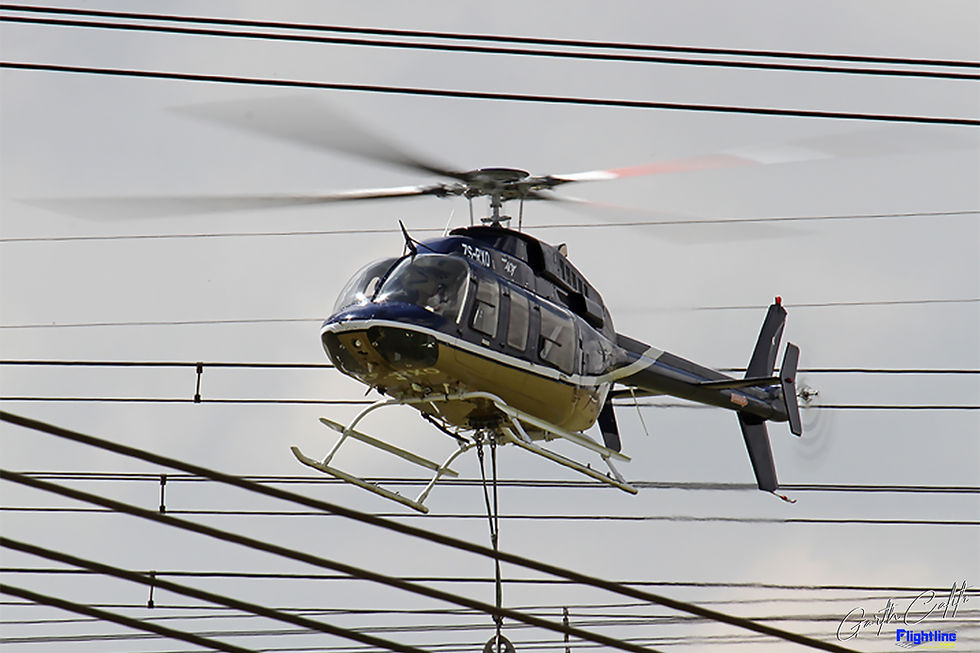
The NTCSA is responsible for operating and expanding South Africa’s national electricity transmission grid, an increasingly complex network that must accommodate new generation capacity from renewable, conventional and cross-border power sources.

According to NTCSA Chief Executive Officer Monde Bala, the new helicopter fleet will arrive at a crucial time. “The NTCSA is eagerly anticipating the arrival of the seven new Bell 407GXi helicopters, in line with our agreement with Bell Textron Inc. As we renew and modernise our aviation fleet, their delivery could not be timelier.”

South Africa’s transmission operator is currently undertaking a massive build programme aimed at strengthening the country’s electricity backbone. The project includes the construction of more than 14,000 kilometres of new high-voltage and ultra-high-voltage transmission lines, which will connect new generation facilities to major consumption centres across the country.

This expansion is essential as South Africa integrates increasing levels of so-called renewable energy, particularly wind and solar, into the national grid. Many of these projects are located in remote regions where helicopter support is vital for construction oversight, infrastructure inspection and rapid response to faults or weather-related damage.
In addition to supporting new transmission infrastructure, NTCSA must also maintain and protect thousands of kilometres of existing lines that form the backbone of the country’s power system. Helicopters provide a fast and efficient means of monitoring these assets, especially in rugged terrain or remote areas where ground access may be difficult.

Bell executives highlighted the Bell 407GXi as a natural fit for demanding utility missions such as those carried out by power utilities and infrastructure operators. “Bell is proud to work with the NTCSA as they expand their utility operations with Bell aircraft,” said Tim Evans, Managing Director for Bell in the Middle East and Africa. The Bell 407GXi is an ideal aircraft for utility operators across the region because it’s a multi-mission workhorse. The NTCSA is joining hundreds of operators across the world who rely on the platform for critical utility use.”

Derived from the long-running Bell 407 family, the GXi variant incorporates modern avionics, improved operational capability, and advanced performance characteristics that make it particularly suitable for demanding aerial work. Powered by a Rolls-Royce M250-C47E/4 turboshaft engine, the aircraft delivers strong high-altitude and hot-weather performance, an important factor for operations in South Africa’s varied climate and terrain.

The helicopter’s four-blade composite rotor system provides a smooth ride and excellent hover performance, both of which are critical when conducting precision tasks such as close-proximity inspections of transmission towers or external load operations during maintenance work.
One of the most significant upgrades on the GXi variant is its advanced cockpit technology. The aircraft features the Garmin G1000H NXi integrated flight deck, an all-glass avionics suite that enhances situational awareness while reducing pilot workload. The system consolidates navigation, flight management, engine monitoring, and safety data into a pair of high-resolution displays, allowing pilots to access critical information quickly during complex missions.

The helicopter is also equipped with single-pilot Instrument Flight Rules (IFR) capability, allowing operations to continue in degraded visibility or adverse weather conditions, an important capability for a utility operator responsible for maintaining national infrastructure. For NTCSA pilots, this capability means greater operational flexibility and improved safety when flying across South Africa’s often unpredictable weather systems.

The Bell 407GXi’s adaptable cabin configuration also supports the diverse missions required by power utilities. The aircraft can accommodate up to five passengers alongside the pilot, while its configurable cabin allows operators to carry inspection teams, maintenance specialists, or specialised equipment such as infrared cameras and lidar scanning systems used in transmission line surveys.
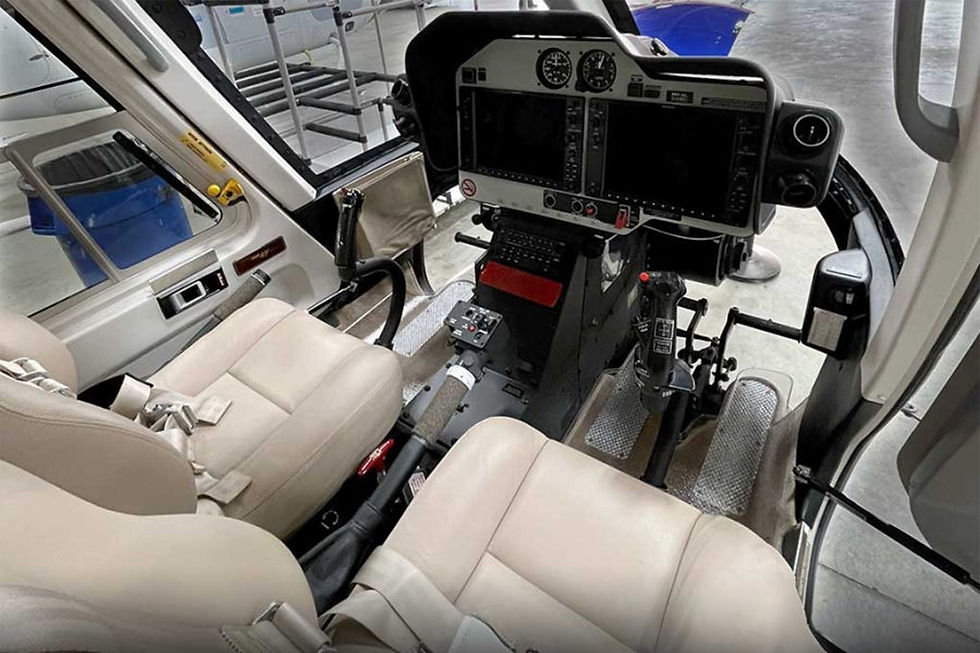
For utility operations, the aircraft can also be equipped for external load missions, enabling crews to transport tools, components or replacement hardware directly to remote transmission towers. This flexibility makes the helicopter particularly valuable during emergency repairs when rapid access to damaged infrastructure is essential to restore power.

Reliable aviation support is a critical element in maintaining large-scale electricity networks. Helicopters enable operators to inspect hundreds of kilometres of power lines in a single day, tasks that could otherwise take weeks by ground-based teams. They also allow rapid deployment of engineering crews following storms, fires or other disruptions that threaten transmission infrastructure.

For NTCSA, the addition of seven modern helicopters will significantly enhance its ability to maintain the resilience of South Africa’s national grid. As the country works to expand generation capacity and integrate new renewable energy projects, the transmission system will become increasingly complex and geographically widespread. The arrival of the Bell 407GXi fleet will therefore play an important role in ensuring that South Africa’s electricity network remains reliable, responsive, and capable of supporting the nation’s evolving energy landscape.
With deliveries expected as part of NTCSA’s fleet modernisation programme, the helicopters will soon become a familiar sight over South Africa’s transmission corridors, quietly ensuring that the power keeping the country running continues to flow.





Comments