


Lufthansa: A Century of Pioneering Flight and Global Connectivity
By Garth Calitz

On 6 January 2026, the aviation industry takes a moment to recognise a significant milestone. Exactly a century earlier, in the chilly winter atmosphere of Berlin, a merger occurred that would permanently change the course of global commerce and travel. The joining of Deutsche Aero Lloyd and Junkers Luftverkehr led to the creation of Deutsche Luft Hansa.

Today, a hundred years after those groundbreaking times, Lufthansa marks its centenary not just as an airline, but as a cornerstone of aviation history. For Flightline Weekly readers, this anniversary serves as a significant reminder of the industry's journey, from wood-and-canvas biplanes to the carbon-fibre Dreamliners that now span the globe.


In 1926, flying was an adventurous endeavour rather than a commonplace activity. Navigation was basic, cabins lacked pressurisation, and "airports" were often just grassy fields. From the start, the original Luft Hansa was a trailblazer. Within its first ten years, the airline was already expanding the limits of possibility, creating bold postal routes over the South Atlantic and setting up the foundation for a network that would eventually reach every inhabited continent.


Although the contemporary Deutsche Lufthansa AG was officially re-established in 1953 and resumed operations in 1955 after the hiatus and devastation of World War II, the airline’s identity is deeply connected to its founding in 1926. This 100-year history embodies a consistent spirit of German engineering and operational discipline. The centennial celebrations in 2026 pay tribute to this legacy, recognising Lufthansa as both a witness to and a key architect of the jet age.

Lufthansa has chosen a marathon approach instead of a sprint to commemorate its centennial. Using the theme "We are the Journey," the airline will dedicate all of 2026 to showcasing the human stories behind the technology. While the industry typically highlights thrust and wingspan, this campaign focuses on the cultural exchange that aviation enables.

"A century of flight truly represents a century of human connection," the airline remarked during its anniversary launch. This idea is being realised through global events at Lufthansa's main hubs in Frankfurt and Munich, along with digital storytelling that showcases the generations of families who have worked under the "Crane" emblem. For aviation enthusiasts and spotters, the highlight of the centenary celebration is undoubtedly the special anniversary livery. Multiple aircraft in Lufthansa's diverse fleet have been turned into flying billboards to mark this 100-year milestone.
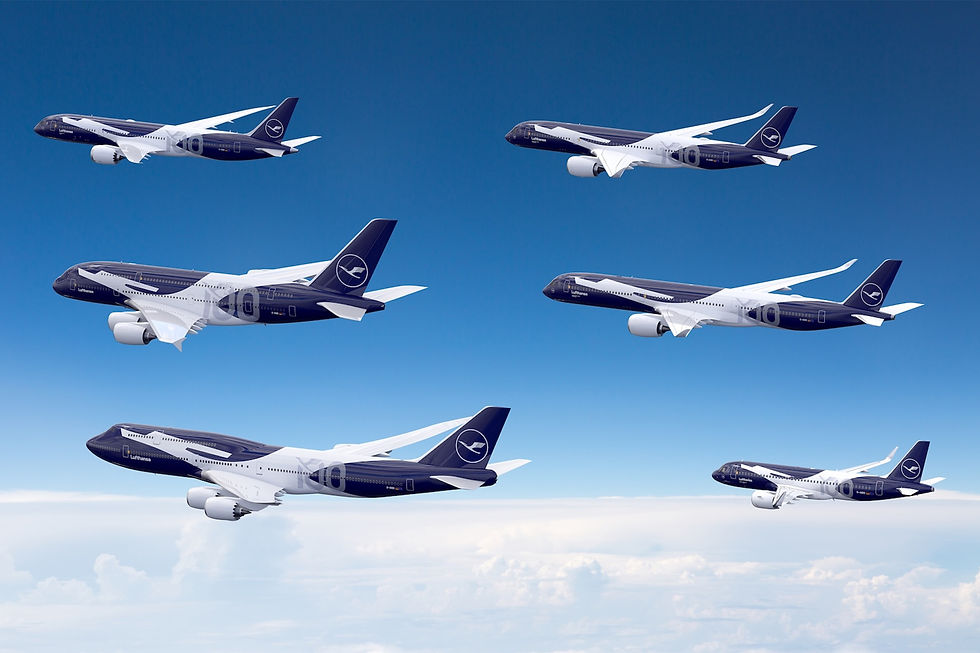
The design is a masterclass in understated elegance. Retaining the airline's sophisticated deep blue and white palette, the centenary aircraft features a prominent “100” logo and the dates 1926 | 2026 emblazoned on the rear fuselage.

The Flagship: The first aircraft to debut the colours was a Boeing 787-9 Dreamliner. This choice is symbolic: the Dreamliner represents the cutting edge of efficiency and passenger comfort, acting as the perfect bridge between a storied past and a sustainable future.

The Giants: Not to be left out, the "Queen of the Skies", the Boeing 747-8 and the Airbus A380 have also received commemorative markings. Seeing these titans of the air wearing the centenary branding is a poignant reminder of the scale Lufthansa has achieved.
The Workhorses: Short-haul travel is represented by the Airbus A320, ensuring that the anniversary is visible at smaller regional airports across Europe, not just at major international hubs.

In 2026, aside from its modern fleet, Lufthansa is honouring the iconic aircraft that set the stage for aviation history. Special focus is on the Junkers Ju 52, endearingly called "Auntie Ju," which was crucial to European air travel in the 1930s.

Lufthansa's dedication to its heritage is highlighted by its emphasis on the Lockheed Super Star, an emblem of the 1950s "Golden Age" when long-range propliners transformed transcontinental travel into a glamorous experience. By featuring static exhibitions and permanent museum displays, the airline ensures that the technical achievements of past eras remain memorable to the digital generation.

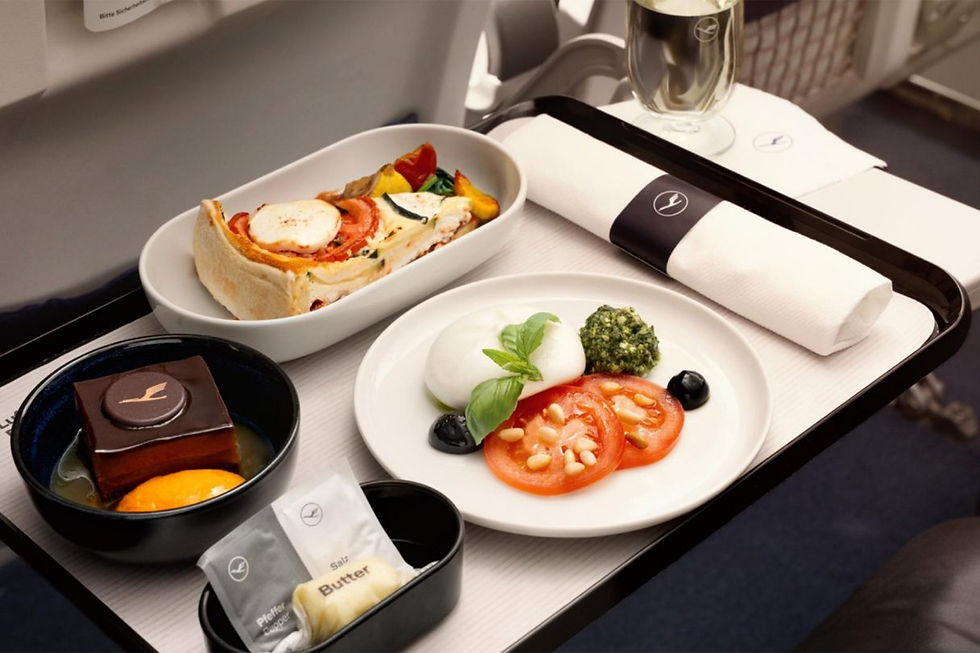
For travellers flying with the Crane in 2026, the anniversary is apparent in every aspect of the journey. From unique boarding passes to specially curated in-flight entertainment channels featuring archival footage of the first trans-Atlantic flights, the experience is completely immersive. The airline has also launched "Centenary Menus" in First and Business Class, bringing back classic dishes from the golden age of 1960s jet travel, reimagined with contemporary culinary techniques. This celebration engages all five senses, reminding passengers that they are part of a living history.
Looking back over the past century, Lufthansa's development is remarkable. Initially a small European airline, it has grown into the Lufthansa Group, a worldwide aviation giant that encompasses SWISS, Austrian Airlines, Brussels Airlines and Eurowings.

Lufthansa has endured and prospered through economic downturns, the shift from propeller aircraft to jets and the significant changes of the post-pandemic era. Its strength lies in its adaptability. As a founding member of the Star Alliance, Lufthansa played a key role in pioneering the global airline cooperation model, transforming the way the world travels.

While 2026 marks a time for reflection, Lufthansa is also using this milestone to highlight its future direction. The upcoming century of aviation will focus on sustainability and digitalisation. The centenary events provide an opportunity for the airline to present its "CleanTech Hub," its investments in Sustainable Aviation Fuel (SAF) and its objective of achieving carbon neutrality by 2050. The message is clear: the first 100 years were about learning to fly and connecting the world; the next 100 will be about perfecting the art of flight in a way that protects the planet.

For a century, the Crane has been a symbol of reliability and German excellence. As we watch the centenary fleet take to the skies this year, we are reminded that aviation is more than just a feat of physics; it is a feat of human will. Lufthansa’s journey from a 1926 startup to a 2026 industry leader mirrors the story of modern civilisation itself: a relentless drive to move faster, reach further, and bring people closer together. Here is to the next hundred years of the Crane.





Comments