


Embraer's E-Jets Family Cleared for India as DGCA Grants Type Certification

India's regional aviation sector has received a significant boost following the certification of several members of the Embraer E-Jets family by the country's aviation regulator, opening the door for wider deployment of the Brazilian manufacturer's latest regional aircraft.
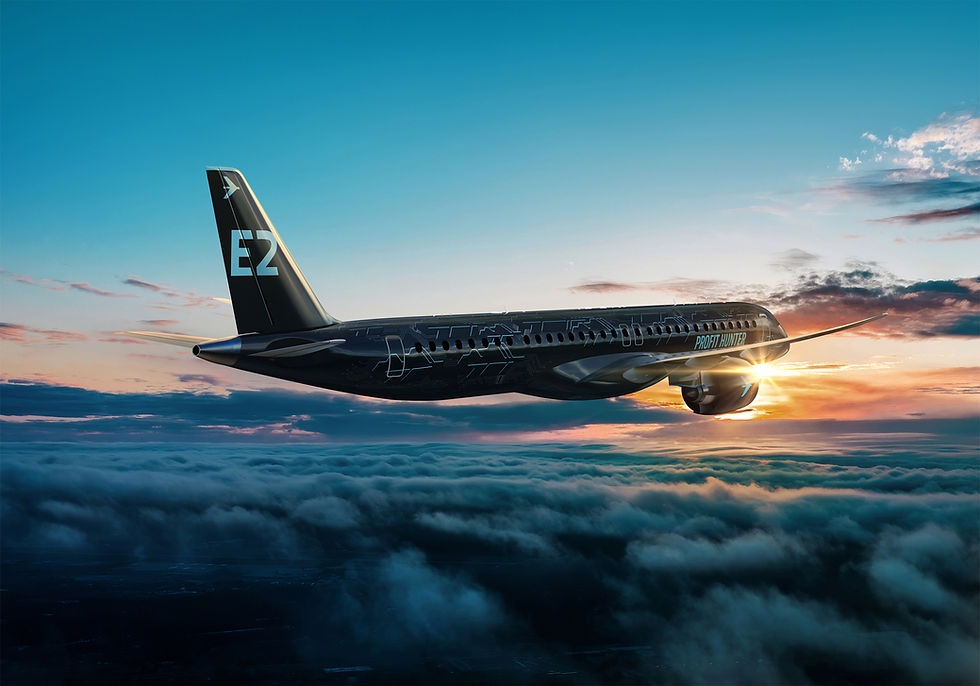

The certification, granted by India's Directorate General of Civil Aviation (DGCA), covers the Embraer E190, E195 and the next-generation E195-E2. The E175 had already received Indian certification and is currently in commercial service with Star Air.

According to Embraer, the approval marks an important milestone as India's domestic aviation market continues to expand rapidly, supported by increasing passenger demand and the government's UDAN (Ude Desh ka Aam Nagrik) regional connectivity programme, which aims to improve air services to underserved communities.


Raul Villaron, Embraer's Senior Vice President Sales & Marketing and Head of Region Asia Pacific for Commercial Aviation, welcomed the certification and thanked the DGCA for its comprehensive evaluation of the aircraft. He said the E-Jets family combines strong operating economics, excellent passenger comfort and proven performance, making it well-suited to support India's growing regional airline sector and the country's ambitious connectivity objectives.

The certification gives Indian airlines access to aircraft capable of filling the gap between smaller turboprops and larger single-aisle jets.
The latest-generation E195-E2 is particularly noteworthy. Designed to deliver lower operating costs and improved environmental performance, it is regarded as one of the most fuel-efficient aircraft in its size category. The aircraft also produces significantly lower noise levels than previous-generation regional jets.

Inside the cabin, passengers benefit from Embraer's signature 2+2 seating configuration, eliminating middle seats while providing generous overhead luggage bins and modern passenger service units.

According to Embraer, the aircraft's range of up to seven hours, combined with its ability to operate from airports with relatively short runways or lower pavement strength, allows airlines to serve routes that would be uneconomical for larger narrowbody aircraft while offering greater speed and comfort than turboprop alternatives.


Adity Shekhar, Embraer's Regional Vice President of Sales, said the certification will enable airlines to develop new point-to-point services and unlock markets that are currently underserved.
Embraer already has an established footprint in India, with almost 50 aircraft operating across commercial, business and defence aviation. Regional carrier Star Air currently operates a fleet of Embraer E175s and ERJ145s, making it the country's principal E-Jet operator.

Earlier this year, Embraer strengthened its long-term commitment to the Indian aerospace industry by signing an enhanced Memorandum of Understanding with Adani Defence & Aerospace. The agreement outlines plans to establish a Final Assembly Line (FAL) in India for the E175, supporting the country's Regional Transport Aircraft programme and the government's broader "Make in India" industrial strategy.

The E-Jets family has become one of the world's most successful regional aircraft programmes since entering service, with more than 1,900 aircraft delivered to over 80 airlines in more than 50 countries. Including South Africa's Airlink, which is the biggest operator of Embraers worldwide.

The E195-E2 has also received certification from the world's three major aviation authorities—the Federal Aviation Administration (FAA) in the United States, the European Union Aviation Safety Agency (EASA) and Brazil's National Civil Aviation Agency (ANAC)—underscoring its acceptance in major global markets.

India is forecast to become one of the world's fastest-growing aviation markets over the coming decades, creating demand for aircraft that can economically serve secondary cities and thinner regional routes. The certification of additional Embraer E-Jet variants positions the manufacturer to compete more aggressively in this expanding sector.

For Embraer, the approval is more than a regulatory milestone; it strengthens its foothold in a strategically important market while complementing its plans for local industrial cooperation. If additional airline orders follow, India's regional aviation network could soon see a much larger presence of the versatile E-Jets family, helping bridge the gap between turboprops and larger single-aisle aircraft on the country's rapidly evolving route network.





Aircraft certification and new route possibilities can make regional flying feel more flexible, but passengers judge an airline by what happens when they actually book. Breeze Airways customers may need help with reservations, baggage, schedule changes, refunds, credits, seating, or app access, which makes breeze airways customer service contacts useful when travel plans stop feeling straightforward. A lower-fare or newer airline can be appealing, but support still matters when timing, money, and travel details are involved.