


Was the A380 Superjumbo Too Much of a Good Thing?
By Garth Calitz

There are few aircraft that announce their arrival quite like the Airbus A380. It doesn't so much land at an airport as occupy it. Two decks, four engines, a wingspan that makes taxiway planners reach for the antacids and enough seats to transport the entire population of a "platteland" town in one go. When Airbus launched the A380, it wasn't merely building a new airliner. It was making a rather confident prediction about the future of commercial aviation. And, as predictions go, it was spectacularly wrong.

This is not to say the A380 was a bad aircraft. Far from it. The A380 is arguably one of the most impressive civil aircraft ever built. It is quiet, remarkably spacious, and when properly utilised, an extraordinarily capable long-haul machine. Passengers generally love it, crews appreciate it and aviation enthusiasts treat its departure from an airport as a minor religious ceremony. The problem was that Airbus had built an exceptional answer to a question the airline industry gradually stopped asking.

The thinking behind the A380 was perfectly understandable. Airports were becoming congested, passenger numbers were increasing and the world's major hubs were filling up with smaller aircraft. Airbus reasoned that if airport capacity was the problem, perhaps the solution was to put more passengers on each aircraft. Simple, really. Instead of increasing the number of aircraft movements, make the aircraft considerably larger.

Airbus envisioned a new era of very-large-aircraft travel, with the Super Jumbo sitting at the top of the market and taking on Boeing's venerable 747. The A380 would connect the world's major hubs with enormous passenger loads, while airlines would enjoy economies of scale and airports would make better use of their increasingly precious slots.
There was just one small problem: the airline industry had other ideas.
While Airbus was busy creating the world's largest passenger aircraft, Boeing and the engine manufacturers were quietly working on a different concept: smaller, highly efficient twin-engine aircraft capable of flying enormous distances without requiring several hundred passengers to make the economics work. The Boeing 787 arrived with two engines; the Airbus A350 followed with two engines.
Suddenly, airlines discovered that they didn't necessarily need to fly 500 people from London to Singapore. They could fly 250 or 300 people directly to a slightly less obvious destination—and do it profitably.
This was rather inconvenient for the A380; the aircraft's great strength was also its Achilles' heel. An A380 is magnificent when you can fill it. When you can't, it becomes a very expensive way of transporting empty seats around the planet. Unfortunately, empty seats don't pay the fuel bills.

Airbus ultimately delivered 251 A380s. That sounds impressive until one remembers that the aircraft was conceived as the cornerstone of a massive very-large-aircraft market. The Boeing 747, which the A380 was expected to succeed, eventually reached 1,574 deliveries across its production life. That comparison is rather less flattering.
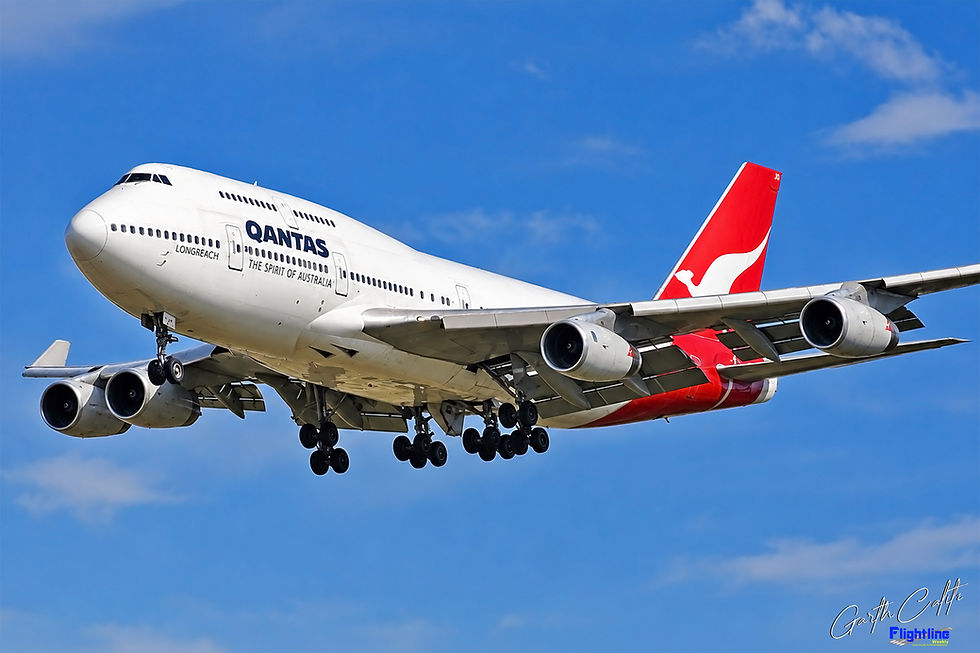
The A380's development and production programme also became a financial headache for Airbus. The aircraft was enormously complex to design and manufacture, with production spread across several European countries and a final assembly process in Toulouse that required some impressive logistical gymnastics. Wiring problems alone caused significant delays to the programme, while costs climbed substantially beyond the original estimates.

Still, the aircraft entered service with Singapore Airlines in 2007 and promptly demonstrated what it could do. What it could do was make passengers wonder why every aircraft wasn't built like a luxury apartment block. Airlines experimented with bars, lounges, showers and suites.

Emirates turned the A380 into a central part of its global network strategy, eventually becoming by far the largest operator of the type. For Emirates, the aircraft made sense because the airline had the hub, the passenger flows and the network density to fill it. For many other airlines, however, the economics were considerably less attractive.

If the A380's business case had already been placed on life support, the COVID pandemic briefly pulled the plug. Airlines grounded their fleets and discovered that operating enormous four-engine aircraft with hundreds of seats was not necessarily the best strategy when international travel had effectively disappeared. Several airlines decided that the pandemic had provided a convenient opportunity to retire their A380s permanently.
Others brought them back, and that is where the story becomes wonderfully aviation-like. The aircraft that was supposedly obsolete suddenly became useful again. As international travel recovered, airlines discovered that the A380 offered something that modern twin-engine aircraft couldn't quite replicate: enormous capacity, excellent passenger appeal and the ability to move large numbers of people through congested airport slots.

So the A380 returned to service, because apparently even aircraft that have been declared dead several times can still make a comeback. Yet the fundamental problem remains. Airbus didn't fail because it built an aircraft that nobody wanted. It failed because it built an aircraft that too few airlines wanted in sufficient numbers. There is an important distinction.

The A380 demonstrated that passengers liked very large aircraft. It demonstrated that airlines could operate them successfully on the right routes. It demonstrated that airport congestion could create a market for higher-capacity aircraft. But it did not demonstrate that the world wanted hundreds of them. Instead, aviation moved towards flexibility.
Airlines wanted to open new routes without having to fill an aircraft the size of a rugby stadium. They wanted to fly directly between secondary cities. They wanted lower fuel consumption. They wanted aircraft that could make money with fewer passengers. In other words, they wanted almost everything the A380 wasn't designed around.

The irony is difficult to miss. Airbus spent years developing the ultimate hub-to-hub machine just as the industry was discovering the joys of point-to-point flying. It built four engines just as reliability and engine technology were making two engines increasingly attractive. It built enormous capacity just as airlines were discovering that frequency and flexibility could be more valuable than sheer size. And it created an aircraft so spectacular that passengers loved it while the bean counters occasionally looked at it as though it had personally offended them.

The A380 therefore deserves a rather more nuanced verdict than simply "failure." As an aircraft, it was a triumph. As an engineering achievement, it was extraordinary. As a passenger experience, it remains difficult to beat. As a commercial strategy, however, it was a spectacular case of being brilliantly early—or brilliantly late, depending on your preferred definition of irony.
Perhaps the greatest compliment to the A380 is that, despite Airbus ending production in 2021, the aircraft refuses to disappear. It keeps flying. It keeps attracting passengers. It keeps turning heads. And it keeps reminding the aviation industry that sometimes the most magnificent aircraft ever built can still be the wrong aircraft for the market.

Airbus looked at the future and saw airports packed with enormous aircraft carrying enormous numbers of passengers. The future looked back and apparently said: "Very impressive. We'll take the A350 instead."
And that, ladies and gentlemen, is how you build the world's largest passenger aircraft—and accidentally prove that bigger isn't always better.





Large aircraft routes show how many moving pieces sit behind one flight: ticket numbers, loyalty accounts, partner airlines, seat changes, baggage rules, and schedule updates. For Aeroplan or airline-account support, I noted Air Canada phone number with the booking reference, membership number, passenger name, points activity, receipt, and flight-date record. That placement is logical when the issue is missing miles, award availability, flight credit, name details, refund timing, baggage claim, or a partner-flight record. The aviation angle can be interesting, but the actual service question has to point to one trip or one loyalty account. A short, documented request usually works better than describing every part of the travel plan.