




South Africans Are Flying Almost as Much as Before COVID — So Where Did All the Flights Go?

There is a slightly strange thing happening in South African aviation. The country's major airports are now handling almost as many passengers as they did before COVID-19 brought the aviation industry to its knees, yet there are fewer aircraft movements taking place. In other words, the passengers have largely come back, but quite a few of the aeroplanes haven't.

According to Airports Company South Africa's latest figures for the financial year ending 31 March 2026, passenger traffic across its airports had recovered to 98% of pre-COVID levels. ACSA handled approximately 20.58 million departing passengers, an increase of 8.5% over the previous year. Domestic traffic had recovered to 97% of its pre-pandemic level, while regional traffic had reached 104% and international traffic had returned to 100%.

The really interesting number, however, is aircraft movements. Those had recovered to only around 93% of pre-COVID levels. That creates a sizeable gap between the number of flights being operated and the number of people being carried. Put simply, South Africa is getting remarkably close to its old passenger volumes without putting the same number of aircraft into the sky.

There is nothing particularly mysterious about the mathematics. A major factor is that airlines are operating aircraft more efficiently, with fuller cabins and, in some cases, larger aircraft. But there is another much more fundamental change underneath the numbers: South Africa's domestic airline industry is a very different beast from the one that existed in 2019.
Back then, passengers had considerably more airline brands and capacity to choose from. Since then, Comair and its kulula.com brand have disappeared, as has Mango. South African Airways has returned from business rescue, but on a much smaller scale than the airline operated before its financial collapse. At the same time, FlySafair, Airlink and Cemair have expanded, taking on much of the capacity left behind by failed or downsized competitors. That consolidation has changed the economics of the domestic market.
Rather than having several airlines competing aggressively on the same routes with multiple aircraft types, today's market is increasingly concentrated around a smaller number of substantial operators. FlySafair has become the dominant force in the domestic low-cost market, while Airlink has built an extensive regional and domestic network using its Embraer fleet. SAA continues rebuilding its network, while CemAir occupies a more specialised position with its fleet of regional jets and turboprops, and the newcomer Lift has made a slight impact on the "Golden Triangle" with its A320 fleet.
If an airline can replace two smaller flights with one larger aircraft and still carry roughly the same number of passengers, it can reduce the number of movements while maintaining passenger capacity. That is particularly relevant at airports where runway, terminal and air-traffic capacity is becoming increasingly valuable. And this is where the story becomes rather more interesting than simply saying that airlines have become more efficient.
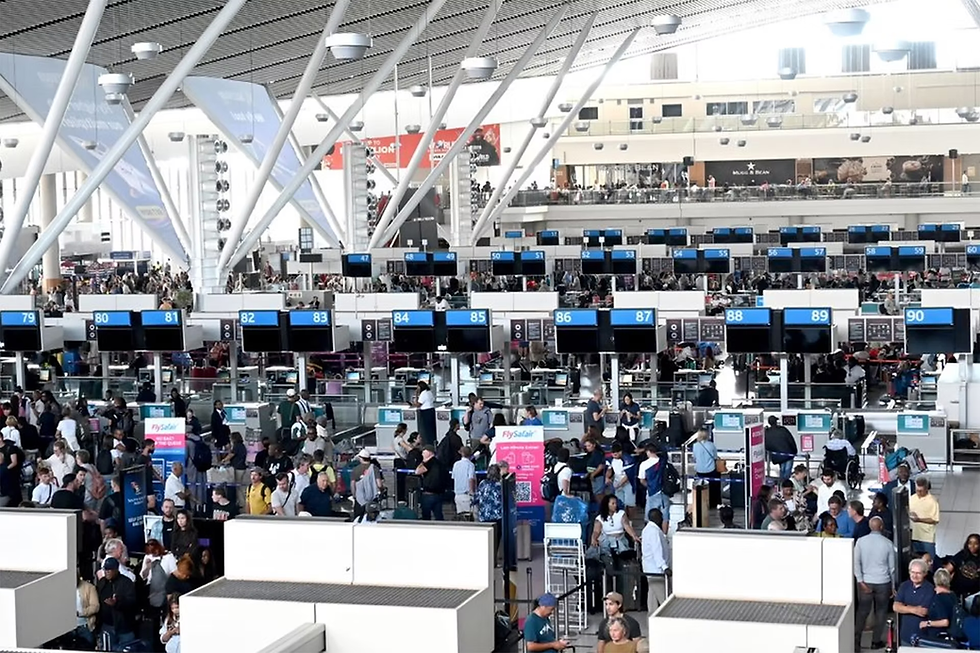
ACSA has identified congestion and slot availability as growing issues, particularly at the country's busiest airports. O.R. Tambo International remains the country's largest aviation gateway, while Cape Town International has experienced particularly visible peak-period congestion. ACSA says additional terminal capacity and upgrades are planned at Cape Town, but with no dates given, it doesn't mean much; airlines have also raised concerns about runway and air-traffic-management capacity at O.R. Tambo.
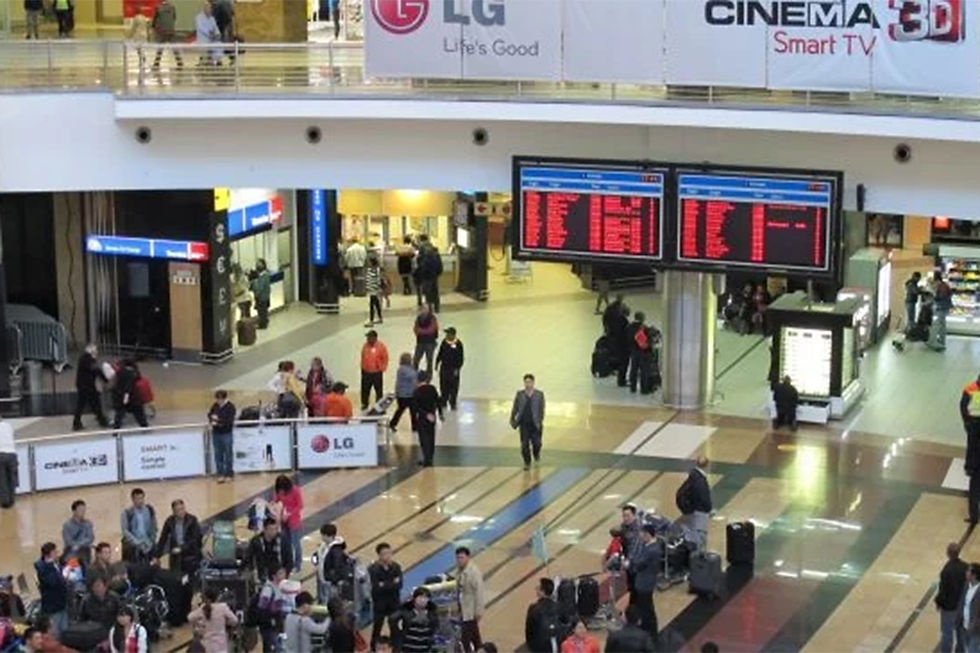
That creates an interesting paradox. South Africa needs more aviation capacity because passenger numbers are growing, but simply adding more flights isn't necessarily possible during the busiest periods. The answer can therefore be to make existing flights carry more passengers.
O.R. Tambo remains the country's primary international and domestic hub, but Cape Town has become increasingly important in its own right. International airlines have been adding capacity directly to Cape Town, reducing the need for some passengers to connect through Johannesburg. That shift is significant because it changes the traditional role of O.R. Tambo as the almost unavoidable gateway between South Africa and the rest of the world.
Cape Town's growth has also created its own problems.
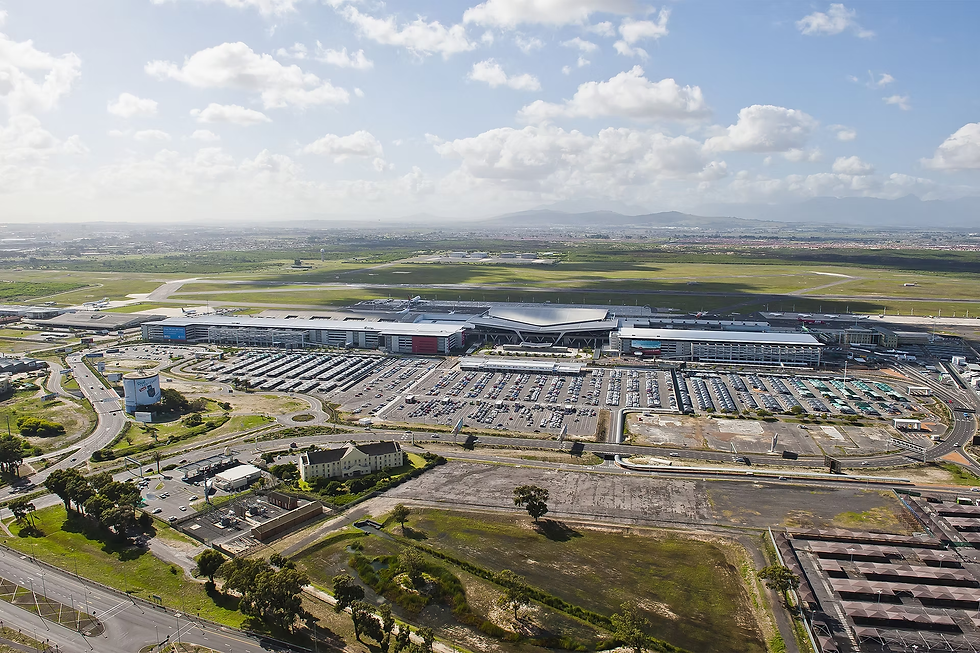
ACSA has reported that congestion at Cape Town International Airport is already a concern, due to limited terminal capacity and restricted slot availability during peak times. The organisation is working on plans for a new domestic arrivals terminal and an upgrade to the international terminal, but these projects will take time to complete. In the interim, ACSA claims it is implementing short-term measures to alleviate some of the pressure, although the specifics of these measures are still unclear.
The broader numbers show that ACSA itself has emerged from the pandemic in considerably better financial shape. For FY2025/26, the company reported R8.8 billion in revenue, a R1.2 billion net profit and a R1.99 billion profit before tax. Aeronautical revenue increased 15.2% to approximately R4.7 billion as aircraft and passenger activity recovered.
ACSA's challenge now is no longer simply survival. It is having to invest for the next phase of growth while dealing with capacity constraints, rising operating costs and the enormous capital requirements associated with expanding major airports.
ACSA is already looking beyond the immediate recovery. Its current strategy includes infrastructure modernisation, expanding connectivity and preparing the airport network for further growth. The company is targeting 42 million passengers by 2029/30, a figure that would put additional pressure on airports already experiencing congestion at peak periods.
The question is whether the infrastructure will keep pace.

There is another interesting consequence of the post-COVID airline shake-up: South Africa's airlines are now operating with considerably different fleet strategies.
Airlink has been able to use its Embraer fleet to match aircraft size to individual routes, while FlySafair has concentrated heavily on Boeing 737-family aircraft. SAA, meanwhile, has been rebuilding its fleet around Airbus widebody and narrowbody aircraft while continuing to expand its network. The result is a market where fleet utilisation and aircraft size have become increasingly important tools for growing capacity without simply increasing the number of flights. That may explain why the headline figures look contradictory.
South Africa isn't necessarily flying less - It is flying differently.
The country has fewer airlines than it had before the pandemic, fewer aircraft movements than it had in 2019, but almost the same number of passengers. International traffic has recovered fully, regional traffic has actually moved above pre-pandemic levels and domestic traffic is only slightly behind its old benchmark. For passengers, however, the statistics don't necessarily make the experience feel like a recovery.
Fuller aircraft can mean fewer empty seats, but they can also mean fewer alternatives when a flight is cancelled or sold out. Limited airport capacity can constrain airlines from simply adding another frequency. And consolidation means that when one major operator changes a route, there may be fewer competitors willing or able to immediately fill the gap.
The aviation industry therefore faces a rather different problem in 2026 from the one it faced in 2020. Back then, everyone was asking when passengers would return.
Now they're back.
The question is whether South Africa has enough airport capacity, aircraft, infrastructure and airline competition to accommodate the next wave of growth.
ACSA's numbers suggest the first part of the recovery is essentially complete. Passenger traffic is at 98% of pre-COVID levels, while international and regional traffic have already reached or exceeded their previous benchmarks. The next phase is therefore unlikely to be about simply getting people back onto aeroplanes.
It will be about where those aircraft fly, how big they are, how full they are and whether South Africa's airports can handle them. And judging by the numbers, the days of simply solving growth by adding another flight may already be disappearing.
Which is probably good news for the accountants.
For passengers trying to find a seat on the Friday afternoon flight to Cape Town, perhaps not quite so much.





Comments