




Airbus A350F Takes Flight – While Boeing’s 777-8F Keeps Checking the Calendar
By Garth Calitz

Airbus has officially put its newest freighter into the air, with the first A350F completing its maiden flight from Toulouse on 29 September 2026. It is a significant moment not only for Airbus but for the entire heavy air-cargo market, where Boeing has enjoyed something approaching squatter’s rights for decades. The 747 Freighter became an icon, the 777F has been enormously successful, and Airbus has never really managed to loosen Boeing’s grip on the upper end of the freighter business. This time, however, Toulouse has arrived with something considerably more serious – and, perhaps more importantly, it has arrived while Boeing’s competing 777-8 Freighter is still some distance from entering service.
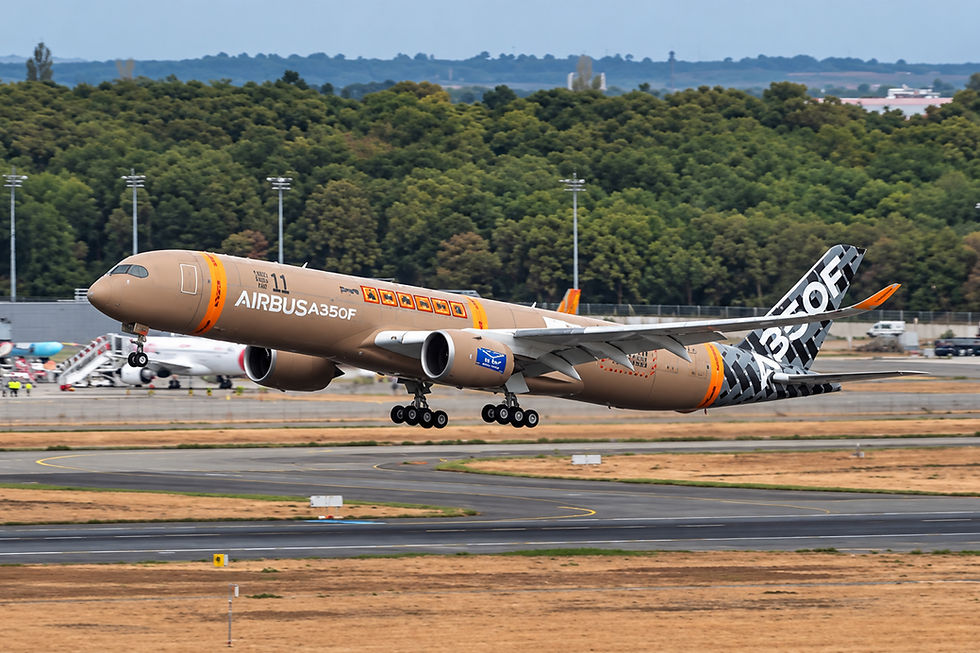
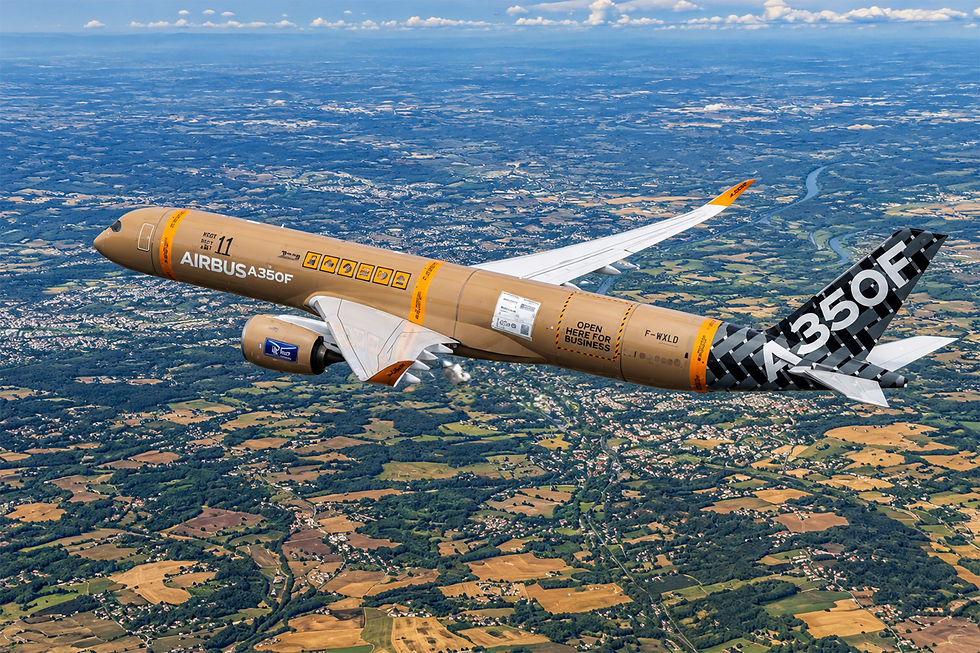
The aircraft involved in the first flight was MSN700, the first of two dedicated A350F flight-test aircraft. It departed Toulouse with five Airbus test personnel aboard and remained airborne for four hours and ten minutes, climbing to 25,000 feet and reaching an indicated airspeed of 340 knots. This was no ceremonial circuit around Toulouse for the photographers either. The crew explored the aircraft’s handling characteristics in direct law, examined engine behaviour and checked core mechanical systems while Airbus engineers on the ground monitored thousands of parameters through the aircraft’s extensive flight-test instrumentation. The objective was to confirm that the real aeroplane behaved as the enormous collection of computers, simulations, and engineers had spent several years predicting it would. Happily for Airbus and probably rather disappointingly for anyone in Seattle hoping for an interesting morning, it did.
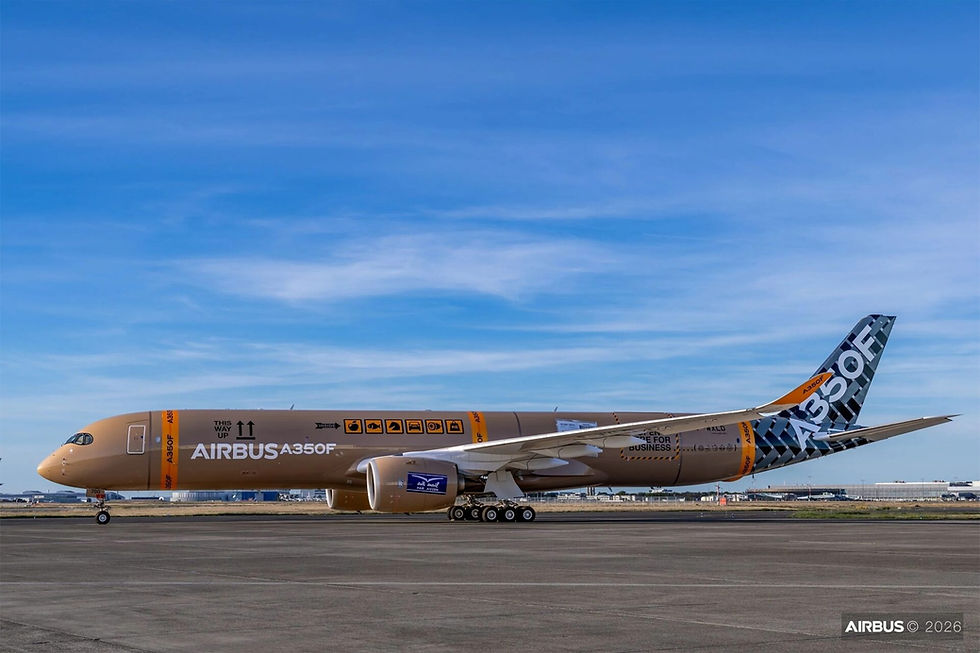
The flight begins what Airbus describes as an approximately 400-hour certification flight-test campaign, using MSN700 and the second aircraft, MSN701. The two aircraft will divide the workload, with MSN700 focusing primarily on handling qualities, performance, and autopilot testing, while MSN701 will focus on aircraft systems, including air conditioning, water and waste systems, smoke detection, and hot- and cold-weather trials. MSN700 even carries a special tail skid and bumper for take-off performance testing, because at some point test pilots are going to explore the very edges of the aircraft’s performance envelope, which is one of those jobs that sounds enormously entertaining until somebody explains exactly how close the tail is expected to get to the runway.
Not Simply an A350 With the Seats Removed
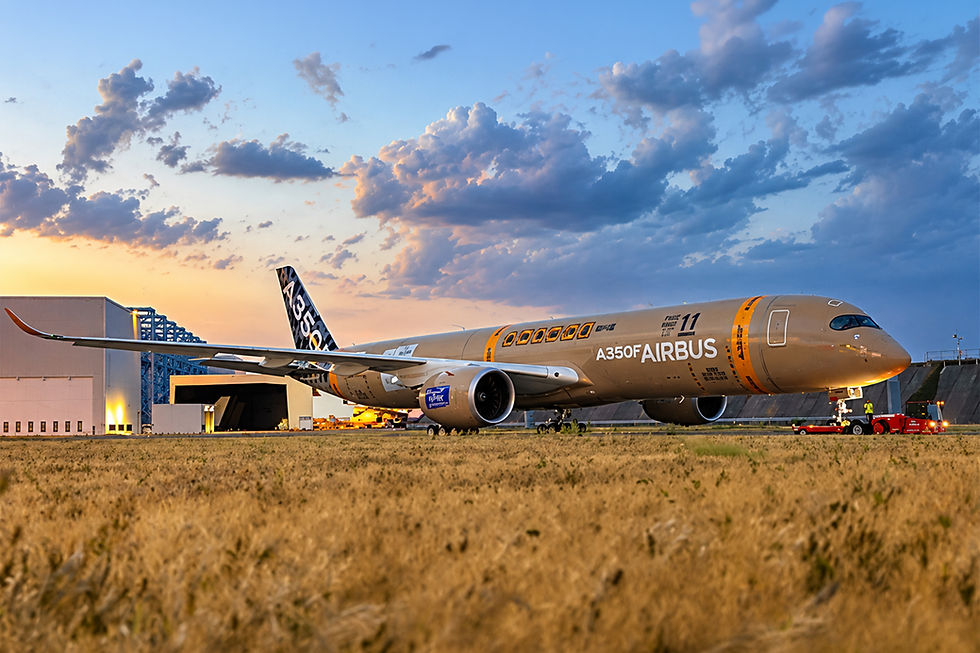
Although the A350F shares plenty of DNA with the passenger A350 family, calling it an A350 with the seats, overhead bins and temperamental coffee machines removed would be doing the aircraft a considerable injustice. The freighter has its own fuselage configuration, effectively combining dimensions derived from the A350-900 forward fuselage with the A350-1000 rear fuselage and wings. It also features a purpose-designed cargo structure and, most noticeably, an enormous 4.3-metre-wide main-deck cargo door, manufactured at Getafe in Spain. Airbus describes it as the largest main-deck cargo door fitted to a commercial aircraft.
The numbers explain why Airbus believes it has something capable of upsetting the established order. The A350F will offer a maximum payload of 111 tonnes and a range of up to 8,700 kilometres, while being powered by Rolls-Royce Trent XWB-97 engines. More than 70% of its structure consists of advanced materials, and Airbus says the aircraft has a maximum take-off weight some 46 tonnes lower than its competitor. The manufacturer is claiming fuel-consumption and carbon-emission reductions of up to 40% compared with previous-generation freighters offering similar payload-range capability. As always with manufacturer performance claims, operators will eventually provide the figures that matter most – those appearing on fuel invoices and maintenance spreadsheets, but there is little doubt that the A350 platform gives Airbus a very modern starting point.
That matters because air freight is an unforgiving business. A freighter earns money when it is moving boxes, engines, pharmaceuticals, electronics and the occasional mysteriously urgent pallet halfway around the planet. Airlines are not particularly interested in whether an aircraft looks elegant outside the terminal window. They want payload, volume, reliability, range and preferably a fuel bill that does not require the finance director to lie down in a darkened room afterwards.
Meanwhile, Over at Boeing…
Boeing is developing the 777-8 Freighter, the cargo member of the 777X family, and on paper it remains a formidable competitor. Boeing describes it as the industry's most capable twin-engine freighter and continues to secure significant customer commitments; as recently as July 2026, MSC Air Cargo ordered five examples. Nobody should therefore make the mistake of writing off Boeing in a market it understands extremely well. There is, however, the small matter of when the aircraft actually arrives.

Boeing originally launched the 777-8F with entry into service targeted earlier in the decade, but the broader 777X programme has endured a lengthy certification journey. In October 2024, Boeing formally moved the anticipated first delivery of the 777-8 Freighter to 2028, citing revised certification timelines, delays associated with 777-9 flight testing and the impact of the IAM work stoppage. Boeing's own subsequent annual reporting continued to show the 777-8F moving to 2028.
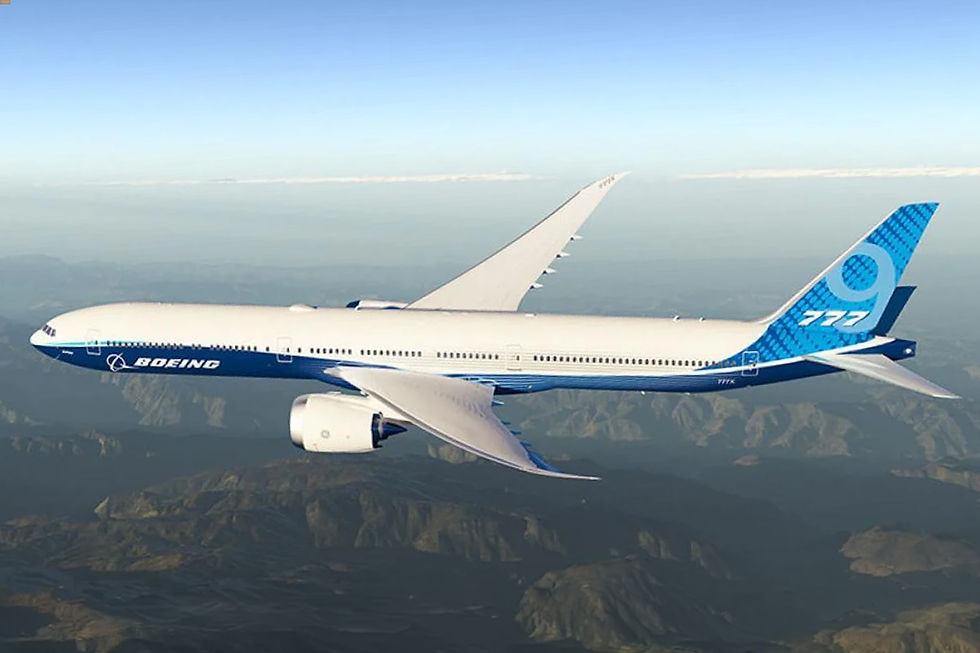
So, while Airbus engineers were watching MSN700 rotate from the runway at Toulouse, the A350F achieved something its principal future rival has yet to do: it flew.
That doesn't automatically make Airbus the winner – aircraft programmes have an unfortunate habit of punishing anyone who celebrates too early – but it does give Toulouse something useful to talk about while Seattle continues working through the 777X certification programme. At this stage Boeing could probably produce a very respectable coffee-table book entitled Dates We Once Had in Mind, although one suspects airline customers would prefer aeroplanes.
To be fair, Airbus has hardly operated according to Swiss railway timetables either. The A350F programme has experienced schedule movement of its own, and certification remains a substantial undertaking. Airbus is aiming for certification and first customer deliveries in the second half of 2027, which means plenty still has to go right before anyone starts loading pallets aboard revenue flights. A successful maiden flight is an important milestone, but it is not a type certificate.
A Freighter Battle Worth Watching
The market clearly believes both manufacturers have something worth waiting for. Airbus reported that, by the end of August 2026, the A350F had accumulated 115 orders from 14 disclosed customers, with the manufacturer claiming as much as 59% of the large-freighter market. Boeing, meanwhile, continues selling the 777-8F despite its later arrival, demonstrating the extraordinary strength of Boeing's reputation and installed customer base in global cargo operations.
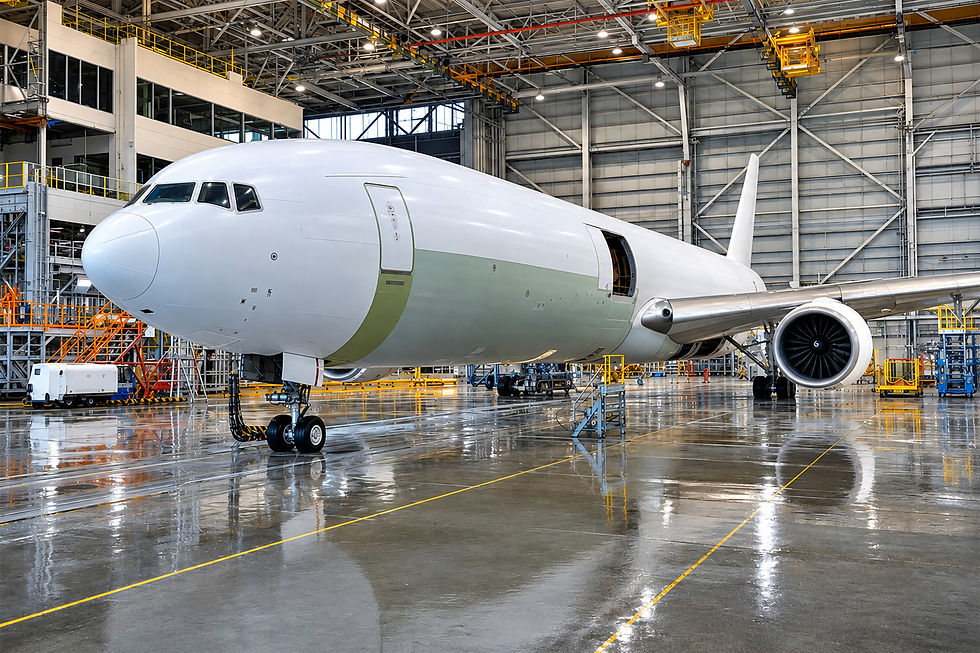
For cargo operators, the competition is excellent news. The next generation of large twin-engine freighters promises to replace increasingly elderly four-engine aircraft and eventually supplement or replace today's highly successful 777F fleets with aircraft designed around significantly improved efficiency. Airbus has the A350F; Boeing has the 777-8F. Both manufacturers are chasing many of the same operators, and those operators will be looking very carefully at payload, cargo volume, range, airport compatibility, acquisition cost, maintenance requirements and, perhaps, most importantly, delivery slots.
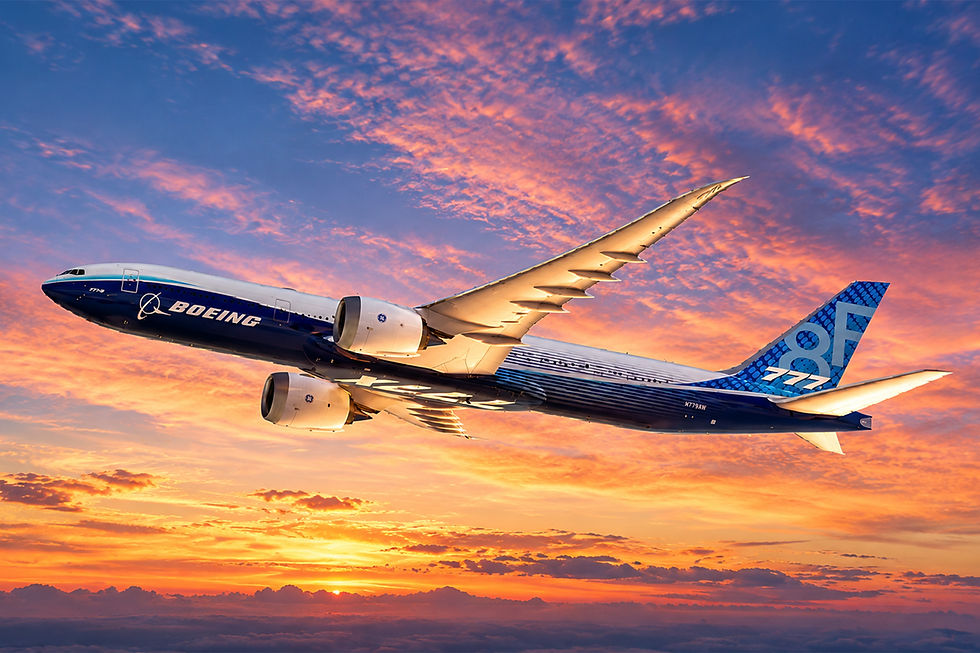
For South Africa, the development is worth watching even if neither aircraft immediately appears in local colours. South Africa sits at the end of some very long international cargo sectors, where range, payload and fuel efficiency matter enormously. Johannesburg's altitude adds another complication to aircraft performance, making the capabilities of the next generation of widebody freighters particularly relevant to operators serving Southern Africa. The A350F and 777-8F could therefore eventually become familiar visitors to O.R. Tambo as international cargo fleets are renewed.

For now, however, Airbus gets to enjoy the moment. Five years after launching the A350F programme, its big new freighter has finally left the ground under its own power, completed more than four hours of testing and returned safely to Toulouse. There are hundreds of flight-test hours still ahead, mountains of certification paperwork to complete and countless opportunities for engineers to discover that an aircraft component costing several hundred thousand euros has developed an unexpected dislike for a particular temperature.
But the A350F is flying - The Boeing 777-8F isn't – yet.

In an industry where manufacturers can produce all the promising presentations, artist impressions and carefully worded delivery forecasts they like, there eventually comes a wonderfully simple test of progress: Does the aeroplane actually exist, and has someone flown it?
As of 29 September 2026, Airbus can tick both boxes.
Boeing still has one of them waiting for a tick.





Comments