




FLYFOFA: The Teflon Company
By Garth Calitz
Nothing sticks — not controversy, not court cases, not government investigations. Apparently, not even R85 million.
There are companies that occasionally have a bad experience with a government tender. There are companies that have an unfortunate contract dispute. There are companies that discover, usually to their considerable annoyance, that regulators actually read the paperwork.
And then there is Flyfofa.
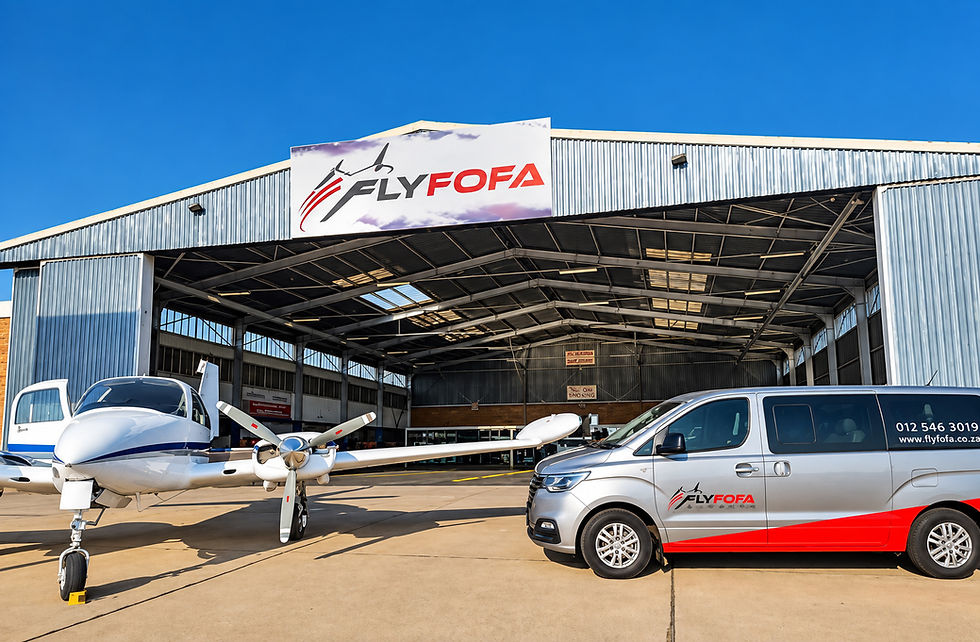
We have all heard some details about the many isolated cases, but I decided to compile them into one article. Unfortunately, the pattern that emerges is concerning, and I, for one, do not believe in coincidence.
Since being established in November 2013, Flyfofa has built a rather unusual history in South African aviation. Its name has appeared in disputes and controversies involving government tenders, aeromedical services, aviation certification, state-owned airlines, aircraft leases and more recently, a R148 million National Skills Fund aviation-training programme.
There have been investigations. There have been court cases. There have been government findings. There have been allegations. There have been contracts that ended up being declared invalid or unlawful. And yet, remarkably, Flyfofa keeps flying.
It is difficult not to admire the sheer durability of the business model. In aviation, we have composites, titanium, carbon fibre and increasingly sophisticated alloys designed to withstand enormous punishment. Flyfofa appears to have gone one better.
Teflon. Nothing seems to stick.
Before anybody reaches for the lawyers, however, let's get one thing straight. Not every allegation made against Flyfofa has been proven. A government procurement process being declared unlawful does not automatically mean the contractor committed a crime. A reported discrepancy does not automatically equal fraud. A controversial tender does not, by itself, establish corruption. Flightline Weekly is perfectly happy to distinguish between an allegation and a finding.
Unfortunately, that distinction doesn't make the history any less interesting. If anything, it makes it more interesting. Because when the same name keeps appearing in government procurement stories over more than a decade, eventually someone has to ask: What exactly is going on here?
2013: THE STORY TAKES OFF
Flyfofa Airways and Flyfofa Aviation Training were incorporated on 28 November 2013. At this point, there was nothing particularly remarkable about the company. South Africa needs aviation businesses. Airlines need aircraft. Training organisations need students. Government needs services. Everybody needs somebody to send an invoice to.
Simple.
But within roughly two years of its establishment, Flyfofa would find itself at the centre of a controversial national aeromedical tender. And that was where the Teflon story began to develop its first layer.
2015: THE AEROMEDICAL TENDER
Flyfofa won portions of the RT-79 national aeromedical services tender, involving fixed-wing air ambulance and outreach services in the Northern Cape and KwaZulu-Natal.
Almost immediately, questions were raised about the award. A detailed Spotlight investigation reported concerns from competitors about Flyfofa's ability to provide the required services. The publication also reported questions surrounding the backgrounds of senior Flyfofa personnel and the circumstances surrounding its newly issued Air Operator Certificate.
SACAA confirmed that irregularities had occurred concerning the issuance of Flyfofa's AOC in January 2015, although the authority confidently stated that the previous employment of Flyfofa executive Thabo Fisha at SACAA was not connected to his dismissal from the authority.
And then came the procurement problem.
Treasury later cancelled the RT-79 tender, saying the evaluation was based on criteria not included in the tender documents. Flyfofa was not found guilty of corruption over the affair. But for a company barely two years old, having its name attached to a cancelled national tender and questions about aviation certification was hardly an ideal opening chapter.
Still, the company carried on. First layer of Teflon applied.
2017: SA EXPRESS JOINS THE STORY
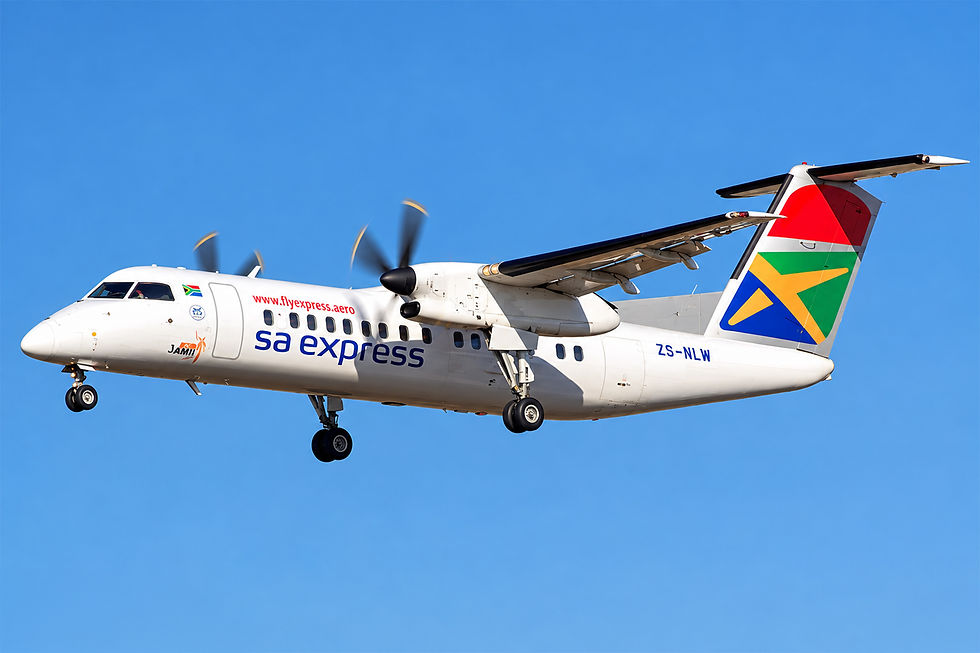
Next came South African Express. Flyfofa entered into aircraft leasing arrangements with the state-owned airline. In 2017, SA Express entered into a further lease agreement with Flyfofa. Then the lawyers arrived.
SA Express challenged the agreement in the High Court, arguing that the procurement process had not complied with constitutional and PFMA requirements. The court ultimately declared the agreement invalid. Again, this isn't a finding that Flyfofa committed a criminal offence. The procurement process was the state-owned airline's responsibility.
But it does mean another Flyfofa government contract ended up in court and was declared invalid. For most businesses, that might be enough excitement for one decade. Flyfofa, however, apparently had other plans.
Second layer of Teflon applied.
2019: THEN CAME SAA
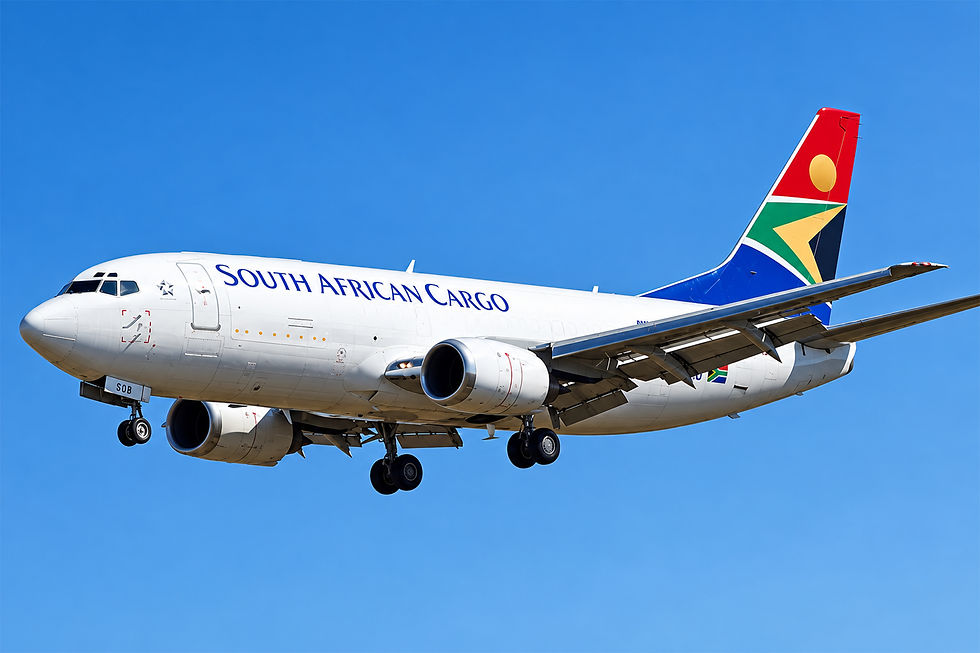
If SA Express wasn't enough, there was always its much larger sibling. South African Airways. Flyfofa became involved in arrangements to provide Boeing 737-300 freighters to SAA. The aircraft were used in SAA's cargo operation, and the original arrangement was subsequently followed by another contract.
This is where the story eventually became considerably more expensive. Because the number attached to the next chapter was R85,340,863, That's not a typo; that's R85.34 million.
THE R85 MILLION CONTRACT
In July 2019, SAA and Flyfofa entered into a 36-month dry-lease arrangement involving a Boeing 737-300 freighter. According to the Special Investigating Unit, the agreement was concluded without the competitive procurement process required under the circumstances and without the necessary National Treasury approval for a deviation. The SIU took the matter to the Special Tribunal.
In September 2026, the Tribunal found the SAA decision unlawful and set the agreement aside. Now we're no longer talking about an old newspaper allegation. We're talking about a judicial finding. The Tribunal also ordered Flyfofa to provide an accounting of money received from SAA and the costs incurred in performing the agreement. If the accounting establishes profits or unjustified enrichment that must be recovered, the SIU intends to pursue that money, together with interest.
This is the part of the story where the Teflon coating should theoretically begin to look a little nervous.
But wait. There's another aircraft involved.
THE AIRCRAFT THAT WASN'T FLYING
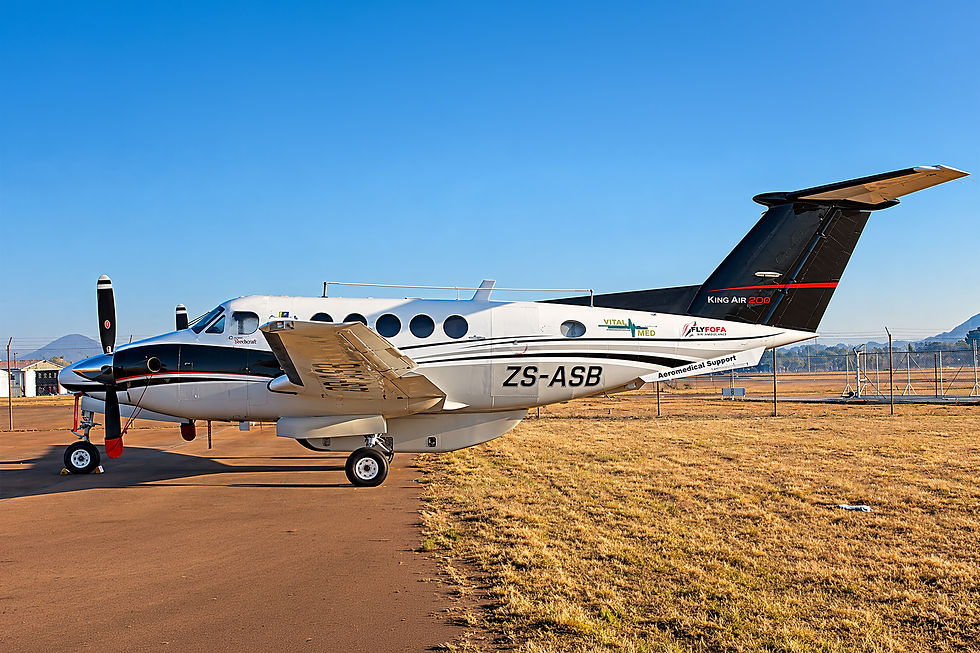
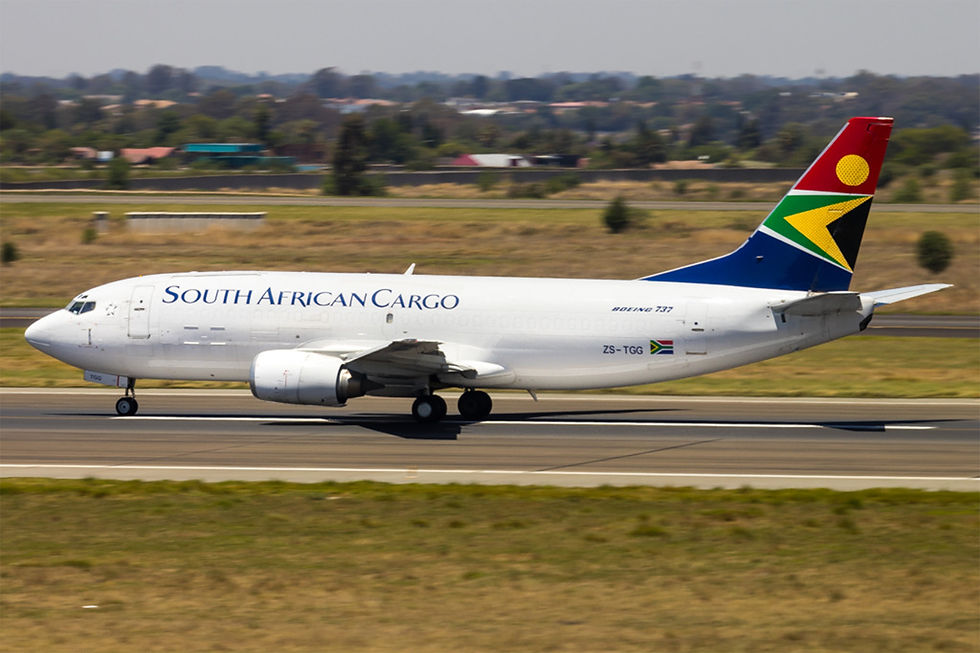
One of the aircraft involved, ZS-TGG, had been grounded from December 2018 until August 2019. The court proceedings examined the arrangements surrounding the aircraft, including the use of a substitute aircraft and payments made under the agreement. The Tribunal has now ordered the detailed accounting.
In other words:
Show us the money.
Or, more accurately:
Show us where the money went.
This is generally the point in an aviation story where somebody starts checking the maintenance logs, the journey logs and the financial statements at the same time. The SIU has said it is pursuing the recovery of profits made under the unlawful agreement. And yet, once again, Flyfofa remains airborne.
Third layer of Teflon applied.
THEN ALONG CAME R148 MILLION
Surely, by now, somebody must have thought: "Perhaps we should keep an eye on this one." Apparently not.
Enter the National Skills Fund.
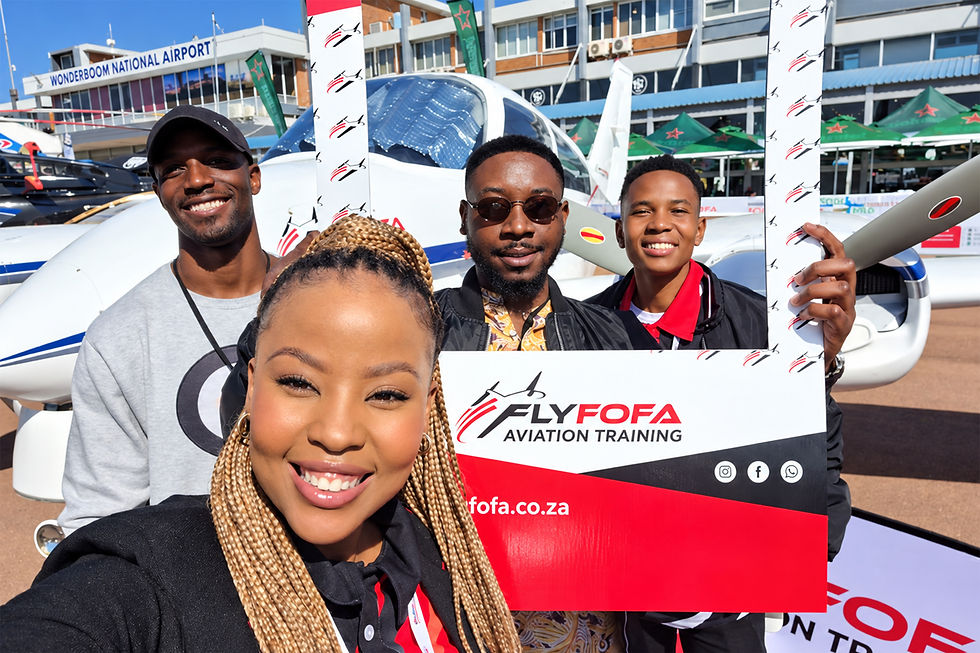
Flyfofa Aviation Training became involved in a government-funded aviation training programme worth approximately R148 million, intended to train hundreds of learners. On paper, it was a fantastic idea; South Africa needs pilots. South Africa needs aviation technicians and other aviation professionals. Young people need opportunities. The aviation industry needs skilled personnel.
It was exactly the kind of programme that should make everyone feel good about the future.
Then the paperwork started.
The NSF raised concerns regarding contractual compliance, training verification, expenditure and supporting documentation. Eventually, the government pulled the plug. In August 2026, the NSF terminated its agreement with Flyfofa Aviation, citing persistent contractual non-compliance.
The NSF also stressed that the students themselves were not responsible and that steps were being taken to protect their training. This is where the story stops being merely entertaining. For the students involved, this wasn't a procurement dispute; it was their careers. They signed up to learn to fly, instead, they found themselves caught in a dispute over contracts, funding and compliance. That is not exactly the sort of turbulence anybody ordered.

THE R3.88 MILLION FLYING-HOUR QUESTION
Then came another uncomfortable figure. According to investigative reporting by amaBhungane, the NSF compared flying hours claimed by Flyfofa Aviation Training with the hours recorded in students' logbooks. The reported discrepancy was approximately R3.88 million.
AmaBhungane reported that the NSF had raised concerns over the discrepancy and that credit notes were subsequently issued. There were also reports concerning approximately R13 million paid to two companies associated with the Flyfofa principals.
Those matters are serious. But again, they must be described accurately. They are reported allegations and government compliance concerns. They are not a criminal conviction.
Flightline Weekly isn't going to invent one. We don't need to.
The documented history is already remarkable enough.
Fourth layer of Teflon applied.
THE FLYFOFA FILE
So let's put it all together.
2013 - Flyfofa Airways and Flyfofa Aviation Training established.
2015 - Flyfofa wins components of the RT-79 aeromedical tender.
2015 - Questions emerge regarding the tender and aviation certification.
2016 - RT-79 tender cancelled.
2017 - Flyfofa becomes involved in aircraft leasing arrangements with SA Express.
2019 - High Court declares the SA Express second lease agreement invalid.
2019 - SAA enters the R85.34 million Flyfofa dry-lease arrangement.
2026 - Special Tribunal declares the SAA agreement unlawful and orders an accounting.
2026 - National Skills Fund terminates the R148 million training programme over persistent contractual non-compliance.
2026 - Reported discrepancies emerge concerning flying hours and other payments.
And somehow...
Flyfofa is still flying.
THE TEFLON COMPANY
Perhaps we've been looking at this completely the wrong way. Maybe Flyfofa isn't controversial. Maybe Flyfofa is simply exceptionally unlucky. Perhaps every government department involved just happens to have procurement problems at precisely the wrong time. Perhaps every court case is simply a misunderstanding. Perhaps every investigation is a coincidence. Perhaps every government contract that ends up being challenged was somebody else's fault. And perhaps the Teflon is not on Flyfofa at all.
Perhaps the Teflon is on the South African procurement system.
Because there is something almost reassuringly predictable about the sequence.
A contract appears.
Questions are raised.
Someone investigates.
Lawyers arrive.
Government discovers procurement regulations.
A court becomes involved.
The contract gets declared invalid or unlawful.
Somebody promises to recover money.
And eventually...
Flyfofa is still standing at the gate. Ready for the next departure.
Let's be clear.
Flyfofa has not been found guilty of every allegation ever made against it. The company should not be accused of criminal conduct where none has been established. But neither should the documented record simply be waved away.
A High Court declared a Flyfofa-related SA Express agreement invalid. A Special Tribunal has declared the R85.34 million SAA arrangement unlawful. That Tribunal has ordered an accounting which could result in recovery of profits or unjustified enrichment. The National Skills Fund terminated a R148 million training contract over what it described as persistent contractual non-compliance.
And surrounding those confirmed events is a decade-long trail of reported allegations, regulatory questions and procurement controversies.
That is not a verdict.
It is a history.
And it raises a perfectly legitimate question:
Why does Flyfofa keep finding itself back at the procurement gate?
Because perhaps we've been asking the wrong question.
"Why does the state keep creating situations in which Flyfofa ends up receiving public-sector contracts in the first place?"
Now that is a question worth asking.
And somewhere in South Africa, presumably, another procurement committee is sitting around a table.
There will be coffee.
There will be PowerPoint presentations.
There will be spreadsheets.
There will probably be somebody saying:
"Don't worry, we've checked everything this time."
And perhaps there will be a familiar name on the agenda.
Flyfofa.
Because apparently, when you've survived one procurement controversy, one court case, another state-owned airline, an R85 million contract declared unlawful, a government investigation and a R148 million training programme terminated for non-compliance... You don't necessarily get grounded.
You just get another coat of Teflon.
Nothing sticks. Not controversy. Not investigations. Not court cases. Apparently, not even R85 million.
One can't help thinking of a combat zone term: Is there Top Cover involved somewhere?





Comments