


Reported Drone Strike at JFK Highlights Continuing Risks to Commercial Aviation
- Jul 1
- 4 min read
By Garth Calitz
A reported mid-air collision between a JetBlue Airbus A321 and an unidentified drone during approach to New York's John F. Kennedy International Airport has once again drawn attention to the growing challenge that unmanned aircraft systems pose to commercial aviation.

The incident occurred on 29 June when JetBlue Flight 948, operating from Harry Reid International Airport to JFK, reported what the flight crew believed was a collision with a drone while descending through approximately 3,000 feet during the final stages of the approach. Despite the reported impact, the aircraft continued its approach and landed safely without requiring emergency assistance. Passengers disembarked normally following arrival.
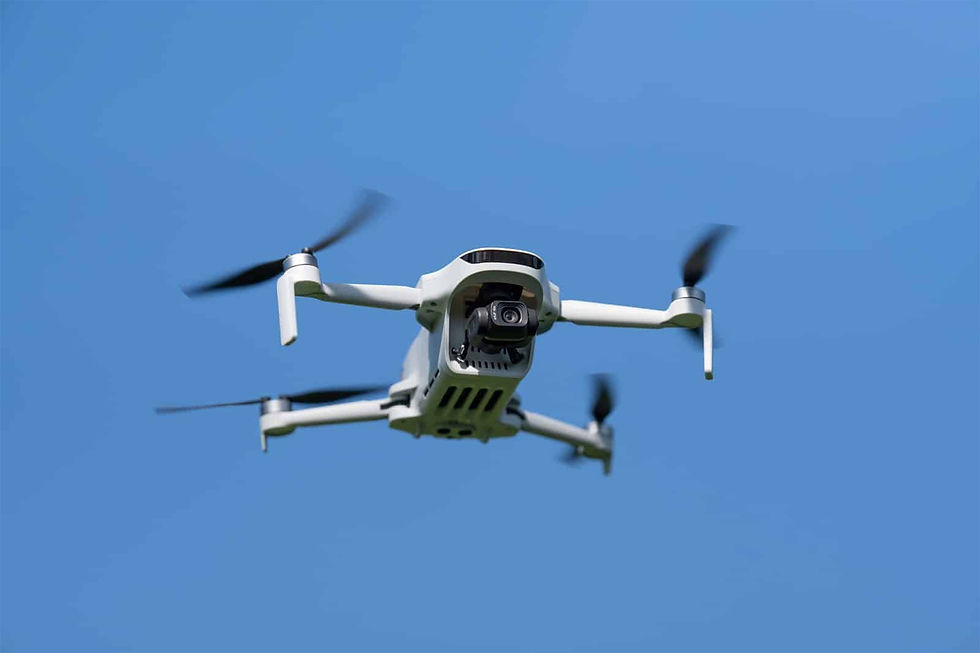
Following standard safety procedures, JetBlue removed the aircraft from service to conduct a detailed post-flight inspection. According to the airline, maintenance personnel found no visible damage or physical evidence indicating that the aircraft had struck a drone. The incident nevertheless remains under investigation by the Federal Aviation Administration, which will seek to determine what object, if any, was encountered during the approach.

Although no damage was ultimately identified, the event demonstrates the importance aviation authorities place on pilot reports involving potential drone encounters. According to air traffic control communications, the flight crew advised controllers that they believed a drone had struck the aircraft above the cockpit while the aircraft was turning onto its final approach. Such reports automatically trigger safety protocols and maintenance inspections, regardless of whether physical evidence is immediately apparent.

South Africa has experienced a rapid increase in drone ownership over the past decade, driven by applications ranging from aerial photography and surveying to agriculture, infrastructure inspection and security. While the majority of drone operators comply with regulations issued by the South African Civil Aviation Authority, unauthorised flights near airports continue to concern aviation authorities.
Under South African regulations, remotely piloted aircraft may not be operated within 10 kilometres of an airport without the necessary approvals, and commercial operators are required to hold a Remote Pilot Licence (RPL) and operate under an approved Remote Operating Certificate (ROC). To confirm whether a specific area, such as your house or a park, falls within the 10 km restricted zone of a nearby airport, you can verify your flight coordinates using the Drone Map v2.0 tool.

The growing popularity of drones has prompted airports and air navigation service providers to examine additional measures to protect controlled airspace. Major gateways such as O. R. Tambo International Airport, Cape Town International Airport and King Shaka International Airport rely on strict regulatory controls and pilot reporting to minimise the risk of drone incursions. As South Africa's commercial drone industry continues to expand, investment in drone detection systems, operator education and effective enforcement will become increasingly important to ensure that the country's busy air transport network can safely coexist with unmanned aircraft operations.

While bird strikes remain one of aviation's most common wildlife hazards, drones present a fundamentally different risk profile. Commercial aircraft are certificated to withstand impacts with birds of specified sizes, with certification standards based largely on the fact that birds consist primarily of soft tissue. Consumer and commercial drones, however, incorporate rigid materials including aluminium, high-strength plastics, electric motors, cameras, electronic circuitry and lithium-ion batteries.

These components have the potential to produce impact characteristics very different from those associated with bird strikes. Depending on the size of the drone and the point of impact, damage could range from superficial structural dents requiring inspection to more significant consequences involving cockpit windows, flight control surfaces, navigation sensors or engine components. The presence of lithium-ion batteries introduces an additional consideration, as damaged batteries may present thermal runaway or fire risks that are not typically associated with wildlife strikes.
Drone encounters are particularly concerning during take-off and landing, when aircraft operate at relatively low altitudes and flight crews have limited time to respond to unexpected events.
Potential hazards include:
Damage to cockpit windscreens, affecting pilot visibility.
Engine ingestion of rigid drone components.
Damage to leading edges, slats or flaps.
Impacts to pitot tubes, antennas or other critical sensors.
Fire hazards associated with lithium-ion batteries.
Increased cockpit workload and potential disruption to air traffic operations.
Even when no physical damage occurs, reports of drone activity often result in operational delays while authorities assess the situation and determine whether other aircraft may be affected.

The JetBlue incident follows a series of recent drone encounters involving commercial aircraft in the United States, highlighting what appears to be an increasing challenge for aviation authorities. Just days before the JFK event, the crew of a United Airlines Boeing 737 approaching Newark Liberty International Airport reported a near miss with an unauthorised drone that passed an estimated 100 feet below the aircraft while it was descending through approximately 2,000 feet. The flight landed safely, but the FAA opened an investigation into the incident, reinforcing concerns about drones operating well above their permitted altitudes and within controlled airspace.

Although confirmed collisions between drones and commercial aircraft are exceedingly rare, reports of drone sightings continue to occur frequently and are a cause for concern. Encounters with drones reported by airlines, airports, and regulators highlight the necessity for ongoing investment in counter-drone technologies and enhanced airspace management. Numerous major international airports are assessing or implementing systems that can detect, identify, and track unauthorised drones operating near flight paths. These technologies are anticipated to become increasingly crucial as drone operations extend beyond recreational use to include commercial delivery, infrastructure inspection, and urban air mobility applications.









The controls in Drive Mad feel responsive, and restarting a failed level is fast enough that I kept playing longer than expected.