


Falcon 10X Composite Wing Marks New Era for Business Aviation

Dassault Aviation’s upcoming Falcon 10X is set to introduce a significant first for the business jet sector with the adoption of what the company says is business aviation’s first all-composite wing. The new ultra-long-range flagship, currently in development, is expected to combine advanced materials, aerodynamic efficiency and long-range capability in a move that could influence future aircraft design across the segment.

The Falcon 10X was launched as Dassault’s answer to growing demand for larger, longer-range business jets capable of linking major global city pairs nonstop while offering greater cabin comfort and lower operating costs. At the centre of that strategy is the aircraft’s new carbon-fibre composite wing, developed to deliver both structural and aerodynamic advantages.

Composite materials have become increasingly common in commercial airliners and military aircraft over the past two decades, but their use in purpose-built business jets has remained more limited. By using carbon-fibre structures instead of conventional aluminium, manufacturers can reduce weight while maintaining high strength and durability. Composite components are also more resistant to corrosion and metal fatigue, factors that can reduce long-term maintenance requirements.

For operators, those benefits can translate into improved fuel efficiency, greater payload flexibility and lower lifecycle costs. In an era where fuel prices and sustainability targets remain key concerns, the shift to lighter structures is becoming an increasingly important part of aircraft design.

Dassault says the Falcon 10X wing has been engineered with a high aspect ratio and advanced sweep profile to maximise cruise efficiency while retaining the low-speed handling characteristics for which the Falcon family is known. The aircraft will also feature sophisticated high-lift devices, including slats and flaps, aimed at improving take-off and landing performance. That combination is intended to provide the 10X-strong runway flexibility while preserving long-range cruise performance. Dassault has historically marketed its business jets on the ability to operate from shorter runways than some competitors, opening access to airports closer to final destinations.

The Falcon 10X is projected to have a range of approximately 7,500 nautical miles and a maximum operating speed of Mach 0.925. If achieved, those figures would place it among the leading aircraft in the ultra-long-range business jet category, competing directly with flagship models such as the Bombardier Global 7500 and Gulfstream G700.

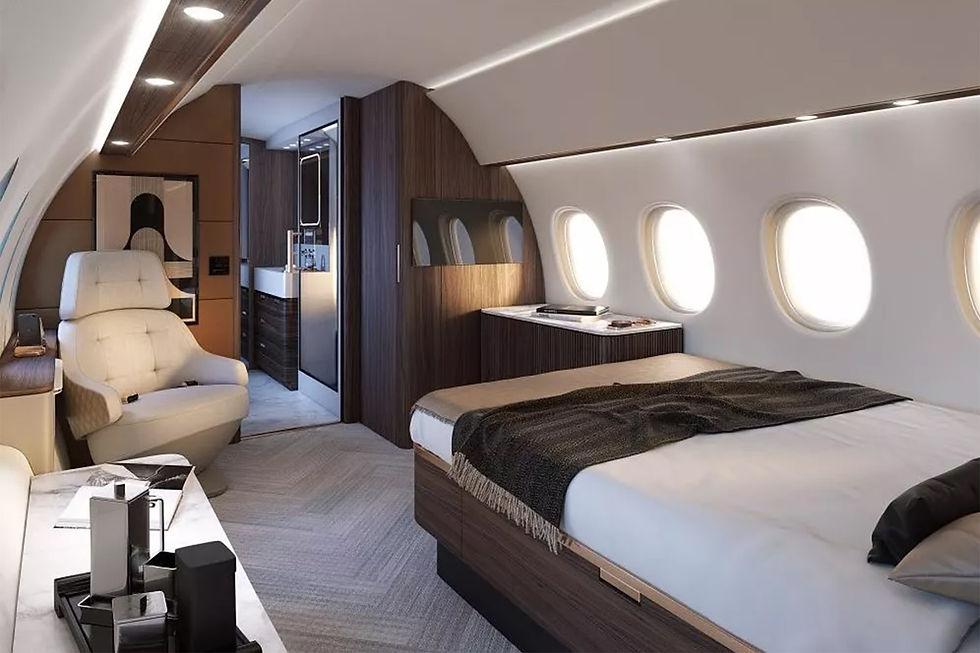
Beyond performance figures, the aircraft is also being positioned as a cabin leader. Dassault has announced a spacious interior with stand-up height throughout the cabin, multiple lounge and sleeping configurations, and large windows designed to maximise natural light. Advanced cabin pressurisation and air filtration systems are also expected to feature prominently.

However, the composite wing remains one of the programme’s most strategically important innovations. It allows a larger aircraft to offset the weight penalties typically associated with bigger cabins and higher fuel loads. That can help preserve efficiency while supporting the long-range missions expected by top-tier business aviation customers.
Industry analysts see the move as part of a broader trend in private aviation, where technologies pioneered in the airline and defence sectors are being adapted for premium business jets. As competition intensifies in the upper end of the market, manufacturers are increasingly relying on new materials, digital flight systems and aerodynamic refinements to differentiate their products.

The Falcon 10X represents more than a new model. It is a statement of intent in one of aviation’s most competitive niches. By combining long-range capability, large-cabin comfort and a next-generation composite wing, the French manufacturer is seeking to strengthen its position against established rivals.

With certification and entry into service still ahead, the industry will be watching closely to see whether the Falcon 10X delivers on its ambitious promises. If successful, its all-composite wing may prove to be one of the most influential design steps yet seen in business aviation.





Business development helps a company find new customers, build strong partnerships, and create steady growth. It includes finding useful opportunities, understanding customer needs, and building relationships that can support future sales. A company may also improve its services, enter new markets, or work with other businesses to reach more people. For example, prosper llc can focus on building clear plans, connecting with the right partners, and creating services that meet customer needs. A simple and consistent approach can help a business grow while keeping customer relationships strong.
thank u, i like play snow rider