


The Tiger Mk III Upgrade for Modern Combat Operations

Airbus Helicopters is advancing development of the Tiger Mk III, a major mid-life upgrade programme designed to ensure the Tiger attack helicopter remains capable of meeting the demands of future high-intensity combat operations. Developed through cooperation between France and Spain, the programme combines new avionics, sensors, communications systems and weapon capabilities with the proven performance of the existing Tiger platform.

Launched in 2022 under the auspices of the Joint Organisation for Armament Cooperation (OCCAR), the Tiger Mk III programme represents one of Europe’s most significant rotorcraft modernisation efforts. The upgrade is intended to extend the operational life of the Tiger fleet for decades while enhancing its effectiveness on increasingly digitalised and contested battlefields.

According to Airbus Helicopters, the programme focuses on retaining the Tiger’s established strengths, including its agility, survivability and low-signature characteristics, while integrating advanced technologies required for modern warfare.

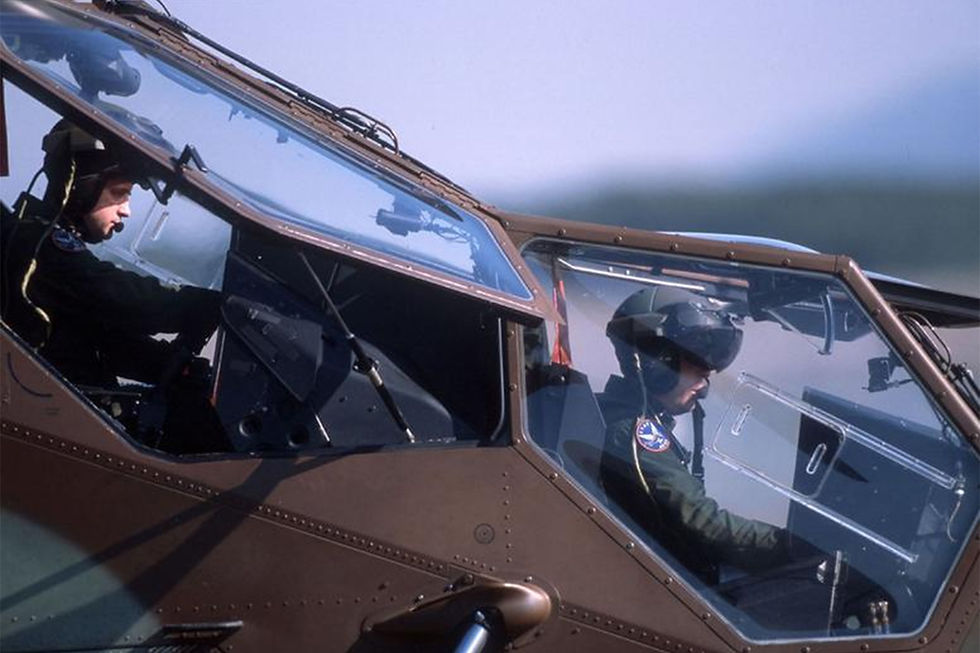
A central element of the upgrade is the introduction of a completely new digital avionics architecture. The helicopter will receive a modernised cockpit featuring touchscreen displays, an upgraded digital helmet system and enhanced mission management capabilities. The aircraft’s wiring infrastructure is also being extensively redesigned to support higher data throughput and increased communication capacity.

The Tiger Mk III will also benefit from new-generation sensors and targeting systems. Among the key additions is the Euroflir 510 optronic sight, which offers improved detection, identification and targeting performance at greater distances. These enhancements are intended to allow crews to identify threats earlier and engage targets more effectively while remaining outside hostile engagement zones.

The programme places significant emphasis on networked operations and interoperability. Future Tiger Mk III helicopters are expected to operate more closely with unmanned systems, including drones, enabling the exchange of tactical information and supporting coordinated battlefield operations. Such capabilities are increasingly viewed as essential for modern military forces operating in complex and rapidly evolving environments.

Crew workload reduction is another major objective of the upgrade. Advanced avionics and automation are expected to simplify many mission-management tasks, allowing pilots and weapon system operators to focus more effectively on tactical decision-making during combat operations. Enhanced infrared sensors and improved targeting systems will further increase situational awareness while reducing exposure to threats.
The expanded weapons capability planned for the Mk III configuration is intended to improve operational flexibility and provide greater stand-off engagement options. By enabling attacks from longer distances, the helicopter can reduce the risk to both crew and aircraft when operating in heavily defended areas.

The development of the programme has recently passed several important milestones. Airbus Helicopters has introduced a dedicated ground-test platform, often referred to as “helicopter zero,” which is being used to validate the integration of the new systems before flight testing begins. The first flight of the Tiger Mk III demonstrator is targeted as a key programme milestone.
Beyond the immediate improvements, Airbus Helicopters has designed the Mk III with future growth in mind. The new avionics architecture is intended to be modular and scalable, allowing operators to incorporate additional capabilities and upgrades as technologies and mission requirements evolve.

For France and Spain, the programme represents not only a capability enhancement but also a demonstration of European defence cooperation. By pooling resources and expertise, both nations aim to deliver a modern combat helicopter that will remain operationally relevant well into the coming decades.

As military forces worldwide continue to adapt to emerging threats and increasingly interconnected battlefields, the Tiger Mk III programme highlights the growing importance of modernisation initiatives that combine proven platforms with next-generation technologies. The result is expected to be a more capable, more connected, and more survivable attack helicopter, prepared for the challenges of future warfare.





Comments