





The Enduring Legacy of the PZL Wilga: A Look Back 64 Years Later
By Garth Calitz

Sixty-four years ago, on 24 April 1962, one of the most distinctive utility aircraft ever built took to the skies for the first time. That aircraft was the PZL-104 Wilga, a rugged Polish design that would go on to earn an enduring reputation for toughness, versatility and outstanding short take-off and landing performance. As the Wilga marks the 64th anniversary of its maiden flight in 2026, it remains one of the most recognisable and respected light aircraft to emerge from Eastern Europe.

The Wilga was developed during a period when Poland’s aviation industry was focused on producing practical aircraft capable of operating in demanding conditions. Large parts of the country relied on grass airstrips and rural landing areas rather than paved runways, creating a need for an aeroplane that could operate safely from short, uneven surfaces while carrying passengers, cargo or towing gliders. Designers at Polish manufacturer PZL set out to create a machine that could meet those requirements while also serving aero clubs, agricultural operators and state organisations.

The result was the Wilga, named after the Eurasian Golden Oriole. Its prototype, powered by a 134kW Narkiewicz WN-6 flat-six engine, flew on 24 April 1962, beginning a story that would span decades of production and use around the world. While the prototype demonstrated promise, it also revealed shortcomings that required refinement. Engineers continued to improve the design, reshaping the fuselage, reducing weight, and enhancing visibility from the cockpit. These changes were especially important for glider towing, where pilots needed clear sightlines and stable low-speed handling.

From the beginning, the Wilga stood apart visually from most aircraft of its era. It featured a high-wing configuration that provided excellent downward visibility and improved access to rough strips. A wide-track fixed undercarriage gave it stability on uneven ground, while its spacious cabin and large glazed windows offered superb visibility for pilots and passengers alike. Its tailwheel layout, chunky landing gear, and purposeful lines made it clear that this was an aircraft built for work rather than style.

Perhaps the Wilga’s greatest strength was its ability to operate where many conventional aircraft could not. It quickly became known for impressive short take-off and landing capabilities, allowing it to depart from and arrive at compact grass fields, farm strips, and remote locations. This made it valuable in countries where aviation infrastructure was limited or where flexibility mattered more than speed.

Powerplant development played a major role in the Wilga’s evolution. Early versions used domestic engines, but later variants adopted the robust Ivchenko AI-14R nine-cylinder radial engine. Producing around 260 horsepower, the radial gave the aircraft strong climb performance. It also created the unmistakable sound and nose profile that many enthusiasts now associate with the Wilga. For countless pilots and spectators, the sight of a radial-engined Wilga lifting off a grass strip became an iconic part of club aviation life.

Over the years, the aircraft appeared in numerous variants. The Wilga 35 became one of the best-known production models and was widely used for sport aviation and utility work. Export versions followed, helping the aircraft reach markets beyond the Eastern Bloc. Later modernised versions introduced Western avionics and alternative engines, extending the design’s life well into the modern era.

Among the most significant late-generation developments was the Wilga 2000, created to bring the classic design into a new century. While retaining the Wilga’s proven airframe concept and renowned STOL performance, the Wilga 2000 introduced a more modern powerplant in the form of a horizontally opposed Lycoming Engines piston engine, replacing the older radial engine used on many earlier variants.

This change improved fuel efficiency, reduced maintenance complexity, and gave the aircraft a cleaner aerodynamic nose profile. The Wilga 2000 also benefited from updated avionics, improved systems, and refinements aimed at private owners and commercial operators seeking a rugged aircraft with modern supportability. It demonstrated that even decades after the original Wilga first flew, the basic concept remained highly relevant.

The Wilga 2000 became especially attractive to operators needing dependable performance from short and unprepared strips while preferring Western engine support networks and parts availability. Though produced in smaller numbers than earlier classic variants, it represented an important bridge between traditional utility aviation and contemporary light aircraft operations.
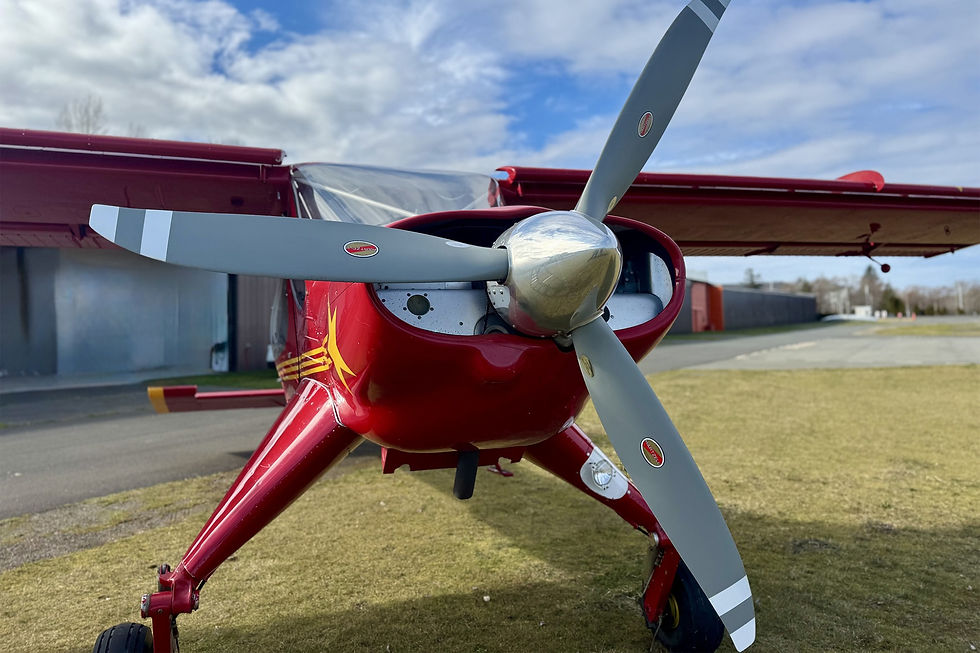
The Wilga’s enduring design also inspired one of the most famous experimental bush aircraft of modern times: Draco, created by American aviator and engineer Mike Patey. Built from a Wilga airframe, Draco was transformed into an extreme-performance backcountry aircraft intended to push STOL capability to remarkable levels.

Powered by a Pratt & Whitney PT6A turboprop engine producing far more power than the original piston-powered Wilga, Draco featured extensive structural and aerodynamic modifications. These included enlarged control surfaces, leading-edge slats, lightweight composite components, oversized tundra tyres, advanced avionics, and numerous custom engineering solutions. The result was an aircraft capable of astonishingly short take-offs, steep climbs, and operations from terrain that would challenge many purpose-built bush planes.

Draco became internationally known through online aviation videos and appearances at STOL competitions, where it demonstrated spectacular performance and showcased the adaptability of the Wilga platform. Although the original Draco was destroyed in an accident during landing in 2019, no one was seriously injured, and the aircraft’s legend only grew.

One of the Wilga’s most important roles throughout its life was glider towing. Across Europe and elsewhere, gliding clubs needed dependable tow aircraft able to accelerate quickly, climb strongly, and operate repeatedly throughout the day. The Wilga excelled in this environment. Its robust airframe could handle demanding daily cycles, while pilots appreciated its predictable handling and strong power reserve. For many glider pilots, their first solo soaring flights began behind a Wilga, climbing steadily into the sky.

Beyond gliding, the type proved equally adaptable. It served in parachuting operations, aerial observation, agricultural support, utility transport and bush flying. Some military and government users employed it for liaison and communications duties. In remote areas, its ability to carry people and supplies into short strips made it especially useful. Few light aircraft of its size demonstrated such a broad operational range.

Internationally, the Wilga developed a loyal following. It was exported to numerous countries and some were produced under licence overseas. Even after newer aircraft entered the market, many operators kept their Wilgas because of their simplicity, durability and relatively low operating costs. Mechanics valued their straightforward construction, while owners admired their ability to continue working hard in challenging environments.

Now, 64 years after that first flight, the Wilga occupies a respected place in aviation history. It may never have been the fastest, most luxurious or most elegant aircraft of its generation, but it succeeded brilliantly at what it was designed to do. It connected rural communities, supported soaring clubs, trained pilots, hauled loads and brought dependable performance to places where more delicate aircraft struggled.

Today, surviving Wilgas remain active in private ownership, museums, flying clubs and specialist operations. At fly-ins, the type still attracts attention with its unmistakable profile and capable handling. Pilots continue to celebrate its STOL performance and rugged character, while aviation historians recognise it as one of Poland’s most successful post-war aircraft designs.





What a fascinating overview of the PZL Wilga’s legacy! It reminds me of the precision and creativity found in games like Geometry Dash Subzero. Just as that game requires skillful navigation, the Wilga's design showcases ingenuity. Thank you for this insightful look back!