


Tanzania Allocates $109 Million to Accelerate Air Tanzania Expansion

The Tanzanian government has announced a major financial commitment to support the continued expansion and modernisation of Air Tanzania, allocating TZS283.05 billion (approximately $109 million) to the state-owned carrier in the country’s 2025/26 transport budget. The funding package reflects the government’s determination to transform Air Tanzania into a stronger regional and intercontinental operator while improving operational efficiency, infrastructure, and long-term financial sustainability.


Transport Minister Makame Mbarawa presented the budget proposals to parliament on 13 May, outlining a broad aviation development strategy centred around fleet expansion, maintenance capability improvements, and infrastructure upgrades. According to the budget documents, TZS185.32 billion ($71.5 million) has been allocated specifically for aircraft acquisitions, the procurement of spare engines, and the rehabilitation of the airline’s maintenance facilities. Another TZS97.73 billion ($37.5 million) will be directed toward operational support projects, including the construction of a new maintenance hangar, the development of cargo handling facilities, and the acquisition of advanced pilot training simulators to strengthen local training capacity.

The investment programme forms part of a wider government effort to position Tanzania as a more competitive aviation hub within East Africa. In addition to the airline-focused spending, the Ministry of Transport also confirmed that its priorities for the 2026/27 fiscal year include the construction of a new passenger terminal in Dar es Salaam with the capacity to handle approximately 2.5 million passengers annually. Authorities believe the planned infrastructure improvements will not only support Air Tanzania’s future growth but also enhance the country’s tourism, trade, and transport sectors by improving connectivity across Africa and beyond.

Government officials highlighted what they described as a significant turnaround at Air Tanzania since the launch of the airline’s revival programme in 2015. At the time, the carrier was operating with only a single aircraft and limited scheduled services. A decade later, the airline’s fleet has expanded to 16 aircraft, representing one of the most ambitious state-backed aviation recovery programmes on the African continent. The rapid growth has enabled the carrier to expand both domestically and internationally while re-establishing itself as a key component of Tanzania’s national transport infrastructure.

The airline’s passenger traffic figures illustrate the scale of the recovery. According to statistics presented to parliament, Air Tanzania carried just 107,166 passengers during the 2016/17 financial year. By the 2024/25 financial year, that figure had climbed to approximately 1.18 million passengers. Financial performance has also improved significantly during the same period, with annual revenues increasing from TZS23 billion to nearly TZS596 billion ($229.5 million). Foreign exchange earnings also rose dramatically, increasing from less than $10 million to more than $157 million, underlining the growing contribution of the airline to Tanzania’s broader economy and international trade activity.

The airline’s operational growth has continued into the current financial year. Between July 2025 and March 2026, Air Tanzania transported more than 1.07 million passengers, representing a year-on-year increase of over 22%. Cargo operations also recorded steady growth, with freight volumes reaching 4,129.7 tonnes during the same reporting period. The increase in cargo traffic reflects the airline’s expanding role in supporting regional logistics and export activity, particularly as Tanzania seeks to strengthen economic links with neighbouring countries and international markets.

Air Tanzania’s route network has expanded considerably alongside the fleet and passenger growth. The airline operated 23 service centres during the 2020/21 fiscal year, but by March 2026, that number had increased to 33. Its current network includes 16 domestic destinations, 14 regional destinations across Africa, and three intercontinental routes. The expanded network has improved connectivity throughout Tanzania while also strengthening links to key regional markets and international destinations, providing the airline with a broader operational footprint than at any other time in its history.

The recent changes in the governance of the airline include the appointment of new board members, aimed at steering the organisation towards improved financial and operational performance. These appointments are part of the broader restructuring efforts initiated by the Tanzanian government. Despite these positive developments, Tanzanian authorities have acknowledged that the airline continues to face significant financial and operational challenges, such as low capital levels, aircraft ownership structure and pressure on the balance sheet. Minister Mbarawa informed parliament that the government is in the process of finalising a restructuring initiative. This process is designed to improve the airline’s financial efficiency and create a sustainable operating model which will support future growth without excessive financial strain.
The airline’s recent recovery is particularly significant given the severe operational difficulties it experienced during the 2023/24 financial year. During that period, prolonged groundings of its Airbus A220 fleet caused by Pratt & Whitney PW1000 engine issues disrupted operations and reduced aircraft availability. Combined with unpaid lease obligations, rising operational costs, and maintenance expenses, the disruptions contributed to substantial losses estimated at TZS534 billion at the time. The crisis highlighted the vulnerabilities associated with fleet availability and financing structures, making the current recovery and expansion efforts especially important for the airline’s long-term stability.

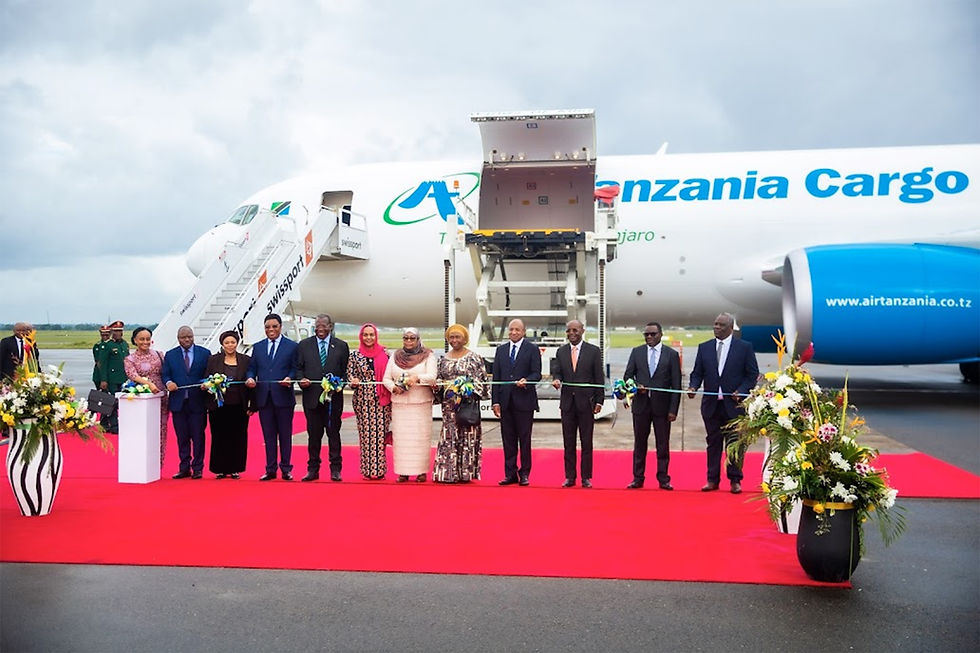
The airline currently operates four Airbus A220-300s, two Boeing 737 MAX 9 aircraft, three Boeing 787-8 Dreamliners, five De Havilland Canada Dash 8-Q400 turboprops, one Dash 8-Q300, and a Boeing 767-300 freighter. The diverse fleet allows the carrier to serve domestic, regional, and long-haul routes while supporting both passenger and cargo operations.
Air Tanzania is also continuing to pursue international expansion opportunities. Reports from Russia indicate that the airline plans to launch three weekly flights between Moscow Vnukovo and Dar es Salaam via Zanzibar from 28 May, although tickets had not yet gone on sale. The proposed route would represent another important step in the airline’s long-haul ambitions while strengthening tourism and business links between Tanzania and Russia.
In addition, the airline has reportedly explored the possibility of introducing fifth freedom services between Russia and the Seychelles on a proposed Dar es Salaam–Mahé–Moscow route. The discussions follow recent diplomatic engagements between Russian President Vladimir Putin and Seychellois President Patrick Herminie. Should the plans materialise, the services could further strengthen Air Tanzania’s international profile and create new opportunities for traffic growth across multiple markets.

With substantial government backing, ongoing infrastructure development, and a steadily expanding route network, Air Tanzania appears positioned to continue its transformation into a more prominent African carrier. While financial and operational challenges remain, the latest budget allocation signals strong government confidence in the airline’s long-term strategic importance and its role in supporting Tanzania’s broader economic and aviation ambitions.





Allegiant Air support is the main angle here because low-cost travel still depends on clear details around bags, seats, credits, refunds, boarding, cancellations, payment questions, and flight changes. Before booking, I would type how to contact allegiant air near the planning stage so I know where to go if a reservation detail needs attention or an add-on has to be reviewed. Airline expansion news is useful aviation context, but passengers usually care most about their own trip, their own confirmation, and the next clear step. I like keeping airline contact information ready in a calm way, not because I expect trouble, but because it makes travel planning feel more organized when timing, app access, or add-ons need a quick review.
Personal finance is about managing your money wisely so you can handle daily costs and prepare for future needs. Start by tracking your income, bills, savings, and regular spending. Creating a simple budget can help you avoid unnecessary purchases and keep more money available for important goals. Before paying for a product or service, checking howmuchdoesitcost.io can help you understand possible expenses. Setting aside money for emergencies, reducing debt, and saving regularly can also make your financial life easier and more organized.