




South Korea’s KF-21 Boramae Takes Flight Into the Real World
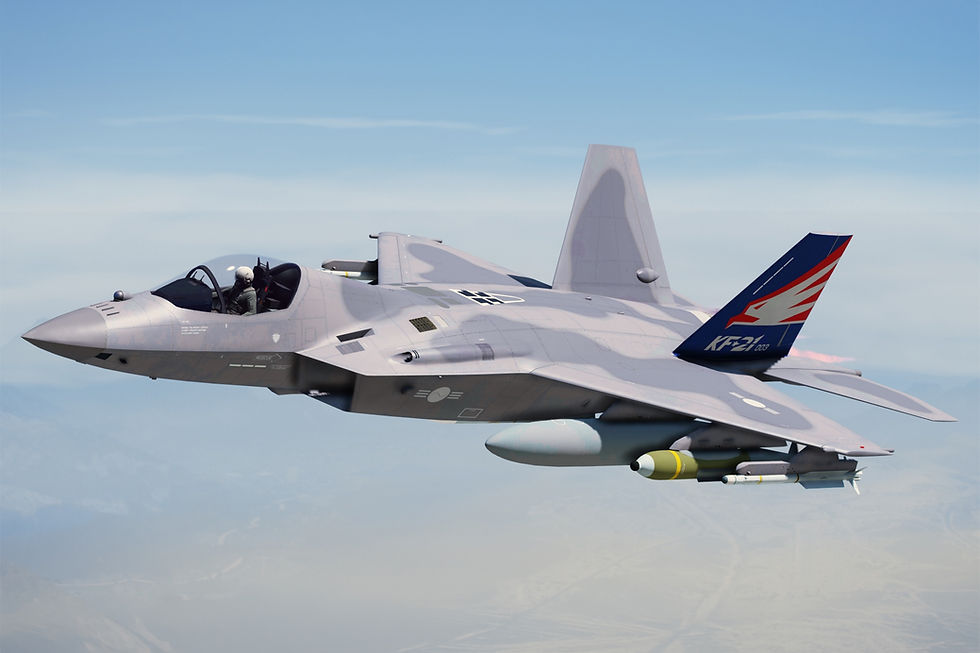
South Korea has taken a major step into the increasingly crowded world of indigenous fighter-aircraft development, with the Republic of Korea Air Force formally receiving its first production KF-21 Boramae on 22 September. The aircraft, serial 26-001, was accepted from Korea Aerospace Industries (KAI) at its Sacheon facility before being flown to Yecheon Air Base, marking the beginning of a new chapter for a programme that has taken more than a decade to reach this point.
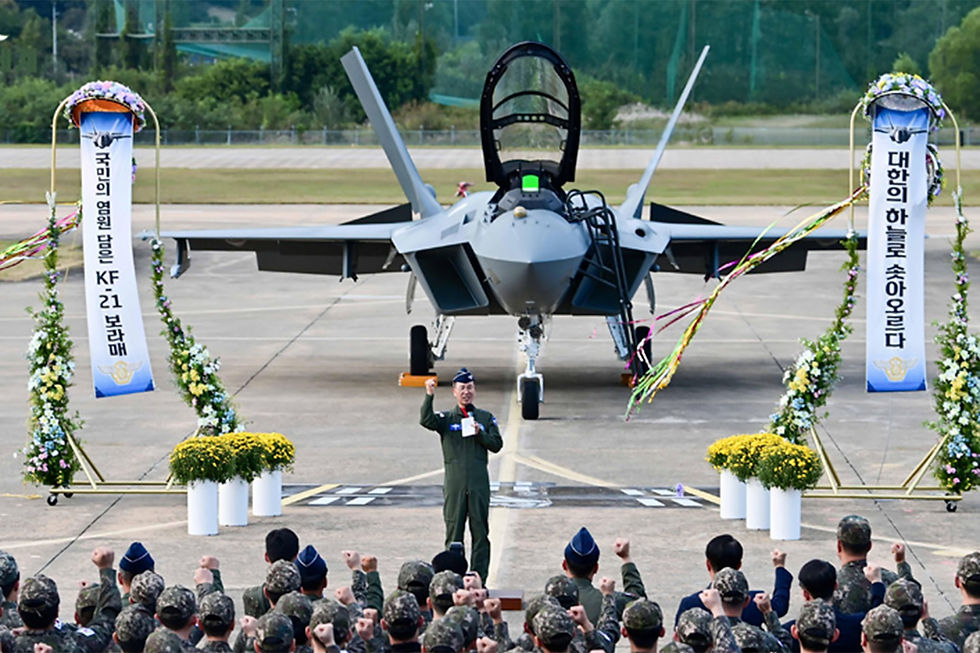
The arrival of the first production aircraft is significant, but there is an important distinction between delivery and operational service. The Republic of Korea Air Force will initially use the aircraft for pilot conversion, maintenance training and the establishment of operating procedures. South Korea says the KF-21 is expected to be formally declared operational in the second half of 2027, after the service has built up the necessary personnel, maintenance infrastructure and operational systems. So while the Boramae has officially joined the Air Force, it still has some homework to finish before it starts receiving the full operational workload.
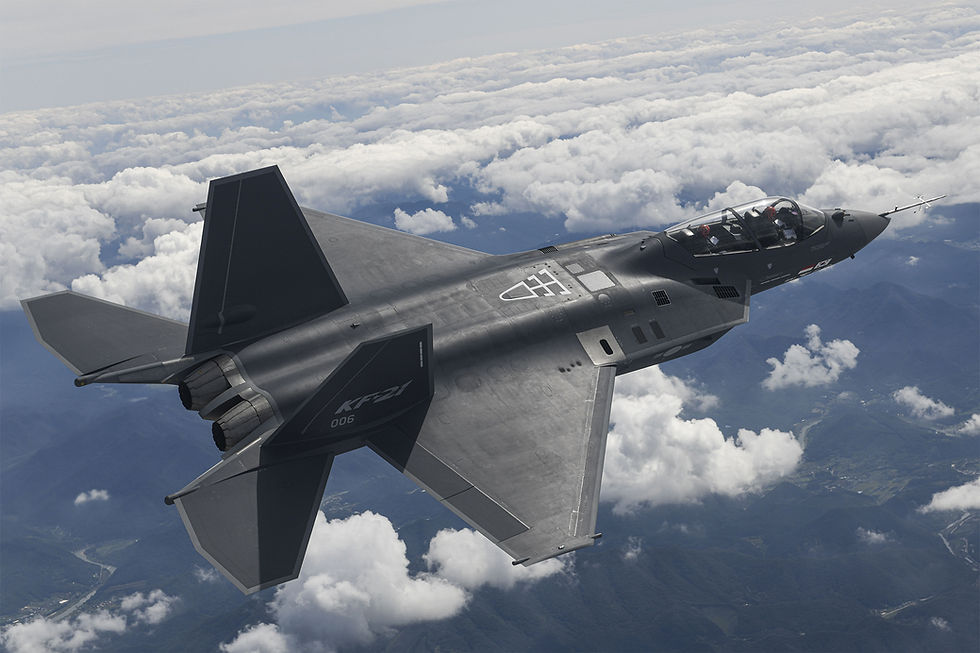
The aircraft's journey to this point has been remarkably rapid by fighter-development standards. South Korea launched the KF-X programme in 2015, with KAI selected as the principal industrial partner. The prototype flew in July 2022, followed by five additional prototypes. Over the development programme, the six aircraft accumulated approximately 1,600 flight tests without an accident, while thousands of individual test conditions were used to validate the aircraft's systems and performance. South Korea completed the development flight-test programme in January 2026 before moving through the final certification and production stages.

The KF-21 subsequently achieved another major milestone in June when South Korea granted it initial type certification. The country's Defence Acquisition Program Administration said the aircraft had satisfied all 745 inspection requirements across 14 airworthiness categories, covering areas including the structure, weapons integration and electronic systems. That certification provided the formal basis for the transition from an experimental development programme to a production aircraft.
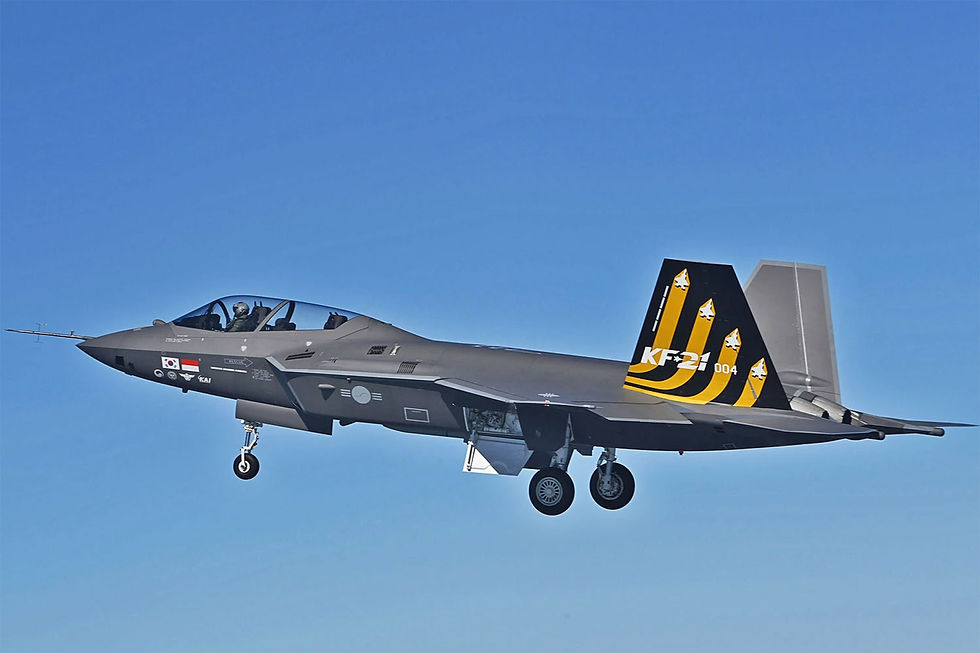
The KF-21 is generally described as a 4.5-generation multirole fighter, sitting technologically between conventional fourth-generation fighters and the more deeply stealth-oriented fifth-generation aircraft such as the F-35. It incorporates an active electronically scanned array radar, modern electronic systems and advanced weapons integration, while its design includes measures intended to reduce its radar signature.

The initial Block I configuration is primarily focused on air-to-air capability. South Korean authorities have said additional testing will progressively expand the aircraft's air-to-ground capabilities. That development path is important because the KF-21 has been designed as a family rather than simply a single fixed configuration. Future versions are expected to add capabilities and weapons as the programme matures.
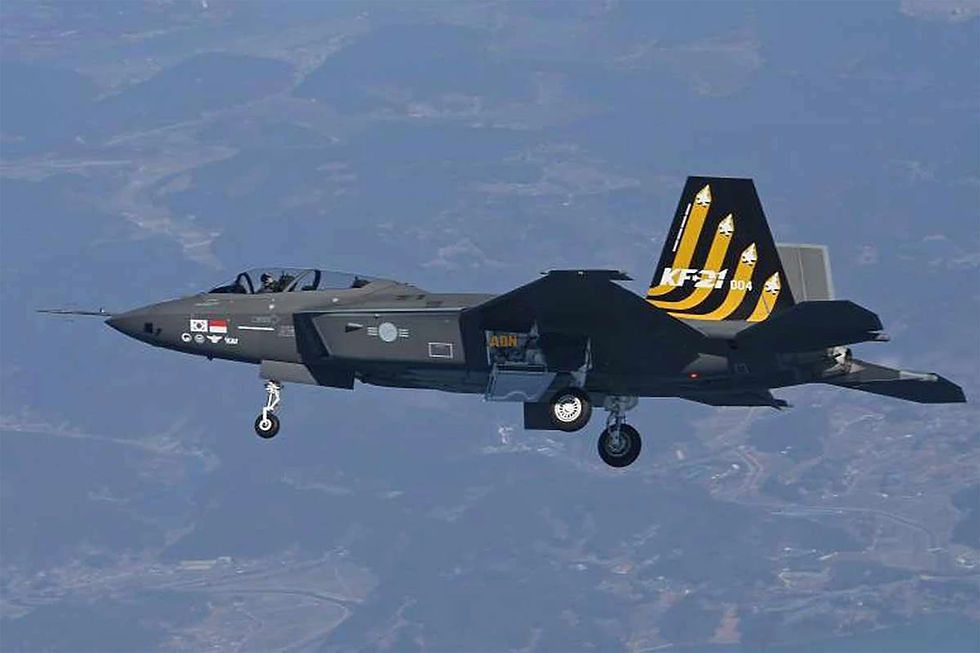
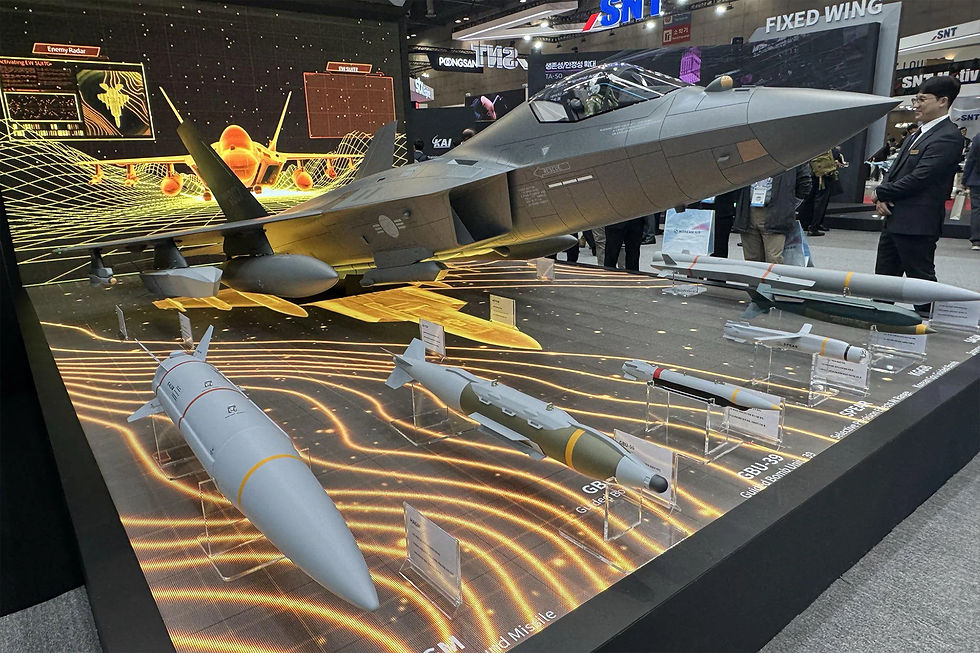
Performance figures place the Boramae firmly in the heavyweight category of modern fighter aircraft. The aircraft has a reported maximum speed of approximately Mach 1.8 and a weapons payload of up to around 7.7 tonnes. Its weapons development has included testing of the European Meteor beyond-visual-range air-to-air missile and the German IRIS-T short-range missile. South Korea is also developing indigenous weapons intended for future integration with the aircraft.
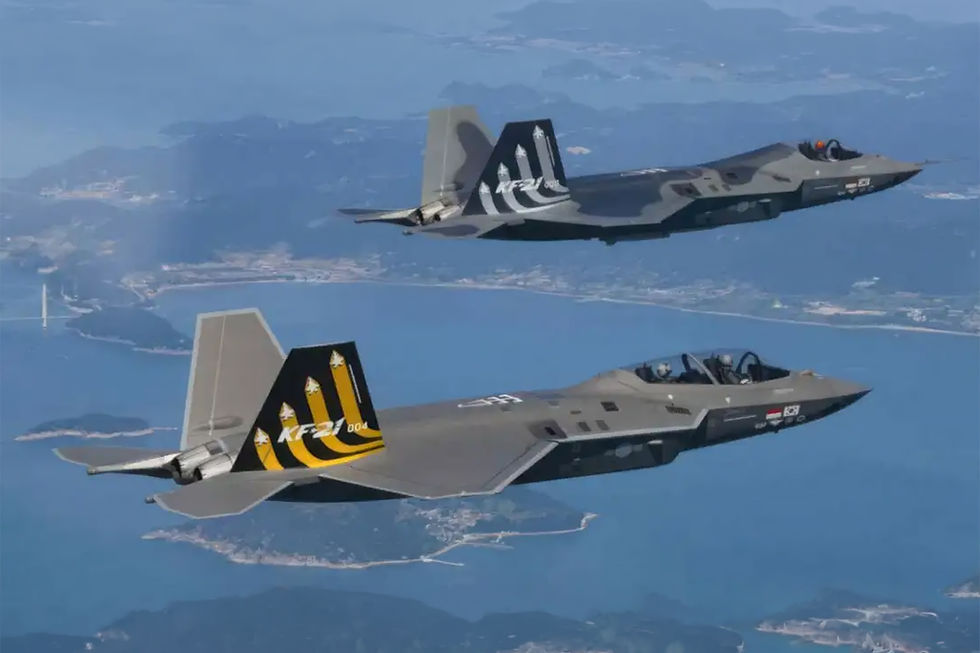
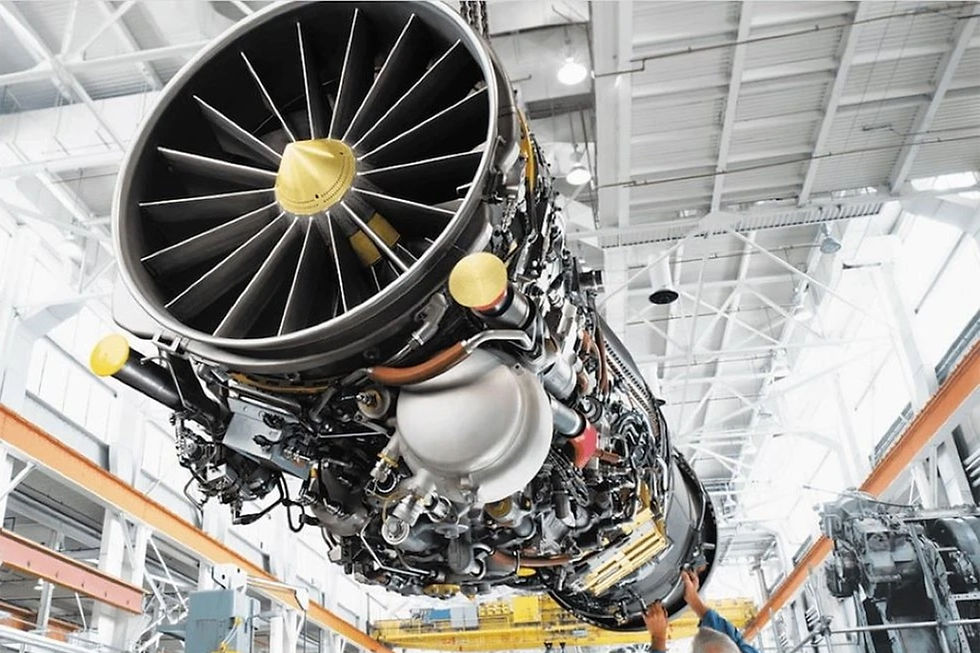
The aircraft is powered by two General Electric F414 engines, the same basic engine family used by the Boeing F/A-18E/F Super Hornet. This gives South Korea access to a mature propulsion system while it continues developing the industrial expertise required for increasingly indigenous aircraft systems. The country has already signalled longer-term ambitions to develop its own fighter engine technology, although that is a separate and considerably more ambitious undertaking.
Production is now moving beyond the first aircraft. The initial production contract covers 20 KF-21s, with the first batch scheduled to be delivered through 2027. South Korea's longer-term requirement is for approximately 120 aircraft, although the exact production and delivery schedule will continue to evolve. The first production aircraft is therefore less an isolated achievement than the beginning of what could become a substantial domestic fighter fleet.
And then there is the export question.
South Korea has made no secret of its ambition to turn the KF-21 into an international product. The aircraft has already attracted considerable attention from potential overseas customers, and Indonesia remains particularly important because it has been involved in the development programme as a partner. The Indonesian relationship has had its share of financial and programme complications, but Indonesia settled its remaining development obligation earlier this year, keeping the partnership alive.
For KAI, exporting the KF-21 would transform the programme from a national fighter project into a much larger aerospace business. That matters because modern combat aircraft depend on production scale. A larger customer base can support longer production runs, reduce unit costs and sustain the industrial infrastructure needed for decades of maintenance, upgrades and future development.

The KF-21 is also an important statement about the changing global fighter market. For decades, the development of sophisticated combat aircraft was effectively restricted to a relatively small group of countries with enormous industrial and financial resources. South Korea has now joined that group with an aircraft developed through its own aerospace industry, supported by an increasingly sophisticated domestic supply chain.
The significance extends beyond the aircraft itself. KAI, Hanwha Aerospace, Hanwha Systems and numerous other South Korean companies have developed experience in structures, engines, radar, avionics, weapons integration and automated production through the programme. South Korea's Defence Acquisition Program Administration says around 700 domestic companies are involved in KF-21 production.
There is, naturally, still a considerable amount of work ahead. Producing a fighter is one challenge; operating an entire fleet efficiently for 30 or 40 years is another. South Korea must establish a sustainable logistics system, train sufficient pilots and maintainers, continue weapons integration and develop future versions of the aircraft. But the hardest psychological barrier has already been crossed.

For years, the KF-21 was a collection of prototypes, test reports, computer models and promises of what South Korea's aerospace industry might eventually achieve. On 22 September, one of those aircraft arrived at a South Korean Air Force base wearing an operational service serial.
It was no longer a prototype.
It was an Air Force aircraft.
And while the Boramae still has another year of training and preparation before it is formally declared operational, South Korea has moved from asking whether it can build a modern fighter to working out how to build, support and eventually sell one. For an aerospace industry that only a few decades ago was primarily producing aircraft under licence, that is quite a transformation.
And somewhere in the boardrooms of the established fighter manufacturers, somebody has probably noticed.





Comments