


Helicopter Hoist Rescue Highlights Vital Aviation Role in Durban Maritime Emergency

A dramatic helicopter medical evacuation off the coast of Durban earlier this month once again highlighted the crucial role aviation plays in modern maritime rescue operations.


At 12:20 on Monday, 2 March, the National Sea Rescue Institute (NSRI) Durban duty crew were placed on alert following reports that a 45-year-old Chinese seafarer had suffered serious injuries after falling down a stairwell aboard a bulk carrier anchored off Durban. The vessel was waiting at the Durban Anchorage when the request for assistance was made.


Initial preparations began immediately at the NSRI Durban Station 5 rescue base, where volunteers readied the rescue craft Alick Rennie for possible deployment. At the same time, Redline Response ambulance services were dispatched to assist with the medical evacuation. Coordination of the operation fell under the Maritime Rescue Coordination Centre (MRCC), working in collaboration with Shipmed Medical Services, who liaised with the ship’s medical team to assess the seriousness of the casualty’s injuries and determine the most appropriate rescue method.

As further updates were received from the vessel indicating that the injured seafarer was in a serious condition, and with rough sea conditions reported offshore, rescue planners quickly shifted their strategy. Rather than attempting a potentially difficult sea transfer using a rescue vessel, authorities opted for a faster and safer aerial evacuation. The Transnet National Ports Authority (TNPA) Port of Durban Port Control activated the port’s pilot helicopter, callsign Transnet 1, to conduct the rescue.

Helicopter evacuations from ships at anchor are highly specialised operations requiring precise flying, experienced hoist operators and coordinated teamwork between aviation and maritime rescue specialists. In this case, the aircraft departed from the Transnet helicopter base carrying both an NSRI rescue swimmer and a Redline rescue paramedic. With the NSRI rescue crew remaining on standby at the station, the helicopter headed out to rendezvous with the bulk carrier at the Durban Anchorage.
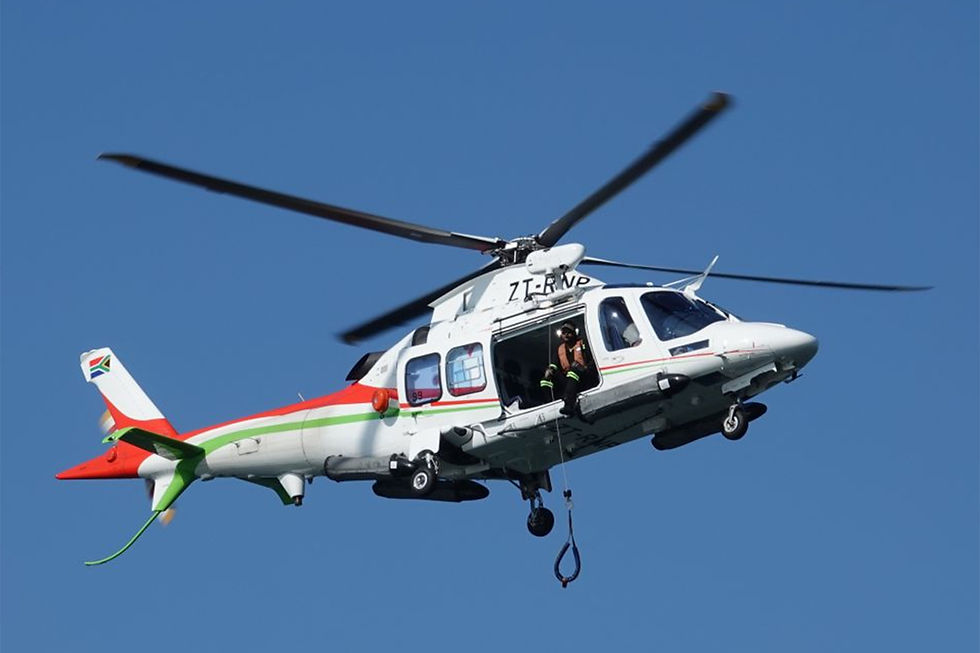
Upon arrival above the vessel, the helicopter crew positioned the aircraft for a technical hoist operation, a demanding manoeuvre that requires exceptional skill from both pilot and hoist operator, particularly in windy offshore conditions. The NSRI rescue swimmer was carefully lowered onto the deck of the ship using the helicopter’s hoist system. Once on board, the rescuer worked with the vessel’s crew to stabilise the injured seafarer and secure him safely into a Bosun’s stretcher. The patient was fitted with protective equipment before being hoisted from the ship’s deck and lifted into the hovering helicopter.

Inside the aircraft, the casualty was immediately placed under the care of the Redline rescue paramedic, who monitored his condition during the flight to shore. Despite the severity of the injuries, the patient was reported to be in a serious but stable condition.
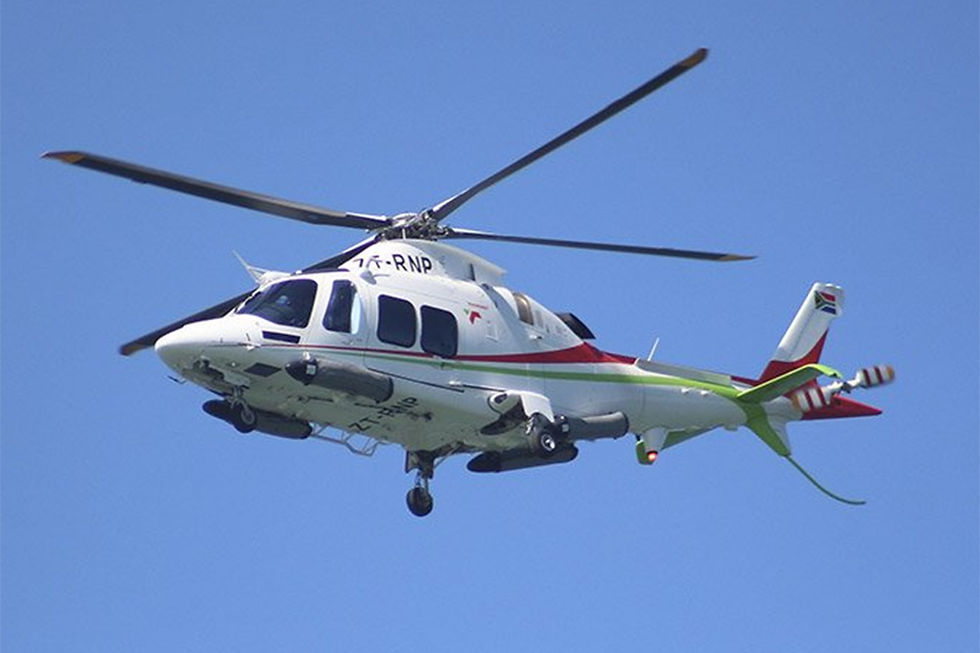
Following the successful hoist extraction, the helicopter flew directly to a Durban hospital, where the injured seafarer was transferred into the care of doctors and nursing staff for further treatment. In a further demonstration of the aircraft crew’s precision flying, the helicopter then returned to the anchored vessel to retrieve the NSRI rescue swimmer before heading back to base. The entire rescue operation concluded successfully at 15:41.

Operations such as this underscore the vital role aviation plays in supporting maritime safety along South Africa’s busy coastline. Helicopters allow rescue teams to reach vessels far offshore quickly, bypassing difficult sea conditions and dramatically reducing the time required to get critically injured patients to the hospital. The ability to conduct helicopter hoist rescues has become an essential capability in modern maritime emergency response, particularly in busy ports such as Durban, where large commercial vessels frequently anchor offshore.

The NSRI commended the Transnet helicopter crew, including the pilot and hoist operator, for their swift response and professionalism during the technically demanding rescue. Numerous organisations were involved in coordinating the successful mission, including the NSRI Emergency Operations Centre, NSRI Durban duty controllers, Redline Response duty controllers, TNPA Port of Durban Port Control, Telkom Maritime Radio Services, TNPA Port Health, Shipmed Medical Services, South African Police Service Sea Borderline Control and the vessel’s shipping agent.

Through the combined efforts of aviation crews, rescue specialists and medical teams, a potentially life-threatening situation was resolved safely, a powerful reminder that when minutes matter, aviation can make all the difference.





Comments