





Bell 505 Achieves Major SAF Milestone with Over 700 Flight Hours

Bell Textron, in a fruitful long-term partnership with Safran Helicopter Engines, has announced a major milestone in sustainable aviation: a single Bell 505 helicopter has surpassed 700 flight hours using blended Sustainable Aviation Fuel (SAF). This accomplishment, revealed at the European Rotors 2025 event in Cologne, Germany, highlights Bell's steadfast dedication to sustainability and its pioneering role in integrating eco-friendly practices into its flight operations.

The path to achieving this significant milestone started with a strategic collaboration. In March 2022, Bell, a company under Textron Inc., partnered with Safran Helicopter Engines to explore the technical capabilities and economic feasibility of utilizing SAF in the Bell 505, which is equipped with the highly efficient Arrius 2R engine. This partnership sought to advance the limits of existing rotorcraft technology and operational methods, setting the stage for a more environmentally sustainable future for the industry.

This commitment soon led to a groundbreaking achievement. Within a year of announcing the partnership, the Bell 505 made history. In a demonstration flight, it became the first single-engine helicopter to successfully operate on 100% SAF, demonstrating the fuel's feasibility for this type of aircraft.

The real-world operational testing commenced in earnest shortly after. Since July 2022, a dedicated Bell 505 helicopter at the Bell Training Academy has been solely using blended SAF. Over this time, continuous operation has amassed a cumulative total of over 700 flight hours. This figure is significant, as it reflects extensive, real-world data collection essential for validation.
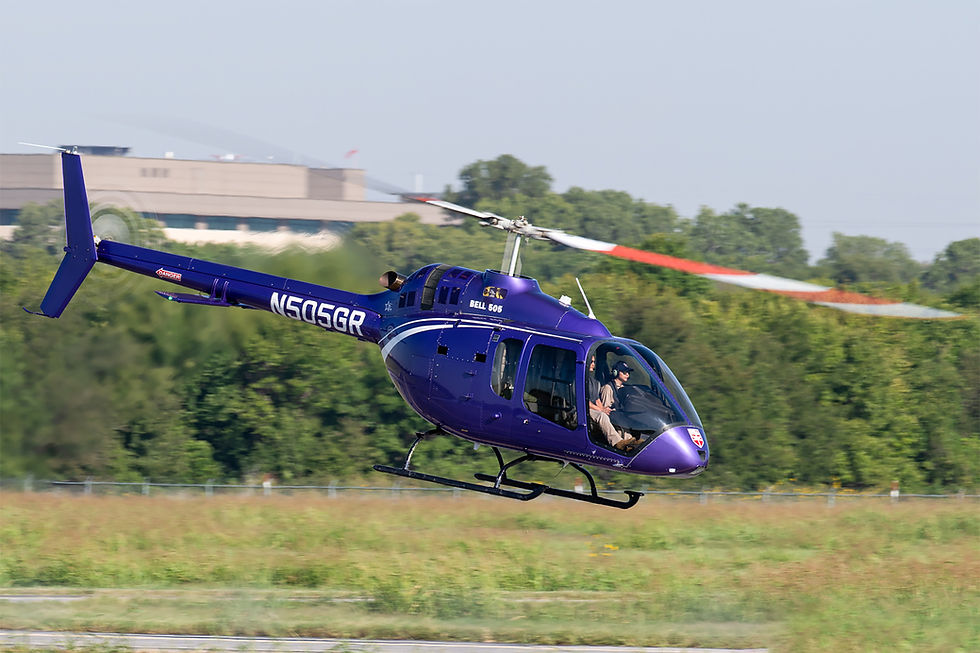
The outcomes of this thorough testing have been extremely positive. During the process, the team has carried out comprehensive evaluations of engine operability, aircraft performance, and physical engine inspections. So far, all results have validated the successful and smooth integration of the blended SAF into the Bell 505's operational profile, showing no adverse effects on the aircraft's performance or the engine's condition.


Robin Wendling, Managing Director of Europe for Bell, expressed enthusiasm about the achievement. "Bell is proud to celebrate this next step in industry carbon reduction objectives," he stated. "Working alongside Safran Helicopter Engines has given us the cutting-edge advantage of exploring opportunities in greener aviation practices."


Echoing this sentiment, Jean-François Sauer, Safran Helicopter Engines' EVP Programs, highlighted the broader industry implications of this success. "We are particularly pleased with these SAF flights in partnership with Bell. SAF is key towards more sustainable helicopter use," Sauer commented. He further elaborated on the current and future capabilities of their powerplants, noting that the Arrius 2R, along with all of Safran's engines, is currently certified to operate with up to 50% drop-in SAF. Looking ahead, he announced ambitious goals: "Very soon, our engines will be capable of 100% drop-in SAF, paving the way for wider use of this type of fuel for increased sustainability of helicopter operations."

The Bell 505 is ideally positioned to spearhead the move towards sustainability. As one of the most technologically advanced aircraft in its category, it is equipped with the robust Safran Arrius 2R engine, dual-channel Full Authority Digital Engine Control (FADEC) for enhanced performance and efficiency, and the Garmin G1000H NXi all-glass avionics suite with a moving map display.

In addition to its technical foundation, the five-seater aircraft is crafted for adaptability and mission fulfillment. Its expansive panoramic windows, open cabin layout, and Synthetic Vision technology make it a perfect choice for various missions, such as public safety, essential utility operations, and military training. By incorporating SAF into the operational framework of this capable and well-regarded platform, Bell is not only establishing a new benchmark for sustainability but also ensuring that advanced rotorcraft can maintain high effectiveness while reducing their environmental impact.

Surpassing 700 flight hours serves as a compelling demonstration of the significant progress achieved through collaboration among industry leaders on essential environmental initiatives, establishing the Bell 505 as a pioneer in the future of eco-friendly rotorcraft operations.





Comments