





A Brief Summary of Exercise Red Flag 2026

Exercise Red Flag 2026 will once again bring together air, space and ground forces from the United States and allied nations for one of the most complex and demanding military training exercises in the world. Conducted primarily at Nellis Air Force Base and across the Nevada Test and Training Range (NTTR), Red Flag provides a realistic environment in which participating forces can practise large-scale, high-intensity combat operations.

The exercise operates across more than 12,000 square miles of controlled airspace and approximately 2.9 million acres of land within the NTTR and surrounding areas in the southwestern United States. This vast training area allows the simulation of modern warfare scenarios that would be impossible to replicate in smaller or more restricted environments. For Exercise Red Flag 2026, around 3,000 personnel from approximately 32 units are expected to take part.

Established in 1975, Exercise Red Flag was developed in response to lessons learned during the Vietnam War. Analysis of combat losses indicated that the first ten combat missions flown by aircrew carried the highest risk. In response, Red Flag was designed to replicate those initial missions within a controlled training environment, enabling aircrew to gain experience under realistic combat conditions before facing them in actual operations.

Each year, the exercise brings together a wide range of participants. For the 2026 iteration, units from the U.S. Air Force and U.S. Space Force will be joined by elements of the U.S. Marine Corps, U.S. Navy and Air National Guard. International participants include the Royal Air Force (RAF) and the Royal Australian Air Force (RAAF), reflecting the long-standing defence cooperation between the United States and its allies.

While fast jet pilots are the most visible participants, Exercise Red Flag is structured as a comprehensive combat training package. Ground crews, maintenance personnel, intelligence analysts, logisticians and support staff all play essential roles. Aircraft maintenance teams ensure high sortie rates, intelligence specialists analyse threats and mission outcomes, and logistics personnel support the sustained operations required during the exercise. This integrated approach reflects the reality of modern military operations, where success depends on coordinated efforts across multiple disciplines.
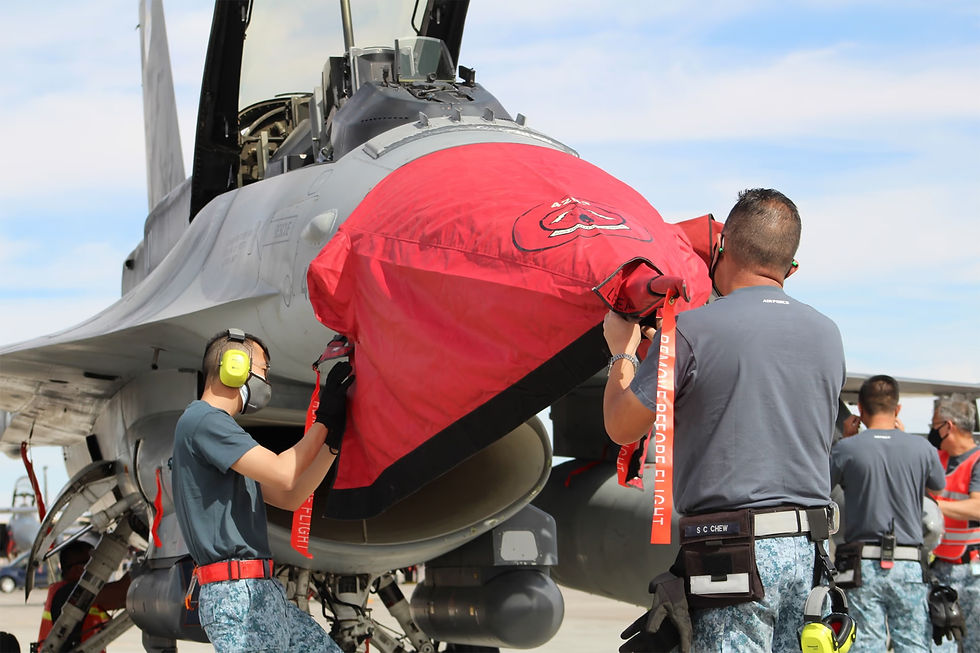
A key element of the exercise is the Tactical Command and Control Team, which manages and coordinates all participating units. This includes assets operating across air, land, maritime, cyber and space domains. By integrating these domains into a single operational framework, Red Flag allows participants to practise joint and coalition operations under realistic command and control conditions. The scale and complexity of the exercise also help to strengthen interoperability and working relationships between allied forces.

Exercise Red Flag is particularly well known for its use of “aggressor” forces. These units replicate potential adversaries using simulated enemy fighter aircraft, advanced ground-based radar systems and surface-to-air missile threats. In recent years, the exercise has expanded to include cyber and space-based elements, reflecting the evolving nature of modern conflict and the increasing importance of information, communications and satellite systems.

The NTTR is uniquely suited to this type of training. With approximately 2,200 targets distributed across the range, along with realistic threat emitters and opposing forces, the area allows combat air forces to train in an environment that closely mirrors real-world operational conditions. The combination of live, virtual and constructive training elements enables participants to practise complex missions while maintaining safety and environmental controls.

As Exercise Red Flag continues to evolve, it remains a cornerstone of advanced military training for the United States and its allies. By providing a realistic, large-scale and multi-domain training environment, Red Flag 2026 will allow participating forces to refine tactics, improve coordination and enhance readiness for future operations.





Thank you for sharing such an insightful and valuable blog. I truly appreciate the time and effort you put into creating content that supports emotional wellness, personal growth, and healing.
At Mindful Perspective, we believe that awareness, compassion, and the right guidance can help individuals navigate life’s challenges with greater clarity and confidence. We are grateful for the opportunity to be part of conversations that encourage emotional healing, self-discovery, and positive transformation.
Thanks for the thoughtful and informative post. The practical advice you included makes the content much more useful than many articles on the same topic. At My Secret Med Spa, we see firsthand how personalized care and expert guidance can make a huge difference in aesthetic and wellness results. Your insights are a great reminder of the value of professional services, and we appreciate you sharing them!"
Thank you for sharing such valuable insights. The article provides a clear and informative perspective on the importance of professional trust and fiduciary services. It highlights how thoughtful planning, compliance, and expert guidance can help individuals and families protect their assets and build long-term financial security. At Preservation Trust Company, we understand the value of personalized trust solutions and appreciate content that helps readers make more informed decisions about wealth preservation and future planning.
Very informative post. The practical approach taken by the author makes the content especially useful. Pairing good travel planning with a dependable Boston car service can help reduce stress and improve the overall experience.
Thanks for the thoughtful and informative post. The practical advice you included makes the content much more useful than many articles on the same topic.With a focus on quality workmanship and responsive customer care, Bay Area Appliances serves homeowners looking for dependable appliance solutions