




Preserving the Past, Inspiring the Future: The Story of the Aviation Heritage Foundation of South Africa
By Pieter van der Sandt
South Africa has one of Africa's richest aviation histories: a story of pioneering flights, wartime courage, ingenuity, and an enduring fascination with flight. It survives in museum aircraft and private hangars, but also in fading photographs, logbooks, letters and personal memories.
Too much of that history, however, remains scattered and vulnerable. Important collections are often held privately and known only to a small circle of enthusiasts. When their custodians pass away, decades of careful research can be dispersed in a matter of days. Photographs lose their captions, documents become separated from the stories that give them meaning, and irreplaceable material may be discarded because nobody recognises its significance.
The Aviation Heritage Foundation of South Africa was founded after the passing of respected aviation researcher Mr Ken Smy (94) and the recovery of the remarkable aviation collection he left behind.

Over many decades, Ken had quietly assembled an extraordinary collection of South African aviation research: photographs, documents, correspondence, manuscripts, records and pilot logbooks. With no known close family to take responsibility for it, his passing created an urgent question: what would become of a lifetime devoted to recording our aviation story?
Recovering and securing Ken’s collection is not simply a matter of moving boxes to safety. Each box held fragments of human lives. Each handwritten note, photograph and annotated document represented knowledge that could never be recreated once lost.
During that recovery, a much wider problem became clear. Ken was not alone. Across South Africa, many aviation historians, photographers, veterans, researchers and enthusiasts have spent lifetimes building important collections, yet do not know what will become of them when they pass away. Their families may not understand the material, have space to keep it or know where it should go. Without an agreed and trusted destination, even historically significant collections can be divided, sold without context, discarded or simply disappear.
It was this realisation that led directly to the establishment of the Aviation Heritage Foundation of South Africa: a non-profit organisation to which people can entrust their collections, research and aviation legacies, confident that the material will be responsibly assessed, preserved and made meaningful for future generations.
One discovery showed just how much can lie hidden inside an apparently ordinary archive.
Among several Second World War-era pilot logbooks, mostly relating to members of the South African Air Force, was an RAF logbook bearing the name “W. Deas”. When I opened it, the first thing I saw was a stark official stamp: “Killed in Action.”
I resisted the temptation to turn immediately to the final page. Instead, I worked through the logbook from the beginning, following the pilot’s progression flight by flight and operation by operation. In doing so, the initials became a person.
He was Wing Commander William Inglis “Bill” Deas, a South African from Piet Retief who volunteered for service with the Royal Air Force Volunteer Reserve.
He served operationally with No. 61 Squadron and later became Officer Commanding of No. 630 Squadron. He was awarded the Distinguished Flying Cross and Bar and the Distinguished Service Order. On the night of 7–8 July 1944, aged only 29, he took off in Lancaster ND688 on his 69th operation, part of a raid against the V-weapon storage site at Saint-Leu-d’Esserent in France. He did not return.
Without preservation, Bill Deas’s logbook might have become merely an unidentified old book—or disappeared altogether. Properly researched and placed in context, it restores the story of a remarkable South African airman and connects a new generation with the reality behind the names, aircraft and statistics of war. That is the kind of history with which the Foundation is dealing: not lifeless paper, but lives waiting to be remembered.
The principle flowing from Ken’s legacy is simple but urgent: South Africa’s aviation heritage does not belong only to the past. It is a national cultural resource that must be identified, protected and made meaningful for future generations.
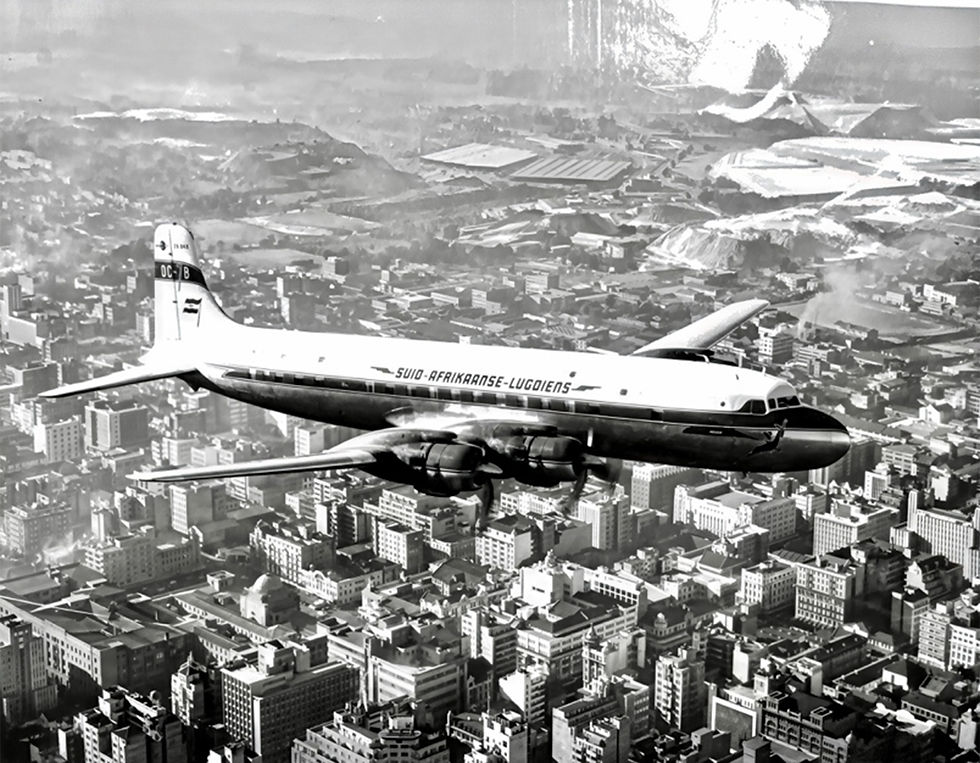
The Foundation will operate as an independent non-profit company dedicated to identifying, preserving, digitising, cataloguing and promoting South African aviation history. It will not compete with museums, historical societies, owners or existing associations, but connect and strengthen their work through a collaborative national platform.
Collaboration rather than competition is a founding principle. Aviation heritage survives because people have devoted extraordinary time, money and energy to saving it. Collectors have rescued documents from skips; volunteers have restored aircraft with limited resources; families have preserved personal records; and researchers such as Ken Smy have spent decades identifying people, places and events. The Foundation will support these custodians, respect their ownership and connect what they have saved to the wider historical record.
The Foundation will seek approval from the South African Revenue Service as a Public Benefit Organisation. This will provide an appropriate legal and fiduciary structure through which aviation collections, archival material, funds and testamentary bequests can be entrusted to it for preservation in the public interest. Certain bequests to an approved Public Benefit Organisation may qualify for favourable estate-duty treatment. Any tax deduction relating to a particular donation will, however, depend on the Foundation obtaining the necessary statutory approval and the donation meeting the applicable legal requirements.
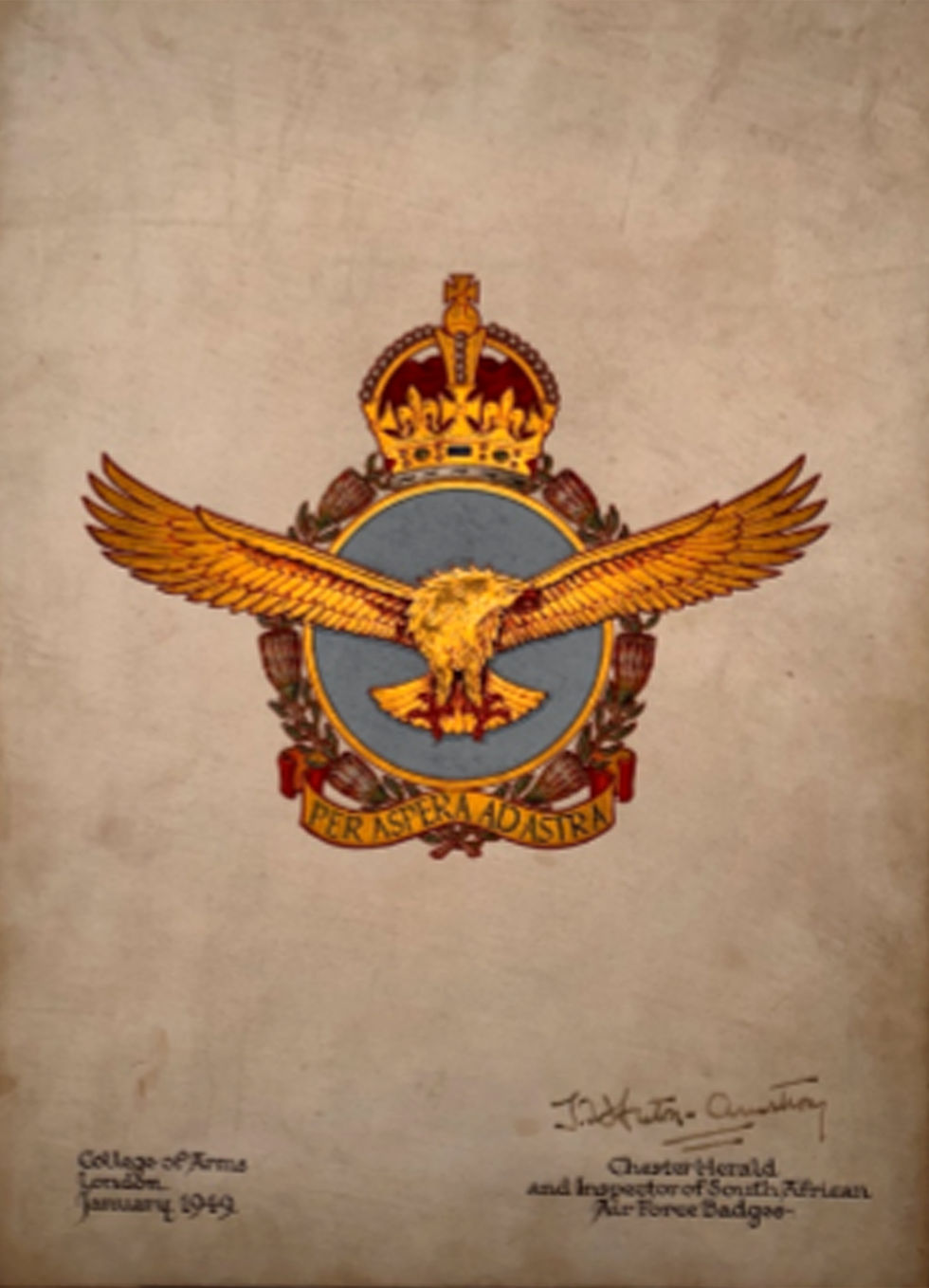
One of its principal initiatives will be the creation of a Digital Aviation Archive. Collections may be donated, loaned for digitisation or retained by their owners while digital copies are preserved. Contributors will be able to determine appropriate access levels, including partial disclosure, anonymity or confidentiality. Preservation therefore need not mean surrendering ownership or control.
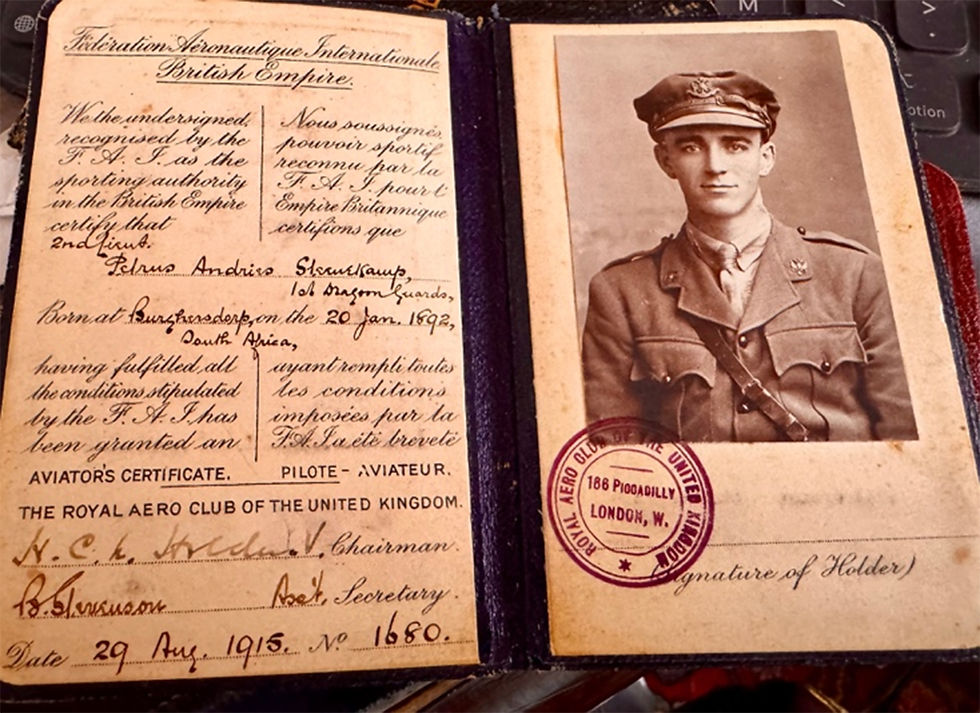
Digitisation is more than scanning old paper. Without accurate names, dates and context, a digital image can remain almost as inaccessible as a photograph in an unmarked box. Structured cataloguing, careful research and secure backups will make the archive a credible public resource.
A further flagship initiative will be the compilation of a South African Warbird Registry: a national record of surviving aircraft in South Africa that previously served with a military, police, customs or other government safety and security organisation anywhere in the world. It will include operational aircraft and static exhibits, recording their identities, service histories, present status and restoration stories.
Privacy and security will remain paramount. Owners will choose whether their details are public, partially disclosed, anonymous or confidential. The aim is to establish what survives—not expose private collections. QR-linked profiles could eventually give museum and airshow visitors direct access to reliable aircraft histories.
The Foundation also intends to record oral histories before first-hand knowledge disappears and facilitate publications, exhibitions and educational projects. These will reconnect aircraft, archives and human stories too often treated separately. An aircraft is more than an airframe, just as a logbook is more than a list of flights.
For individuals, the benefits are practical and personal. Owners and collectors gain a trusted means of documenting and safeguarding material without losing control over it. Veterans, pilots, engineers and ground crew can ensure that their experiences are heard. Families can place the records of loved ones within their proper historical context. Researchers gain access, subject to permissions, to organised and reliable material, while younger enthusiasts gain an engaging doorway into aviation history.
For the broader aviation community, the Foundation offers continuity. It can help museums and associations share knowledge, connect with specialists, support restoration research and reveal gaps in the national historical record.
Ultimately, the Aviation Heritage Foundation of South Africa is about stewardship. We may possess an aircraft, a photograph, a logbook or a collection for a time, but we remain temporary custodians of the history it carries. What we preserve—and what we allow to disappear—will determine how future generations understand those who shaped aviation in this country.
Its motto captures both the responsibility and the promise: “Preserving the Past. Inspiring the Future” By safeguarding South Africa’s aviation story today, the Foundation hopes not merely to remember what came before, but to kindle curiosity, pride and possibility in those who will take flight tomorrow.





Comments