





JetZero Breaks Ground on Historic Greensboro Manufacturing Hub

Aviation startup JetZero has officially broken ground on its new aircraft manufacturing facility and corporate headquarters in Greensboro, North Carolina, marking a major milestone for both the company and the U.S. aerospace industry.

The project represents one of the most significant aerospace investments in recent American history. JetZero plans to invest approximately $4.7 billion in the development of an expansive manufacturing complex near Piedmont Triad International Airport. State officials estimate the project will create more than 14,500 aerospace manufacturing jobs, making it the largest economic development commitment in North Carolina’s history by job creation.


Speaking at the groundbreaking ceremony, North Carolina Governor Josh Stein described the investment as a strong endorsement of the state’s aerospace ecosystem. “Today, a great new chapter in North Carolina’s storied history of flight is taking off,” Stein said. “JetZero’s decision to build here is a vote of confidence in North Carolina’s workforce, our universities and community colleges, and our long aerospace tradition.”

Founded in 2021, JetZero has quickly emerged as one of the aviation industry's most closely watched innovators. The California-based company is focused on developing a new generation of highly efficient commercial aircraft built around a blended-wing-body (BWB) design. Unlike conventional airliners, which feature a cylindrical fuselage attached to separate wings, a blended-wing-body aircraft integrates the fuselage and wings into a single lifting surface, significantly improving aerodynamic efficiency.

The concept itself is not new; NASA and aerospace manufacturers have studied blended-wing-body aircraft for decades, but advances in materials, digital engineering, and manufacturing technologies have brought the design closer to commercial viability. JetZero's goal is to leverage these advances to create an aircraft capable of dramatically reducing fuel consumption while maintaining compatibility with existing airport infrastructure.
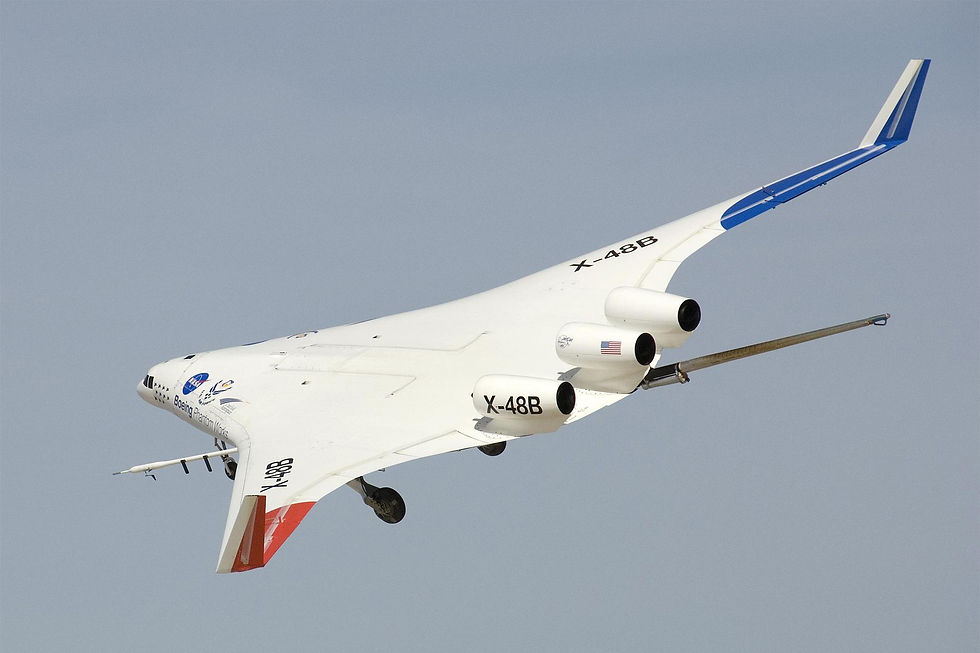
At the centre of the company's ambitions is the Z4, a widebody passenger aircraft designed to carry approximately 250 passengers while delivering up to 50% greater fuel efficiency than comparable aircraft in service today. The aircraft is also expected to offer increased cabin space, lower operating costs, and reduced carbon emissions.

JetZero gained significant momentum in 2023 when it was selected by the U.S. Air Force to develop and fly a full-scale demonstrator aircraft under a programme aimed at evaluating next-generation airlift and tanker concepts. The demonstrator is expected to take flight in 2027 and will serve as a critical step toward commercial certification.

The company has also attracted support from major industry players. Strategic investments and partnerships with airlines, including United Airlines and Alaska Airlines, underscore growing confidence in the potential of the blended-wing-body concept. Both carriers view the technology as a promising avenue for achieving long-term sustainability and cost-reduction goals.
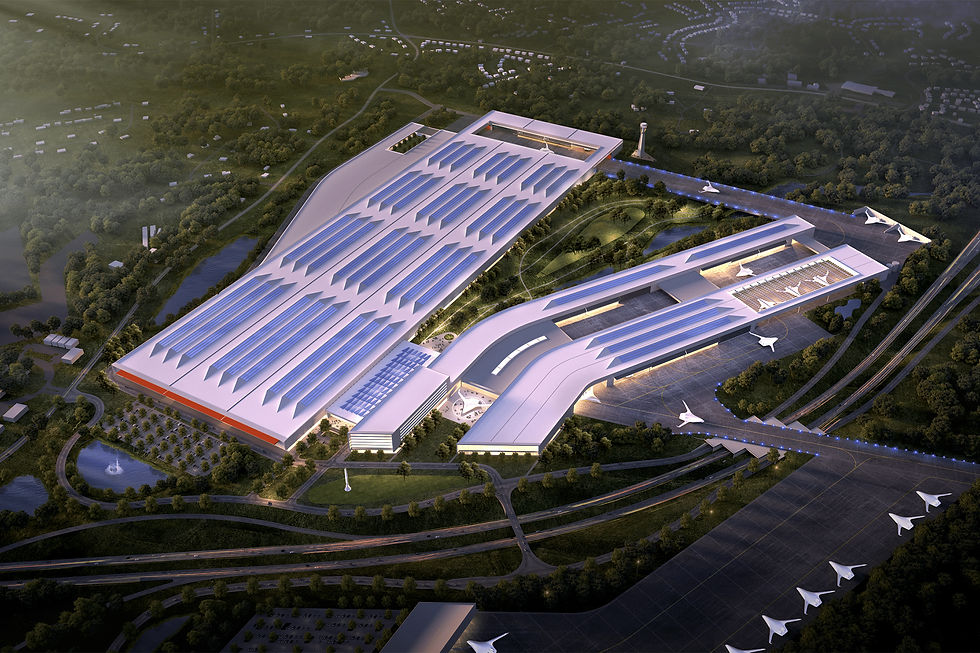
JetZero will build its aircraft at what is planned to become an 8-million-square-foot manufacturing complex covering more than 600 acres near Piedmont Triad International Airport. The project will also see the company relocate its headquarters from California to North Carolina, further strengthening the state's position as a growing aerospace hub.

North Carolina Commerce Secretary Lee Lilley described the development as a long-term investment in both aerospace innovation and advanced manufacturing. “Today’s groundbreaking marks the beginning of a project that will prove to be a leader in both aerospace and advanced materials,” Lilley said.

The announcement comes as North Carolina continues to expand its aerospace footprint. The state is home to more than 400 aerospace companies and recently welcomed the relocation of PSA Airlines’ headquarters from Ohio to Charlotte, bringing hundreds of jobs and additional economic activity to the region. While some observers have drawn comparisons to other large-scale manufacturing projects that have encountered delays, state officials expressed confidence in JetZero’s progress, citing the maturity of the company’s aircraft programme and financing plans.


JetZero CEO and co-founder Tom O’Leary emphasised that the new facility has been designed with flexibility and future growth in mind. “By using the best digital tools available before we break ground, we’ve designed a factory that can grow and change with us,” O’Leary said. “That means we can deliver better aircraft, faster, for our customers and our country.”

For the aviation industry, the Greensboro groundbreaking represents more than the construction of a new factory. It marks a significant step toward bringing blended-wing-body technology from the drawing board into commercial service, a development that could reshape aircraft design, airline economics, and aviation sustainability for decades to come.





Comments