




HH-60W Jolly Green II Debuts in East Africa with First USAF Operational Deployment

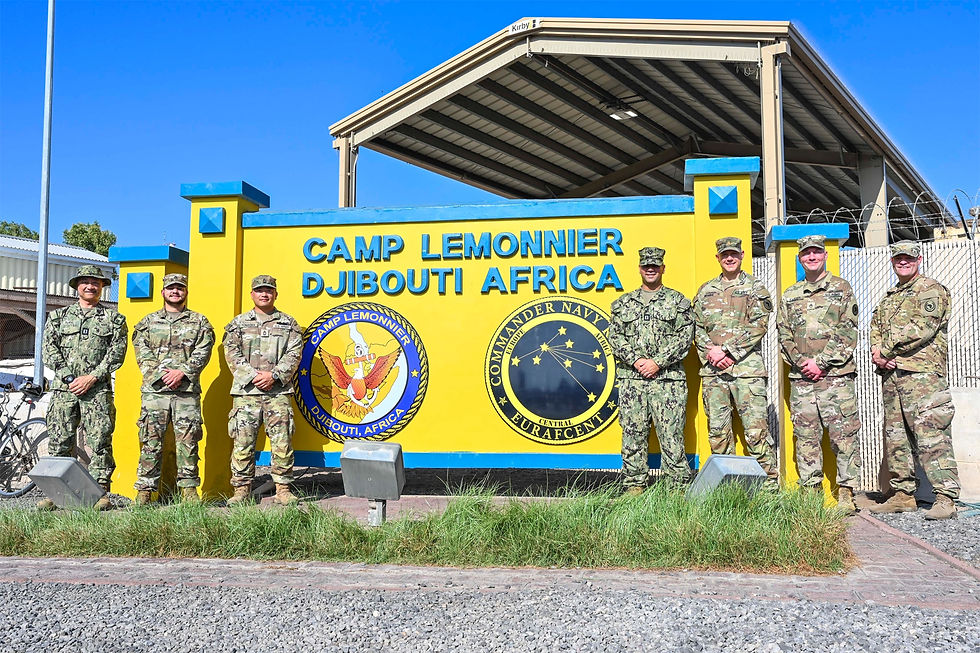
The United States Air Force has reached an important milestone in the operational introduction of its next-generation combat rescue helicopter with the deployment of the HH-60W Jolly Green II to East Africa. The aircraft arrived at Camp Lemonnier in Djibouti on 10 June as part of the deployment of the 56th Expeditionary Rescue Squadron (ERQS), marking the first operational overseas deployment of the unit since transitioning from the legacy HH-60G Pave Hawk.

The deployment establishes a dedicated rotary-wing personnel recovery capability in East Africa, enhancing the United States' ability to respond rapidly to military and humanitarian contingencies across the region. Operating under the 406th Air Expeditionary Wing, the squadron will provide combat search and rescue support while integrating with existing rescue assets already deployed in theatre.

The helicopters were transported to Djibouti aboard U.S. Air Force Reserve Command C-5 Super Galaxy strategic airlifters before being offloaded and prepared for operational service at Camp Lemonnier. Personnel from the 449th Air Expeditionary Group and the 726th Expeditionary Mission Support Squadron worked overnight to receive the aircraft and establish the squadron's operational footprint.

According to Lt. Col. Jonathan Gokey, commander of the 56th Expeditionary Rescue Squadron, the deployment represents a significant achievement following the squadron's conversion to the HH-60W. "This deployment marks our first since transitioning from the battle-proven HH-60G Pave Hawk to the advanced capabilities of the HH-60W Jolly Green II," Gokey said, noting that extensive coordination between the 31st Fighter Wing, U.S. Air Forces Africa (AFAFRICA), and U.S. Africa Command (AFRICOM) was required to execute the deployment successfully.

The arrival of the HH-60W significantly strengthens the personnel recovery capabilities available to U.S. and partner forces operating across AFRICOM's extensive area of responsibility. The 56th ERQS will work closely with the 82nd Expeditionary Rescue Squadron and the Joint Personnel Recovery Centre, creating an integrated rescue network capable of responding rapidly to emergencies in challenging operational environments.

Capt. Jason Hill, commander of the 82nd Expeditionary Rescue Squadron, highlighted the operational benefits of having dedicated rescue helicopters permanently available within the theatre. "Having dedicated rescue air assets in theatre greatly increases our team's ability to quickly and efficiently save lives," Hill said. "The interoperability we have with our rescue partners significantly enhances our capability to support AFRICOM's objectives."

The deployment aligns with the 406th Air Expeditionary Wing's focus on maintaining a high state of readiness while ensuring the security of Camp Lemonnier, one of the United States' key military installations on the African continent.
The HH-60W represents the latest evolution of the U.S. Air Force's combat rescue helicopter fleet. Developed to replace the long-serving HH-60G Pave Hawk, the aircraft incorporates upgraded avionics, improved communications systems, enhanced defensive capabilities and greater fuel capacity, enabling longer-range rescue missions in hostile environments.

Designed specifically for combat search and rescue operations, the helicopter is capable of recovering isolated personnel under threat while operating alongside special operations and conventional military forces. Improved survivability systems and expanded internal fuel capacity provide increased endurance compared with its predecessor, reducing reliance on aerial refuelling during many missions.

The aircraft also offers improved situational awareness for crews through modern digital cockpit systems and advanced mission equipment, supporting operations in both combat and humanitarian scenarios.

The successful arrival and rapid operational integration of the squadron demonstrated the logistical coordination required to establish an expeditionary aviation capability in a remote region.
U.S. Air Force Col. Kris Aikens, commander of the 449th Air Expeditionary Group, praised the efforts of the personnel responsible for receiving the aircraft and preparing them for service. "The rapid offload and integration of the 56th Expeditionary Rescue Squadron is a testament to the agility and professionalism of our Airmen," Aikens said. "Adding the HH-60W Jolly Green II as an advanced personnel recovery asset enhances our crisis response posture and strengthens the capabilities available to the United States and its regional partners."

The deployment supports AFRICOM's "African Led, U.S. Enabled" approach, which focuses on working alongside African partner nations to strengthen regional security and crisis response capabilities.
Camp Lemonnier remains the United States' only permanent military base in Africa and serves as a key hub for operations throughout East Africa and the Horn of Africa. The introduction of the HH-60W provides commanders with an additional layer of operational flexibility, particularly for personnel recovery missions, medical evacuations and support to joint and multinational operations.
While primarily intended for combat search and rescue, the aircraft's capabilities also make it well-suited to supporting humanitarian assistance and disaster response operations when required.
For the 56th Expeditionary Rescue Squadron, the deployment represents more than simply introducing a new helicopter into service. It demonstrates that the HH-60W Jolly Green II has transitioned from development into operational employment, providing the U.S. Air Force with an advanced rescue platform capable of supporting personnel recovery missions across one of the world's most demanding operational theatres.
As the aircraft continues to replace the ageing HH-60G fleet, deployments such as this will provide valuable operational experience while expanding the rescue capabilities available to U.S. and allied forces worldwide.





The controls in Drive Mad feel responsive, and restarting a failed level is fast enough that I kept playing longer than expected.