




GB2 Stormbird Takes Flight: A Firefighting Aircraft Built for the Job
By Garth Calitz

Aviation has produced plenty of aircraft that found themselves doing jobs they were never originally designed for. Agricultural aircraft became fire bombers, military transports became firefighting tankers and even airliners have occasionally found themselves converted into rather enormous flying buckets. Now, Game Aerospace is trying something different: build an aircraft specifically for fighting fires from the drawing board.

The company's GB2 Stormbird completed its first flight on 23 September from Louise Thaden Field in Bentonville, Arkansas, marking the beginning of the flight-test programme for what Game Aerospace describes as a purpose-built aerial firefighting aircraft. Game Aerospace CEO, co-founder and test pilot Philipp Steinbach was at the controls, with the company reporting that the aircraft performed as expected and completed all planned initial evaluations.
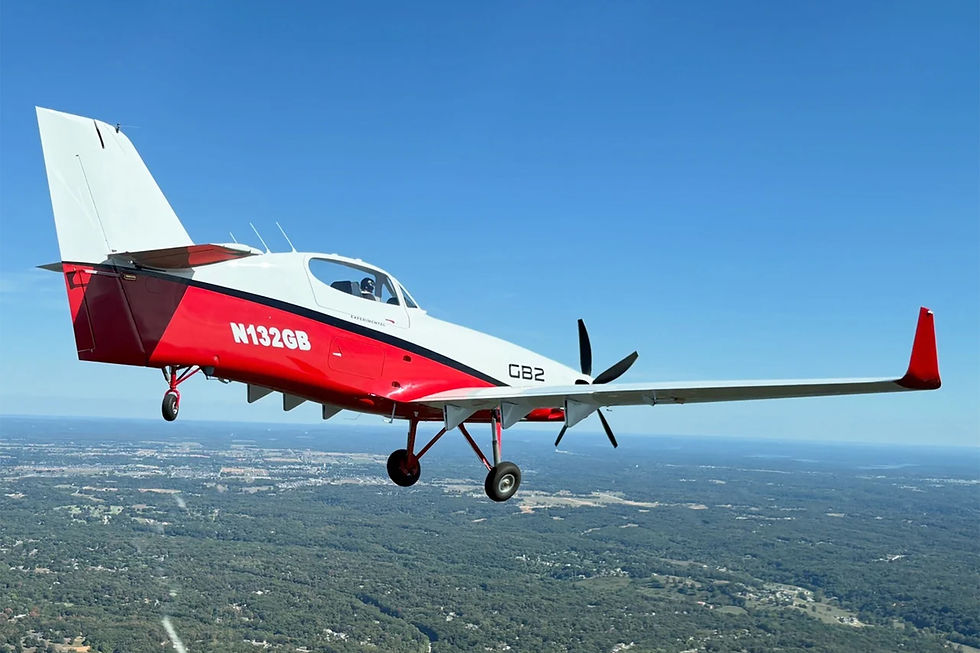
The GB2 is designed around the initial-attack firefighting mission, where speed can be every bit as important as payload. The basic idea is brutally simple: get an aircraft to a developing fire quickly, put a substantial quantity of retardant or water on the ground, return for another load and repeat the process before a small fire becomes a large and very expensive problem.
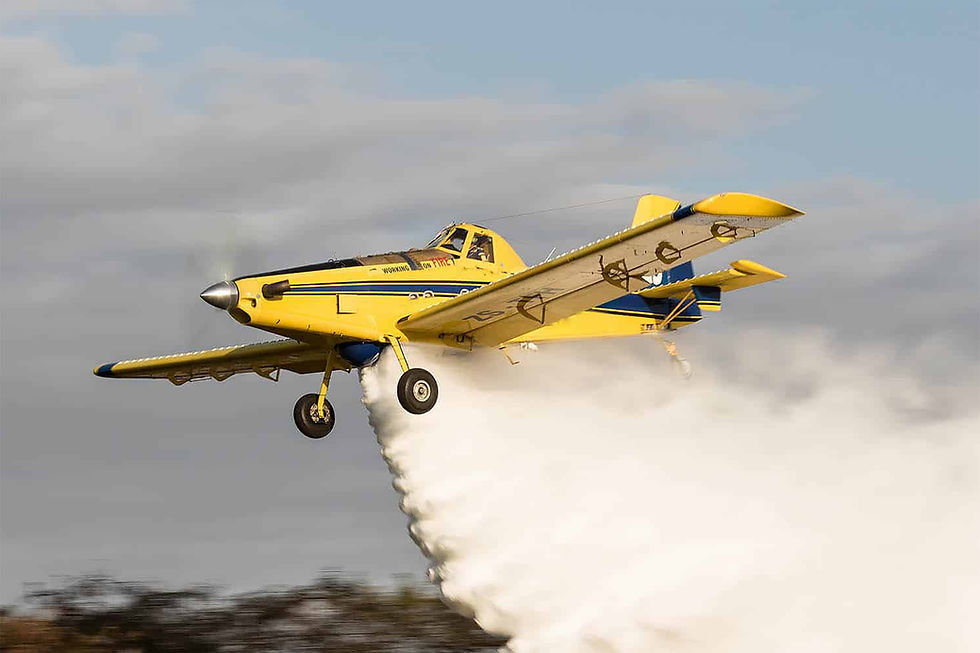
Game Aerospace says the GB2 was developed using input from pilots, operators, ground crews and government agencies, with the objective of improving the speed and efficiency of aerial firefighting operations. Unlike aircraft such as the Air Tractor AT-802, which originated as agricultural aircraft and were subsequently adapted for firefighting, the GB2 has been designed specifically around the demands of the mission.
The composite GB2 has a maximum take-off weight of 19,000 lb (8,618 kg) and an empty weight of approximately 6,050 lb. Its firefighting tank can carry 1,200 US gallons (4,542 litres) of water or retardant, while the aircraft carries another 400 gallons of fuel. Fully loaded, the aircraft is expected to cruise at approximately 200–210 knots, depending on the published configuration and operating conditions.
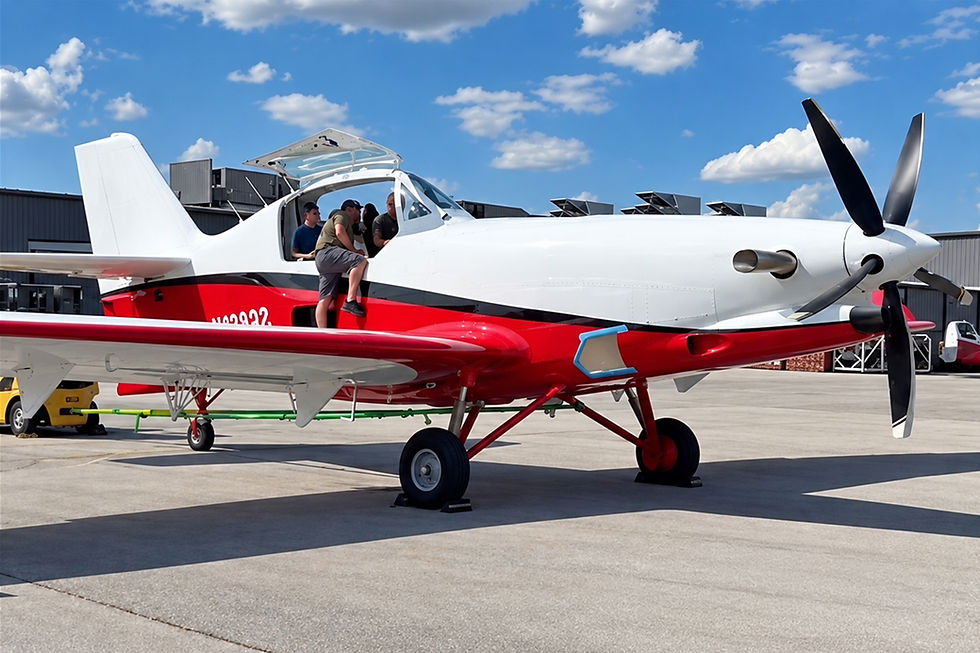
That gives the GB2 a useful position between the smaller single-engine airtankers and the much larger multi-engine firefighting aircraft used on major fires. It isn't intended to replace aircraft capable of carrying thousands of gallons in a single pass. Instead, Game Aerospace is targeting the initial attack role, where aircraft need to be available quickly, operate economically and make repeated drops throughout a firefighting mission.
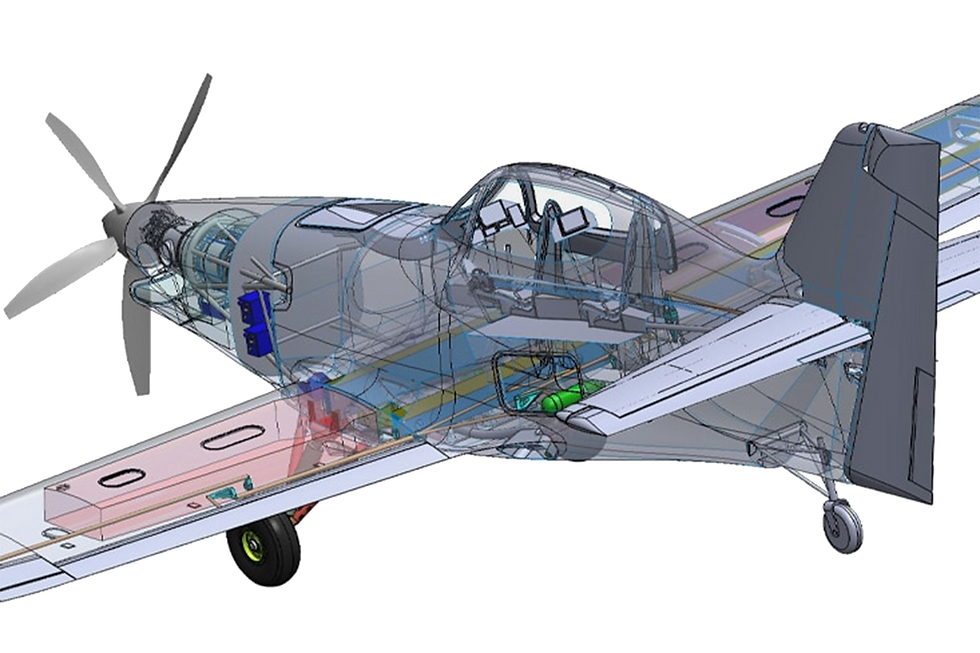
The design also reflects the rather unpleasant environment in which these aircraft are expected to operate. The GB2 uses composite construction and has been designed around the structural loads associated with aerial firefighting. Game Aerospace lists an initial structural life target of 20,000 hours, while the engine is a Pratt & Whitney Canada PT6A-67F, driving an MT-Propeller unit.
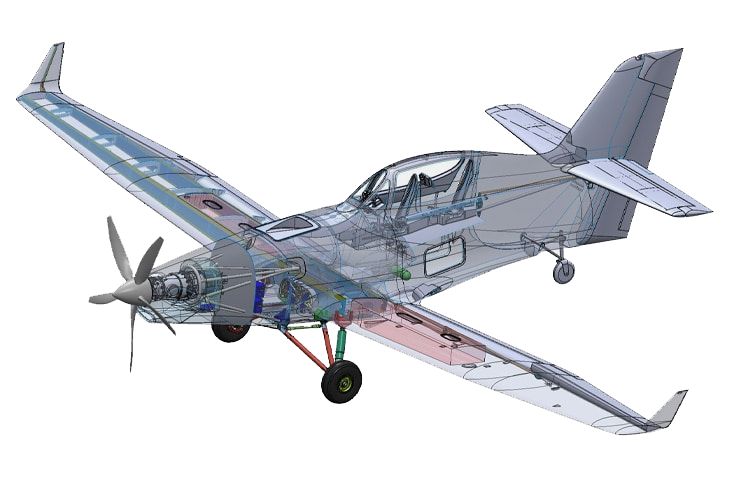
The cockpit is arranged in tandem and includes controls at both seats. This allows the aircraft to be used for training while retaining operational flexibility. During firefighting missions, however, the aircraft is intended to be operated by a single pilot. Garmin avionics and a GFC 600 autopilot are included, with the autopilot intended to reduce workload while the aircraft is travelling to a fire and the pilot prepares for the drop.
That last point is more important than it may initially sound. Flying an airtanker is not simply a case of pointing the aircraft towards smoke and pressing a button. Pilots have to coordinate with other aircraft, ground crews and fire commanders while operating close to terrain, often in turbulent conditions and with rapidly changing visibility. Anything that reduces cockpit workload without compromising control can therefore be useful.

The engine installation has also been designed with the environment in mind. Game lists three selectable engine-intake configurations, ram recovery, particle-barrier filtration and an inertial separator, intended to provide protection against the dust, smoke and airborne debris encountered during low-level operations.
The aircraft's 67-foot wingspan and 42-foot length give the GB2 a substantially larger footprint than the agricultural aircraft from which many existing single-engine airtankers have evolved. Yet its single-engine configuration keeps the aircraft mechanically simpler than the larger multi-engine tankers, potentially offering lower operating and maintenance costs. And that is where Game Aerospace is placing one of its biggest bets.
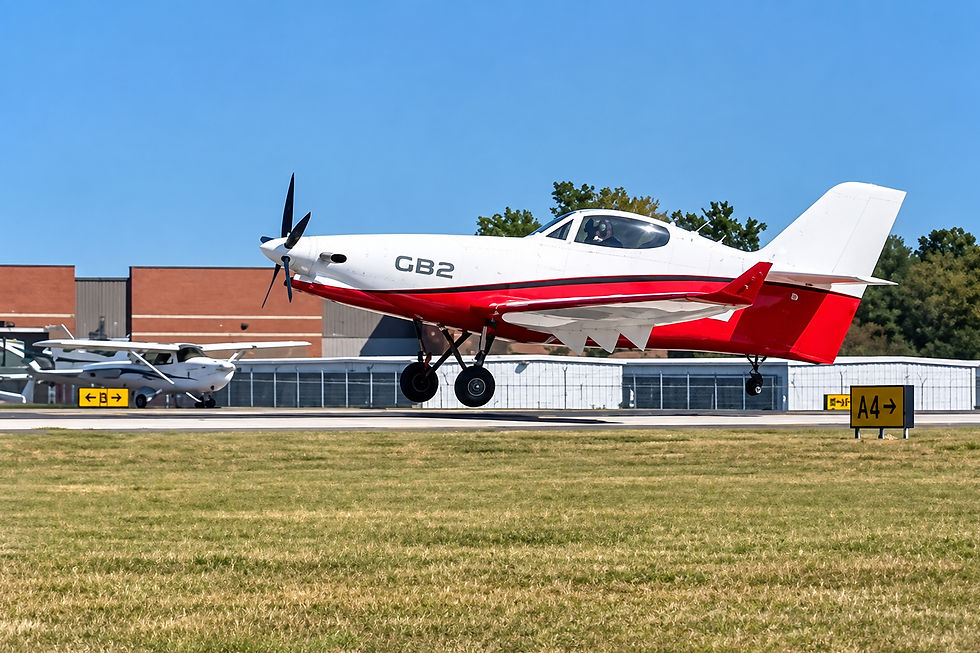
The company wants the GB2 to provide a cost-effective alternative to modifying existing aircraft for firefighting. That is a potentially important proposition as wildfire seasons become increasingly demanding in many parts of the world and operators look for additional aircraft capable of rapid initial attack.
South Africa has extensive experience with aerial firefighting, including the use of agricultural aircraft, helicopters and larger airtankers during major fire seasons. The Cape, in particular, regularly sees aircraft operating in difficult mountainous terrain and strong winds, while wildfire risk extends across much of the country. A purpose-built aircraft offering a sizeable payload while retaining the operating simplicity of a single-engine turboprop could therefore be an interesting proposition for operators well beyond the United States. Of course, the GB2 still has a considerable distance to travel before anyone should start ordering retardant tanks by the dozen.
The first flight is precisely that — a first flight. Game Aerospace must now work through a full flight-test programme before the aircraft can enter service. The company is pursuing FAA Part 23 standard-category certification, with production planned following certification. No firm certification or delivery date has yet been announced.
The programme is nevertheless an interesting development because Game Aerospace is taking the opposite approach to the one that has dominated much of aerial firefighting aviation. Rather than looking around the hangar and asking which existing aeroplane could be modified to carry water, the company started with the question: What would the ideal firefighting aircraft look like if we designed one from scratch? The answer is the GB2 Stormbird.
Whether the market agrees with the answer remains to be seen. But with the prototype now airborne, Game Aerospace has at least moved the argument out of the design office and into the sky.
And considering that the traditional aviation solution to almost every problem has been to take an existing aircraft and bolt something onto it, designing the entire aeroplane specifically to fight fires is almost suspiciously sensible.





Comments