




Embraer KC-390 Proves Arctic Readiness in Swedish Cold-Weather Trials

Embraer’s KC-390 Millennium has successfully completed a demanding cold-weather demonstration campaign in northern Sweden, underlining the Brazilian-built airlifter’s growing credentials for operations in Arctic and high-latitude environments.

Conducted at the Vidsel Test Range military facility, the March campaign was designed to assess the aircraft’s ability to perform in extreme winter conditions while also supporting modern dispersed operating concepts such as Agile Combat Employment (ACE). For Embraer, the trials offered another opportunity to position the KC-390 as a serious contender for air forces seeking a versatile tactical transport and tanker capable of operating across a broad mission set.
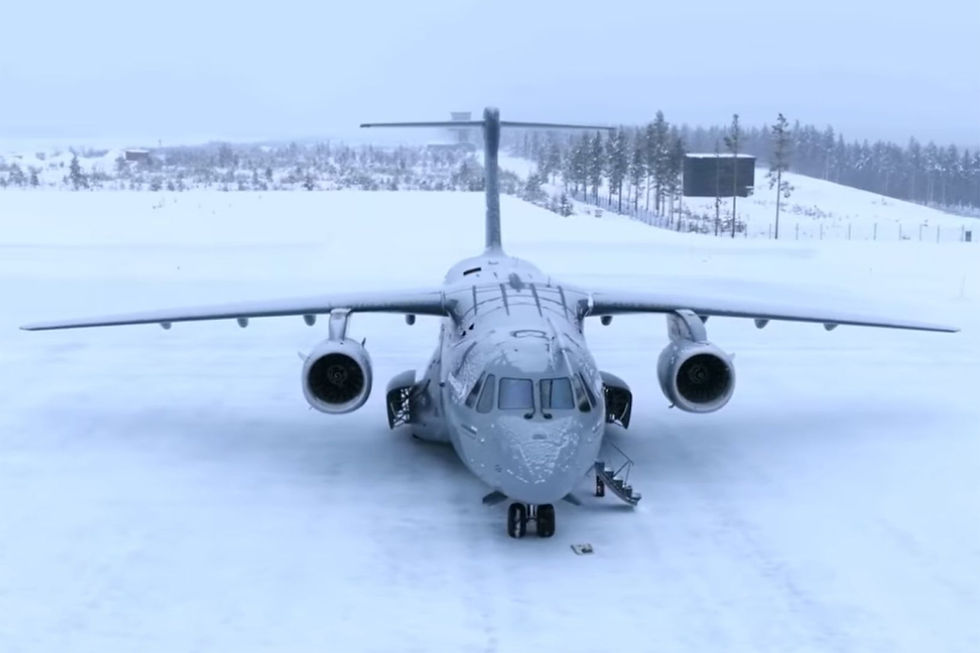
The campaign focused on the practical realities of military airlift operations in harsh climates. During the demonstrations, crews carried out rapid engine and systems starts in sub-zero conditions before executing short take-offs and landings, an important requirement for operating from austere or semi-prepared locations in remote regions.

The aircraft also demonstrated one of its core selling points: fast and flexible cargo handling. During the Swedish trials, the KC-390 was used to load and deploy heavy military vehicles, including SISU GTT all-terrain vehicles, while still maintaining capacity for troops and additional mission equipment. That combination of payload, internal volume and speed remains central to Embraer’s pitch to operators looking for a modern replacement for ageing tactical transport fleets.

Embraer said the aircraft completed the campaign with full reliability, reinforcing claims that the twin-jet transport can sustain operations in demanding environmental conditions without compromising readiness.

“The KC-390 Millennium demonstrated once again its versatility and its ability to successfully perform the most demanding missions under the toughest conditions, all with 100% reliability,” said Bosco da Costa Junior, President and CEO of Embraer Defence & Security. He added that the aircraft’s compatibility with the ACE concept makes it particularly relevant for Northern European and Arctic operators, where mobility, dispersal and rapid logistics support are becoming increasingly important to national defence planning.

That message is likely to resonate across Europe, where air forces are placing renewed emphasis on survivability, flexibility and sustainment in contested environments. ACE, originally developed to improve the resilience of air operations, relies heavily on the ability to move personnel, vehicles, fuel and equipment quickly between dispersed operating locations. In that context, the KC-390’s combination of jet speed, rugged field performance and multi-role capability gives it a distinct edge in the tactical airlift market.

The aircraft is designed as a medium-sized multi-mission platform capable of carrying out transport, medical evacuation, paratroop deployment, cargo delivery and aerial refuelling missions. Unlike many legacy transports still in frontline service, the KC-390 was developed in the 21st century with digital avionics, modern systems architecture and future operational demands in mind.
Its appeal lies not only in performance, but also in economics. Embraer has consistently marketed the KC-390 as offering lower operating costs and higher mission availability than older turboprop competitors, while also delivering faster transit times over long distances.
The successful Swedish campaign adds another useful data point to the aircraft’s growing international profile. As European and NATO-aligned nations continue to assess how best to operate in colder, more remote and more contested theatres, demonstrations such as the one at Vidsel are likely to carry increasing weight.
For Embraer, the message from Sweden was clear: the KC-390 is not just built for transport missions, it is being positioned as a modern logistics and mobility platform ready for the strategic demands of Arctic-era air power.





Comments