


China Advances Hydrogen Aviation With Successful Turboprop Flight Test

China has taken another significant step toward the future of sustainable aviation after successfully completing the maiden flight of a hydrogen-powered aircraft in Hunan province. The test, conducted on April 4, 2026, saw a 7.5-tonne uncrewed cargo aircraft complete a 16-minute demonstration flight using a hydrogen-fuelled turboprop engine developed by the Aero Engine Corporation of China (AECC).
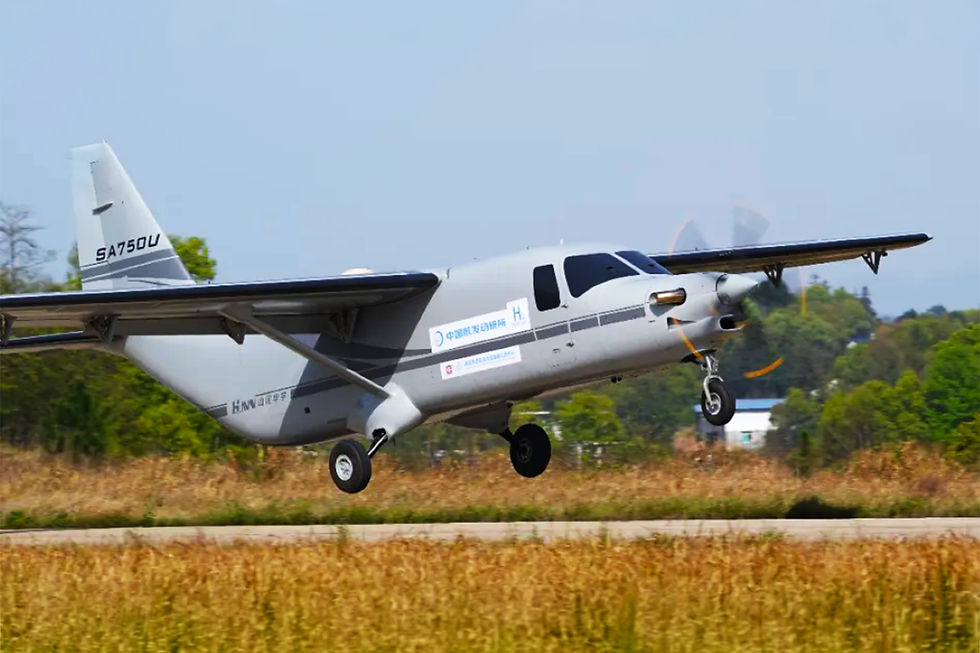
The milestone highlights China’s growing ambitions in alternative aviation propulsion technologies as the global aerospace industry searches for practical pathways to reduce carbon emissions and lessen dependence on conventional fossil fuels.

The aircraft departed from Zhuzhou in Hunan province and completed all planned manoeuvres before returning safely to the airport. During the flight, the aircraft covered approximately 36 kilometres at a speed of around 220 km/h while operating at an altitude of 300 metres. According to reports from Chinese state media, the hydrogen-powered engine performed normally throughout the sortie and remained in excellent condition after landing.

The successful flight followed a series of ground tests completed in late March, during which the turboprop propulsion system underwent validation prior to receiving clearance for airborne testing. Unlike conventional jet engines that produce thrust directly, turboprop engines use turbine power to drive a propeller, making them particularly suitable for regional transport and cargo operations where efficiency at lower speeds is critical.
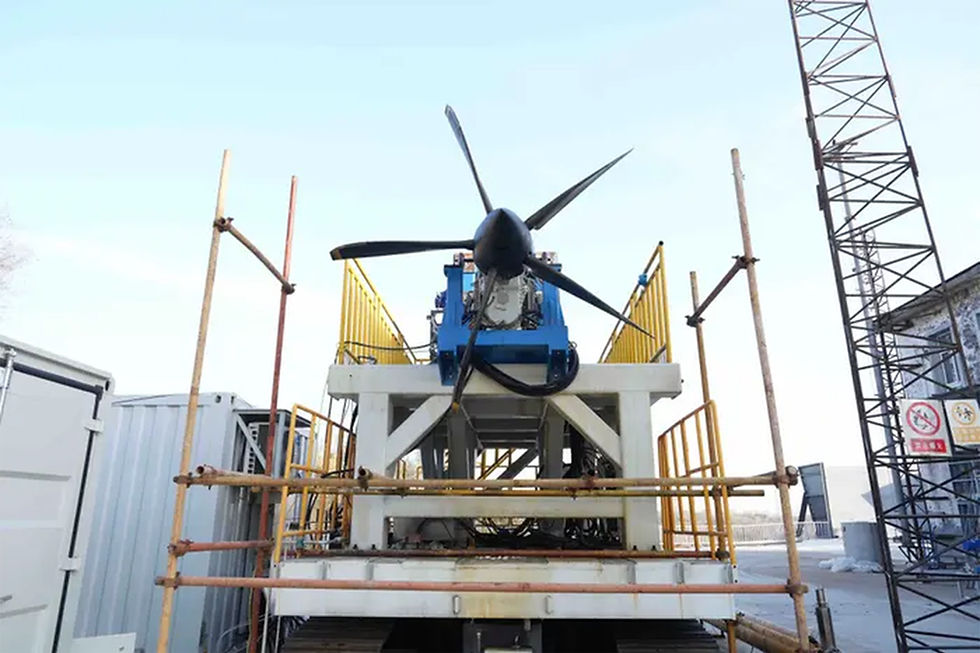
The programme represents an important technological achievement for China’s aviation sector, particularly as hydrogen propulsion continues to attract global attention as one of the most promising long-term solutions for decarbonising aviation. Hydrogen offers several advantages over traditional aviation fuel, including zero carbon emissions at the point of use and significantly higher energy density by weight compared with batteries.

The timing of the test also comes amid renewed concerns over global fuel security and rising energy costs. Continued instability in the Middle East and disruptions affecting major shipping routes, including the Strait of Hormuz, have placed additional pressure on global fuel markets. Against this backdrop, alternative energy sources for aviation are becoming increasingly attractive to both governments and airlines seeking greater operational resilience and lower environmental impact.
According to Chinese reports, AECC intends to initially deploy the hydrogen-powered propulsion system in what China describes as its “low-altitude economy.” Early applications are expected to focus on cargo delivery and logistics support to remote and island regions, where uncrewed aircraft can provide efficient transportation links while reducing operating costs and emissions.

The use of hydrogen propulsion in cargo aircraft also provides a practical testing ground before the technology is adapted for passenger operations. Cargo platforms allow engineers to validate engine reliability, fuel storage systems, thermal management, and operational safety under real-world conditions without the additional regulatory complexity associated with carrying passengers.
China has outlined an ambitious long-term roadmap for hydrogen aviation development. Current plans reportedly target the validation of key hydrogen propulsion technologies by 2028, followed by the introduction of hydrogen-powered regional aircraft by 2035. The country ultimately aims to support the development of hydrogen-powered mainline commercial aircraft by around 2050.

Globally, several aerospace manufacturers and research organisations are pursuing hydrogen-powered flight solutions. Companies across Europe, North America, and Asia are investing heavily in hydrogen combustion engines, hydrogen fuel cells, and hybrid-electric propulsion concepts. However, major challenges remain before the technology can achieve widespread commercial adoption, including hydrogen production infrastructure, storage systems, airport refuelling capabilities, and certification standards.
Despite these hurdles, the successful flight in Hunan demonstrates the accelerating pace of development in the sector. While the aircraft involved in the test was relatively small and uncrewed, the achievement marks another important step toward cleaner aviation technologies that could eventually reshape regional air transport and cargo logistics.
For China, the test also underscores its determination to position itself at the forefront of next-generation aerospace innovation, particularly in emerging technologies that may define the future of aviation over the coming decades.





Before rhythm awareness became natural in Geometry Dash, fast sections often felt chaotic and unpredictable. Better timing changed the way I approached gameplay.