


Airbus Helicopters unveils the Flexrotor in South Africa
By Rob Russell

Airbus Helicopters recently held an event at the Denel Overberg Test Range to show off their multifunctional flexrotor and discuss their various UASs and what they can do and where Airbus is taking drone development.


The event was hosted by Nam-Binh Hoang, MD of Airbus South Africa. After welcoming everyone, he gave a brief overview of what Airbus does in Southern Africa, the services and support it provides in the Commercial, Helicopter, Defence and Space fields. Amongst the various services they provide is the sponsorship and funding for 3 apprentices a year.


Xavier Giry, from Airbus Helicopters in France, then addressed those present. Xavier flew helicopters for the French Air Force for 30 years, then went to the UAE. After that, he joined Airbus and is heavily involved in their UAS division.
Airbus began developing UASs in 1992, and in 2018, the UAS division was integrated into Airbus's Helicopter Division. He gave a comprehensive overview of Airbus Helicopters and how they started in the UAS field and their development of various UASs. They have expanded their range, primarily dependent on customers’ needs and requirements, with the French Armed Services being a major customer. But the real reason for the Overberg function was to show the Flexrotor off in Africa, for the first time.

The Flexrotor is a Group 2 small tactical vertical take-off and landing (VTOL) unmanned aircraft system (UAS). It has a maximum take-off weight of 25 kg (55 lbs) and is designed primarily for Intelligence, Surveillance, and Reconnaissance (ISR) missions for more than 12-14 hours in a typical operational configuration.

It has been designed to be operated by one person and comes in a compact carry case, weighing a total of 50 kg and can be carried by one person. This enables it to be deployed anywhere, even in confined areas. On opening the case, the Flexrotor is on a self-contained table and it is possible to set up the drone in under 10 minutes and have it ready to fly.
Depending on the mission it is required for, it can be adapted to carry various cameras and other such equipment, as they are modular and can be attached to the Flexrotor by the operator.
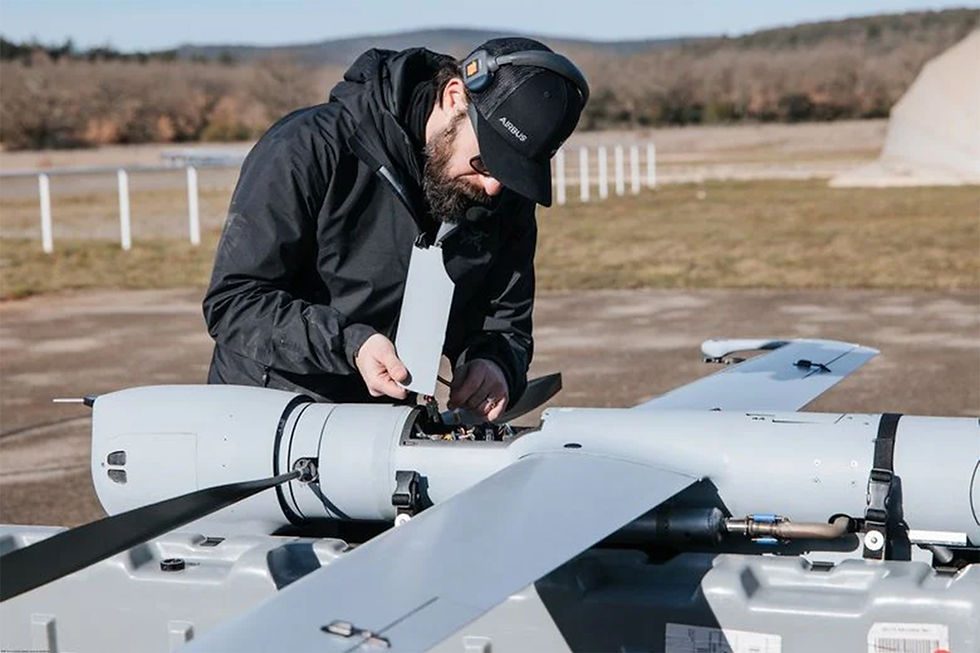
Once set up, it stands at 2m tall, with a wingspan of 3m. It has a max forward speed of 77kts and can operate for up to 14hours, depending on what the mission it is doing. Its range is dependent on line of sight, which can be up to approximately 160 km.

The huge advantage of the Flexrotor is its ability to lift off vertically, to a predetermined height and then transition to normal flight. The operator is, from the operator position, able to pre-programme the take off requirements, the transition to normal flight and then operate the Flexrotor and bring it back to where it is required to land. This can be its original point or wherever the operator has moved to. It also has the advantage of the management of the flight being transferred to another operator. This can either be done digitally or by the use of satellite communications. Another advantage is the use of another UAS to act as a relay and extend the range of the Flexrotor.
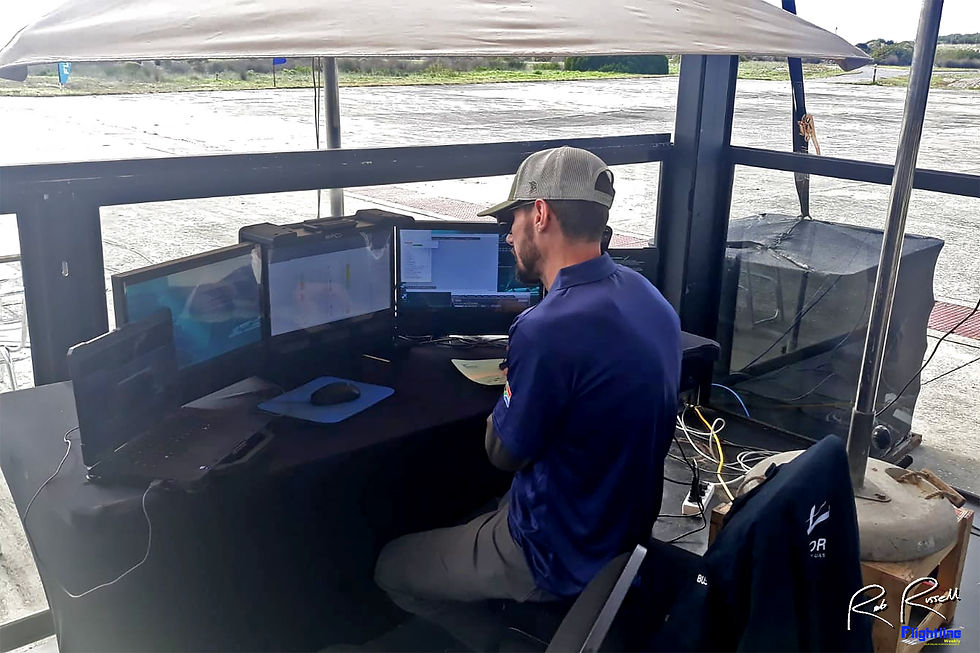
The drone has a GPS aerial on board to ensure accurate position reporting and also feed back accurate GPS information of the target they are following, to the operator.
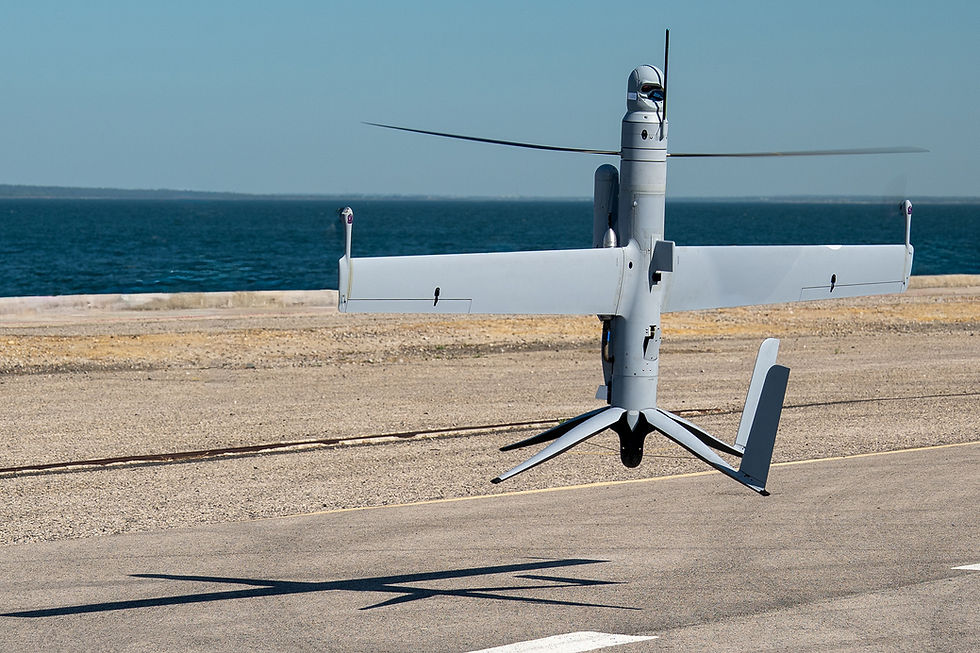
Airbus has ensured the Flexrotor is equipped with ADS-B, to enable it to fly in controlled airspace and is developing the option of VHF communication, to ensure the operator can speak to ATC and operate the Flexrotor in a controlled airspace environment.

Further interesting developments are the ability to manage the Flexrotor flight from a tablet. The advantage of this would, for example, enable a helicopter crew to take control of the Flexrotor and assist them in the flight. This would be very useful in a search and rescue role, where the Flexrotor would be able to locate missing people, and the helicopter would be able to pick them up.

This was recently done in Singapore with the Singapore Air Force. In January 2026, a Flexrotor was teamed with a Republic of Singapore Air Force H225M for the very first time using Airbus’ HTeaming system, to simulate this vital operation. By using HTeaming, the Flexrotor could provide vital intelligence directly to the H225M’s crew, where the pilots would also be able to directly command and control the drone, using a specialised datalink that enables immediate data processing without overloading the pilot’s workload.

Other roles in which the Flexrotor could be utilised would include:
Maritime operations
Flexrotor delivers real-time intelligence for naval reconnaissance, maritime surveillance, and coastal monitoring, which could include searching for illegal operations, like poachers. Further roles would be in the search and rescue of missing people and boats, conducting searches and making use of its thermal imaging cameras.

Land operations
Assisting with missing people and rescues. The flexrotor’s size and ability to be launched anywhere make it ideal to assist in the search for missing persons, i.e. on mountains, and assist in the rescue once they have been located. Real-time transmission from the cameras and relaying to any ground position are possible.

Firefighting operations
Flexrotor provides firefighters with the most up-to-date information - an invaluable asset during critical operations. Fire-fighters can view the live footage that’s being streamed and check the progress of their work. This allows them to better identify where the fire is or will be - even showing that a fire previously thought to be extinguished is still active - so they can tactically manage their resources.

Electronic and signal intelligence - ELINT-SIGINT
Flexrotor excels in electronic and signal intelligence, offering accurate, discreet data collection. It is able to detect and track electronic emissions and communications, providing vital insights for intelligence, electronic warfare, and situational awareness.

The greatest advantage of the Flexrotor is its small size, easiness to set up and operating, and ability to be adapted to each specific flight and need. Its uses are unlimited, and being a class 2 UAS, make it affordable for many Governments and SAR organisations





Comments