


AAD 2026: SAAF Chief to Deliver Keynote on Building an Air Force African Nations Can Actually Afford
By Garth Calitz

The South African Air Force’s (SAAF) top man will take centre stage at AAD 2026, where Lieutenant General Carl Moatshe will deliver the keynote address on the final day of the conference at Air Force Base Waterkloof.

From 16 to 18 September, Africa’s defence chiefs, policymakers, industry executives and assorted people selling solutions to problems that governments have not yet found the money to solve will gather at Waterkloof for the AAD 2026 Conference.

The theme is “Africa’s Future Defence: Trends, Innovation and Opportunities” — which is suitably ambitious for a continent where many air forces are still trying to keep aircraft designed in the previous century flying while simultaneously being encouraged to embrace artificial intelligence, drones, space technology and networked warfare.

Lieutenant General Moatshe’s keynote, titled “Military aviation as a catalyst for Africa’s security, resilience and continental connectivity,” will be delivered on Friday, 18 September, as part of the conference’s Commercial and Military Aviation programme. According to AAD Exhibition Director Nakedi Phasha, the address will provide delegates with a high-level perspective on the future of military aviation and its growing importance to African security. “Lieutenant General Moatshe’s keynote is exactly the kind of high-level, forward-looking conversation the African defence and aerospace market needs,” Phasha said.

Military aviation has long since moved beyond the traditional business of protecting national airspace. African air forces are increasingly expected to contribute to border security, counter-terrorism operations, humanitarian assistance, disaster response, regional peacekeeping and intelligence gathering — often with budgets that seem designed for a considerably less complicated world.
Moatshe’s address will examine how African air forces can respond to terrorism, organised crime, border insecurity, humanitarian emergencies and other emerging threats while improving sovereignty and strategic connectivity. A major focus will be regional cooperation and interoperability, including multinational exercises, shared training, intelligence cooperation and coordinated air operations.

The concept is hardly new. Getting different countries, military structures, procurement systems, communications networks and political priorities to work together, however, remains considerably more difficult than putting “regional cooperation” into a conference programme.
African governments are being asked to acquire increasingly sophisticated military capabilities at a time when defence budgets are under enormous pressure. Modern combat aircraft, transport aircraft, helicopters, unmanned systems, sensors, electronic warfare equipment and the infrastructure required to support them do not come with particularly sympathetic pricing.

Moatshe is expected to address the uncomfortable question of how African countries can balance operational requirements with affordability while simultaneously developing local aerospace and defence industries. That includes building indigenous capability rather than simply remaining customers for foreign manufacturers, an attractive idea that tends to become considerably more complicated when the invoice arrives.
International partnerships and private-sector involvement will also feature, particularly their potential contribution to skills development, technology transfer and the development of a sustainable African aerospace and defence ecosystem. Moatshe took command of the SAAF on 1 April 2026 and has identified people-centred leadership, human capital development and modernisation as key priorities.
His approach includes adapting doctrine and organisational structures to changing technology and warfare, developing drone and space capabilities, making better use of existing systems and preparing personnel for an operating environment changing at a rather faster pace than traditional defence procurement cycles.
An air force can acquire all the drones, satellites, sensors and digital systems it likes, but somebody still has to operate them, maintain them, interpret the information they produce and, occasionally, figure out why the expensive piece of equipment has stopped working. That makes human capital a particularly important component of any modernisation strategy.

The challenge for the SAAF, and many other African air forces, is therefore not simply acquiring new aircraft. It is creating an affordable, sustainable force structure capable of generating usable combat power while retaining the skills, infrastructure, logistics and technical expertise needed to keep that force operational.
And, given the state of many defence budgets, possibly the most important word in the AAD conference theme is “opportunities”, because everyone loves an opportunity until someone has to fund it.
Day Three of the AAD 2026 Conference will cover a broad range of commercial and military aviation subjects, including unmanned aerial systems, future air combat capability, aviation infrastructure, industry skills shortages, civil-military partnerships, cyber security, critical aerospace supply chains and the operational readiness of African air forces.
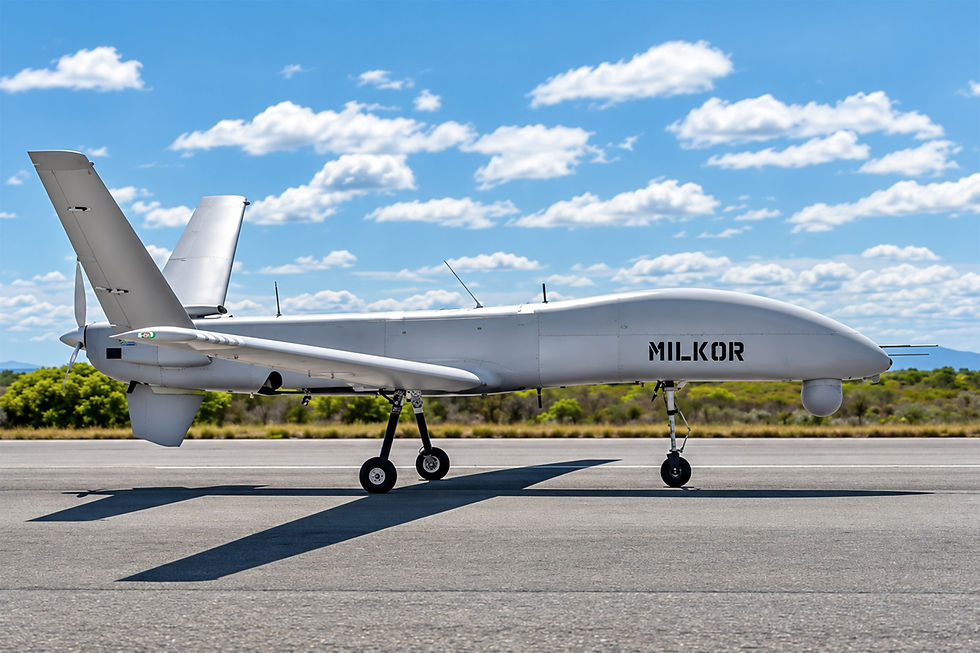
Moatshe’s keynote should therefore provide more than another discussion about the future of military aviation. It will offer a useful indication of where South Africa’s air force leadership believes the SAAF, and African military aviation more broadly, needs to go.
The real question, as always, is whether governments are prepared to provide the resources required to get there. Because having a vision for a modern air force is one thing. Keeping the aircraft flying long enough to implement it is another.



Comments