




ICAO Rebukes Iran Over Airspace Violations

The Council of the International Civil Aviation Organisation has issued a strong rebuke of Iran over what it says were unlawful violations of sovereign airspace across the Middle East, warning that the actions posed a serious and ongoing threat to civil aviation safety in one of the world’s most heavily used air corridors.

Adopted on 31 March 2026 at ICAO’s headquarters in Montréal, the decision marks a rare and pointed intervention by the UN aviation body into a matter that sits at the intersection of geopolitics and flight safety. While ICAO is typically associated with standards, procedures and technical oversight, its latest statement makes clear that the organisation sees the issue not simply as a diplomatic dispute, but as a direct challenge to the safe conduct of international air transport.
According to ICAO, the Islamic Republic of Iran violated the territorial integrity and sovereignty of several member states, including Bahrain, Jordan, Kuwait, Oman, Qatar, Saudi Arabia, and the United Arab Emirates, including their sovereign airspaces. The Council said those actions were contrary to Article 1 of the Convention on International Civil Aviation, which enshrines the principle that every state has complete and exclusive sovereignty over the airspace above its territory.
For the aviation world, that is not legal fine print. It is one of the cornerstones of the global air transport system.

A Safety Issue in a Strategic Air Corridor
The Council’s statement specifically condemned what it described as Iran’s illegal use of unmanned aircraft systems for military purposes against civilian infrastructure over the territories of the affected states. In practical terms, that raises alarm bells well beyond the political sphere.

The Middle East sits astride a critical web of east-west and north-south air routes linking Europe, Asia, Africa and the Gulf. At any given time, the region’s upper airspace carries a dense mix of scheduled passenger flights, cargo operations, business aviation traffic, and military activity. Any uncoordinated incursion into that environment, especially by military drones or other weapons-capable systems, can quickly turn a strategic confrontation into an aviation safety hazard.
For flight crews and controllers, the danger lies in unpredictability. Civil aircraft operate in structured airspace under established separation rules, flight plans and communications protocols. Military drones operating outside those structures, or without coordination with civil authorities, introduce an entirely different level of uncertainty into an already complex operating environment.
That uncertainty matters. Modern airliners cruise at high altitude and high speed through designated airways that are designed to be safe, predictable, and tightly managed. Once unauthorised military activity enters that space, the safety margin narrows dramatically.

Operational Consequences for Airlines
Although ICAO’s decision is diplomatic in tone, the implications for airlines are deeply operational. Carriers flying through or near the region must constantly weigh route efficiency against security risk. When tensions rise, dispatchers and operations centres are often forced to re-evaluate routings, fuel loads, alternates, crew duty limits, and contingency procedures, sometimes with little warning.
In practical terms, that can mean longer flight times, higher fuel burn, reduced payload flexibility, and more complex crew planning. For airlines already navigating tight operating margins, even a temporary increase in conflict-zone risk can ripple across networks and schedules.

Cargo carriers are particularly exposed, given their dependence on long-range overnight operations and tight connection windows. Gulf-based airlines, meanwhile, sit at the centre of some of the busiest intercontinental flows in the world, making regional airspace stability a matter of both safety and commercial significance.
Passengers may only notice a slightly longer flight or an unexpected route shown on the seatback map. Behind the scenes, however, those diversions often reflect extensive real-time risk analysis.

Aviation Still Carries the Scars of Past Conflict-Zone Tragedies
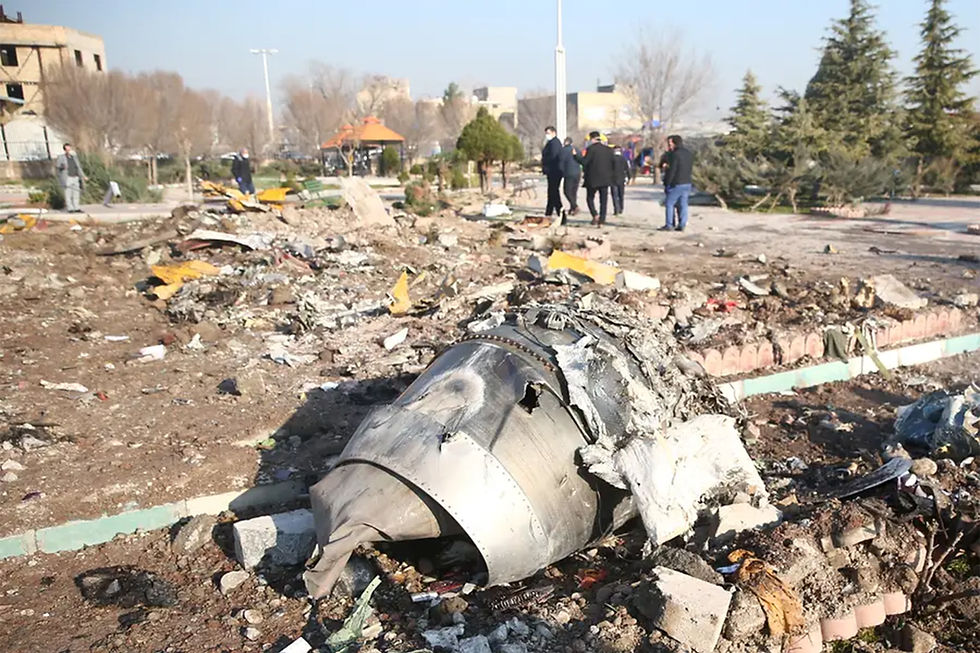
The industry’s sensitivity to these issues is not theoretical. Civil aviation has spent the past decade confronting the reality that commercial aircraft can be placed in harm’s way when military activity spills into or near civilian airspace.
That has prompted a stronger global focus on conflict-zone awareness, intelligence-sharing, NOTAMs and route risk assessment. ICAO, national regulators, and airline security departments have all worked to improve the flow of information available to operators. But these safeguards depend heavily on transparency, timely reporting, and state cooperation, three things that are often in short supply when regional tensions escalate.
That is why ICAO’s wording matters. The Council’s condemnation suggests that the organisation believes the issue has moved beyond isolated concern and into a level of risk that demands formal international censure.
Pressure on Air Traffic Control and Air Navigation Providers
Lost in the broader geopolitical headlines is the pressure such incidents place on the region’s air navigation service providers. Controllers are expected to maintain orderly, safe and efficient traffic flows even when the operating environment becomes less predictable.
If military systems transit through or near controlled airspace without warning, ANSPs may be forced to reconfigure traffic flows, issue restrictions, or temporarily close sectors to protect civilian aircraft. Those decisions can happen quickly and often under significant uncertainty.
For the controllers managing those skies, and the flight planning teams supporting aircraft en route, the consequences are immediate. Capacity drops, workload increases, and the room for error shrinks.
That is one reason why airspace sovereignty is not merely a political abstraction in aviation circles. It is a practical requirement for safe and efficient operations.

A Wider Challenge for ICAO
The episode also underlines a broader challenge confronting ICAO and the wider aviation community: the growing overlap between civil aviation and emerging military technologies. Long-range unmanned aircraft systems, loitering munitions and increasingly sophisticated stand-off strike capabilities have introduced new risks into airspace that was historically designed around conventional aircraft operations.
The legal and procedural framework of global aviation, much of it rooted in the post-war architecture of the Chicago Convention, was never built with today’s hybrid military-airspace threats in mind. That does not make the rules obsolete, but it does make enforcement and compliance more urgent.

In citing not only the Chicago Convention but also United Nations Security Council Resolution 2817 (2026) and relevant ICAO Assembly resolutions, the Council signalled that this is not simply about one state’s conduct. It is about preserving the credibility of the international system that allows civil aircraft to move safely across borders every day.
A Clear Message to Operators and States
ICAO concluded by calling on Iran to cease its unlawful activities and to comply with its obligations under international civil aviation treaties. The Council also underscored the “serious and ongoing risk” posed by unauthorised military incursions into sovereign airspace and the resulting disruption to civil operations.
For the aviation sector, the message is clear enough: when military systems enter civilian operating environments without coordination, the risks are no longer confined to the strategic realm. They become an aviation problem, one with immediate consequences for airlines, crews, air traffic services and passengers.
In a global system that depends on predictability, trust, and respect for sovereign airspace, even a limited breach can have outsized consequences. ICAO’s intervention is therefore more than diplomatic signalling. It is a reminder that the line between geopolitical confrontation and aviation hazard can be far thinner than it appears on a chart.
If that line continues to blur, the burden will fall not only on states and regulators, but on the crews and controllers tasked with keeping the skies safe while the politics play out below.





Comments